Key facts
- IMF and World Bank annual meetings are underway in Bangkok.
- Key themes include inflation, AI, climate change, debt, and geopolitics.
- IMF chief Kristalina Georgieva highlighted energy prices, public debt, and bond market volatility.
- US inflation data, including CPI, will influence the Federal Reserve's rate decision.
- Q3 earnings season begins with major US banks reporting.
- China's export growth is strong, but domestic demand and property market issues persist.
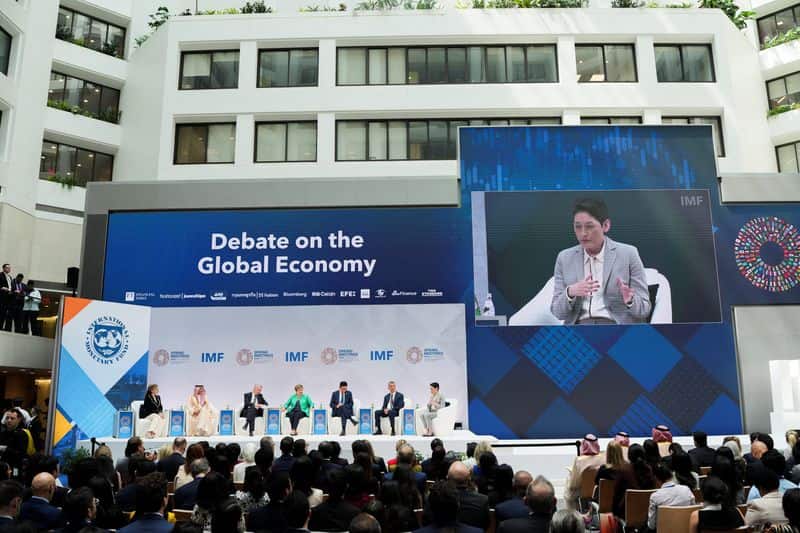
Global finance officials are gathering in Bangkok for the International Monetary Fund's annual meetings, with a packed agenda that includes persistent inflation, the rise of artificial intelligence, climate change, and geopolitical conflicts.
IMF Managing Director Kristalina Georgieva has indicated that the updated World Economic Outlook will present a challenging view of the global economy, citing high energy prices, record public debt, and turbulent bond markets. Discussions are expected to cover fractured geopolitics, including the conflicts in the Middle East and Ukraine, and the regulation of AI amid competition between the US and China.
The meetings also come as the US Federal Reserve weighs its next interest rate move, with key inflation data, including the consumer price index (CPI) and producer price index (PPI), due this week. Bets on another Fed hike have receded, but a strong CPI report could alter expectations.
Wall Street's Q3 earnings season kicks off with major US banks, including JPMorgan Chase, Goldman Sachs, Citigroup, Wells Fargo, Morgan Stanley, and Bank of America, set to report. While earnings are projected to rise, the surge in Treasury yields has impacted bank shares, and investors will be watching for any signs of pressure on dealmaking and lending.
Meanwhile, China's economic data will be scrutinized to see if AI-related exports are compensating for weak domestic demand. Despite strong export growth, a prolonged property slump continues to weigh on consumption. Inflationary pressures are also expected to be evident in Chinese producer and consumer price data.