Key facts
- Novaya Gazeta announced its closure on October 30, 2026, citing relentless pressure from Russia's security services.
- The newspaper said it was evicted from its offices and cut off from its reader donation system.
- Russian authorities blocked its website, arrested staff on what the newspaper called dubious charges, and branded its journalists foreign agents.
- Editor-in-chief Dmitry Muratov shared the 2021 Nobel Peace Prize with Filipino journalist Maria Ressa.
- Novaya Gazeta Europe, set up by journalists who moved to Europe, remains unaffected by the Moscow closure.
- Six Novaya Gazeta journalists were murdered, including Anna Politkovskaya in 2006.
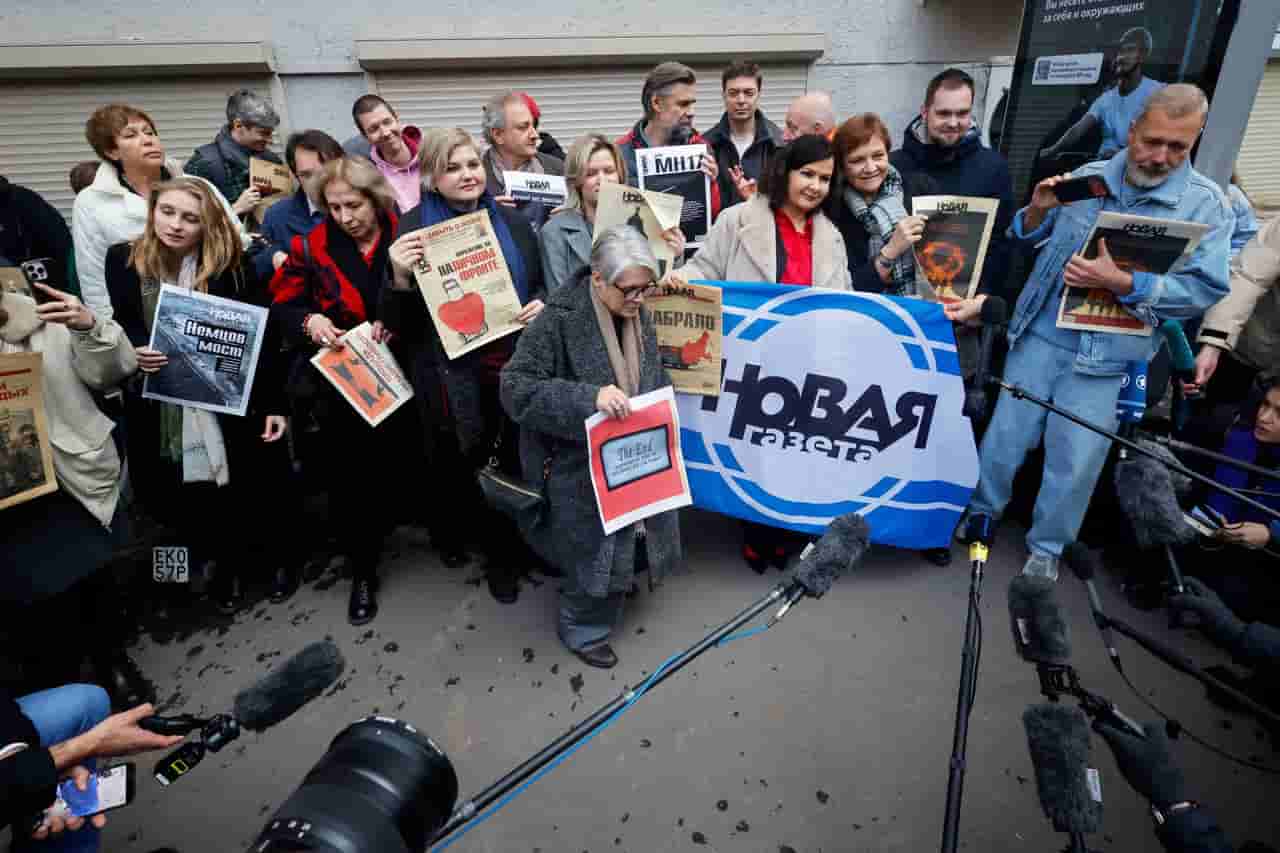
Novaya Gazeta, once one of Russia's most influential independent newspapers, ceased publication in Moscow on November 9, 2026, after announcing its closure on October 30. The newspaper cited relentless pressure from Russia's security services, saying it had been evicted from its offices and cut off from the donation system that let it raise funds directly from readers.
In recent years, Russian authorities blocked its website, arrested staff members on what the newspaper called dubious charges, and branded its journalists "foreign agents." The newspaper's statement announcing the closure was titled "They have killed us" and said: "In this country, human rights and freedoms have been destroyed, and their defense is treated as a crime."
Founded in 1993, partly with money from Mikhail Gorbachev's Nobel Peace Prize, Novaya Gazeta was known for investigations into Russian corruption and human rights abuses. Its journalists challenged the official account of the 2004 Beslan school siege, exposed abuse by Russia's armed forces during the Chechen Wars, and covered extrajudicial killings. Six of its journalists were murdered, including Anna Politkovskaya, killed in her apartment building in 2006.
In October 2021, editor-in-chief Dmitry Muratov was awarded the Nobel Peace Prize alongside Filipino journalist Maria Ressa. After Russia launched its full-scale invasion of Ukraine in February 2022, Novaya Gazeta said in a March 1, 2022, Telegram message that authorities demanded it remove all content calling Moscow's violence in Ukraine a "war," "aggression" or "invasion." The outlet said it asked 4,460 paid members whether to continue under censorship or suspend operations, and 94% said it should keep writing.