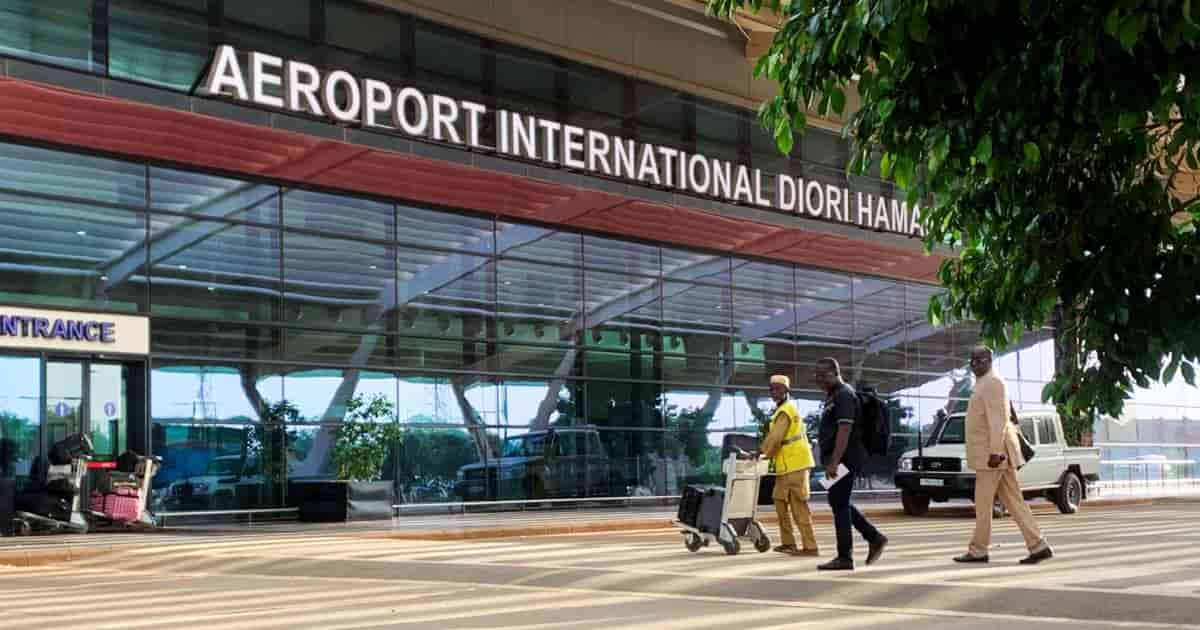
Mutinous soldiers launched attacks on Niger's airport and presidency in the capital, Niamey, early on Saturday, resulting in hours of sustained gunfire and explosions. State television and radio were briefly taken off air during the incident.
By late morning, Niger’s defense ministry announced that the armed forces were progressively regaining control of the targeted sites. However, security sources reported that mutineers remained at the airport and the overall situation was still unclear.
The attack represents the latest challenge to the authority of Abdourahamane Tiani, who came to power in a military coup in July 2023. Despite pledges to enhance security in the Sahel nation, jihadist attacks have continued.
State television, upon resuming broadcasts, stated that mutinous soldiers from a Niamey base had fired on "sensitive sites" in the city, but that security forces had reacted swiftly and "contained this disturbance." A Reuters witness described gunfire at the airport and heavy explosions in the pre-dawn hours.
Two security sources and a diplomat indicated that by 0900 GMT, the presidential palace appeared to be secured by loyalist troops, but the area surrounding the airport remained contested. Loyalist troops were reportedly dispatched to regain control of the airport, either through negotiation or force.
The assault also involved soldiers from the localities of Ouallam, Tera, and Dosso in the southwest. Analysts and security sources suggest that frustration with the government is growing within frontline units, some of which have sustained heavy casualties in battles with the regional Islamic State affiliate.
It remains unclear how many troops allied with the mutineers entered Niamey or their specific deployment locations. Earlier in the year, affiliates of al Qaeda and Islamic State had attacked the civilian airport and military airbase, initially leading to speculation that militants might be behind the assault.
Niger, a country rich in uranium, oil, and gold, has been under military rule since the July 2023 coup that ousted President Mohamed Bazoum. Similar to its neighbors Burkina Faso and Mali, Niger has struggled to counter Islamist insurgencies linked to al Qaeda and Islamic State, despite the military rulers' promises to improve security. The al Qaeda affiliate in West Africa claimed responsibility for an attack on Niamey's airport in June, following an Islamic State attack on the same site five months prior.
Since Tiani's government took power, Niger has shifted its foreign policy away from Western partners, strengthening ties with Russia and withdrawing from the West African regional bloc ECOWAS. It joined Mali and Burkina Faso to form the breakaway Alliance of Sahel States (AES).
The unrest coincides with increased government control over Niger's uranium sector, including the seizure of assets from France's Orano. Niger had been a significant supplier of nuclear fuel to Europe, contributing approximately 15% of Orano's total uranium supply when operating at full capacity. Last week, the government reallocated former Orano and GoviEx uranium permits to state-backed companies, according to a decree.