Key facts
- German outlets NDR, WDR and Sueddeutsche Zeitung reported that Western intelligence concluded Russia plans to launch the Sputnik-S satellite this year.
- The outlets said the satellite was assembled several years ago and is stationed in the Moscow region.
- Kremlin spokesperson Dmitry Peskov said the reports were hardly worth taking seriously.
- Russia's embassy in Berlin called the reports unfounded allegations and part of a propaganda campaign.
- Rutte said NATO has a variety of response options even if the public does not always see them.
- Russia vetoed a 2024 UN Security Council resolution aimed at preventing a nuclear arms race in outer space.
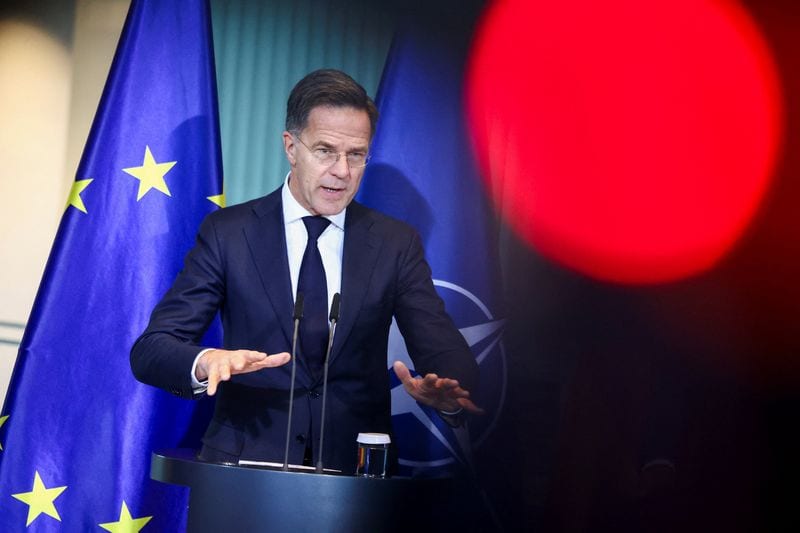
NATO chief Mark Rutte said on November 23, 2026, that the alliance constantly assesses its deterrence and defense situation, including in space, when asked about press reports that Russia was preparing to launch a nuclear-armed satellite. Speaking at a joint press conference in Berlin with German Chancellor Friedrich Merz, Rutte said: "I can assure you, we will always make sure that we defend every inch of NATO territory. And that includes making sure that we are safe when it comes to the space element."
Rutte said NATO had a variety of response options, even if the general public does not always see them. He added: "We see situations in Poland and Estonia, etc ... When it comes to the military domain, we will always make assessments of our deterrence and defence and make updates where necessary."
The remarks followed a report by German broadcasters NDR and WDR and newspaper Sueddeutsche Zeitung that Western intelligence services, including Germany's BND, had exchanged intelligence concluding that Russia plans to launch a nuclear-armed satellite named Sputnik-S this year. The outlets said the satellite was assembled several years ago and is stationed in the Moscow region, and that warnings in early November said it could be launched within 60 days and would be operational shortly afterwards.
Kremlin spokesperson Dmitry Peskov told reporters: "No, we haven't seen the report. But there are so many 'alleged' and 'possible' claims in it, attributed to who knows whom, that it's certainly hardly worth taking them seriously." Russia's embassy in Berlin said it was not aware of any such plans, describing the reports as "unfounded allegations regarding the space activities of the Russian Federation" and "part of a propaganda campaign". Moscow's space measures, the embassy added, proceed "in accordance with international obligations" and serve "exclusively peaceful purposes".