Key facts
- Modi said the package totals 240 billion Nepalese rupees, or $1.62 billion at 148.6200 rupees per dollar.
- About $400 million of the package is grants for reconstruction and infrastructure, with most of the rest a credit line for energy.
- Nepal's government estimates rebuilding the flood-hit region could cost as much as $4.8 billion.
- Nepal gained access to two additional Indian ports, Kandla and Paradip, and improved road and rail connectivity.
- The leaders did not reach an agreement on greater access to Indian airspace for Nepal's Bhairahawa and Pokhara airports.
- India agreed to make an existing air route linking Kathmandu, Bhairahawa and Lucknow bidirectional.
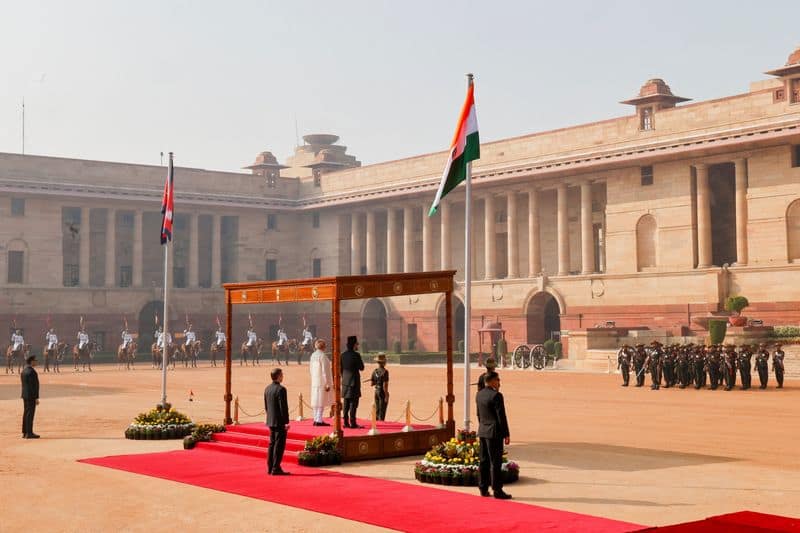
Indian Prime Minister Narendra Modi said on November 23 that India will give Nepal an economic package worth 240 billion Nepalese rupees, or $1.62 billion, Reuters reported. Modi spoke after talks in New Delhi with his Nepali counterpart, Balendra Shah, on Shah's first bilateral visit since he came to power in March.
Most of the package will come as a line of credit for energy projects, alongside about $400 million in grants for reconstruction and infrastructure, according to the BBC. Nepal's government estimates rebuilding the region hit by a flash flood in September could cost as much as $4.8 billion. The floods killed more than 1,400 people, with thousands still missing.
The two countries announced agreements covering trade, hydropower, transport and education for Nepali youths. Nepal secured access to two additional Indian ports, Kandla and Paradip, and the sides agreed to improve road and rail connectivity. The leaders jointly flagged off a train service linking Ayodhya in India with Janakpur in Nepal.
No agreement was reached on greater access to Indian airspace for Nepal's airports at Bhairahawa and Pokhara. India did agree to make an existing air route linking Kathmandu, Bhairahawa and Lucknow bidirectional. The joint statement acknowledged outstanding issues, but the leaders did not mention the border dispute in their public remarks.
Former senior Nepali diplomat Vijay Kant Karna said the package is still a significant amount and could help stabilize a relationship that has often been uneasy. Govind Pokharel, a former vice-chairman of Nepal's National Planning Commission, said Shah's government may have set contentious issues aside to secure progress on more immediate development needs. Indian diplomat Anil Trigunayat said both sides appear to have left the dispute to established mechanisms.