Key facts
- The Moscow Oil Refinery halted operations indefinitely following a large-scale drone attack on June 18.
The Moscow Oil Refinery suspended operations indefinitely after a large-scale drone attack on June 18 damaged key processing units and storage tanks. The facility is crucial for supplying the Moscow fuel market.
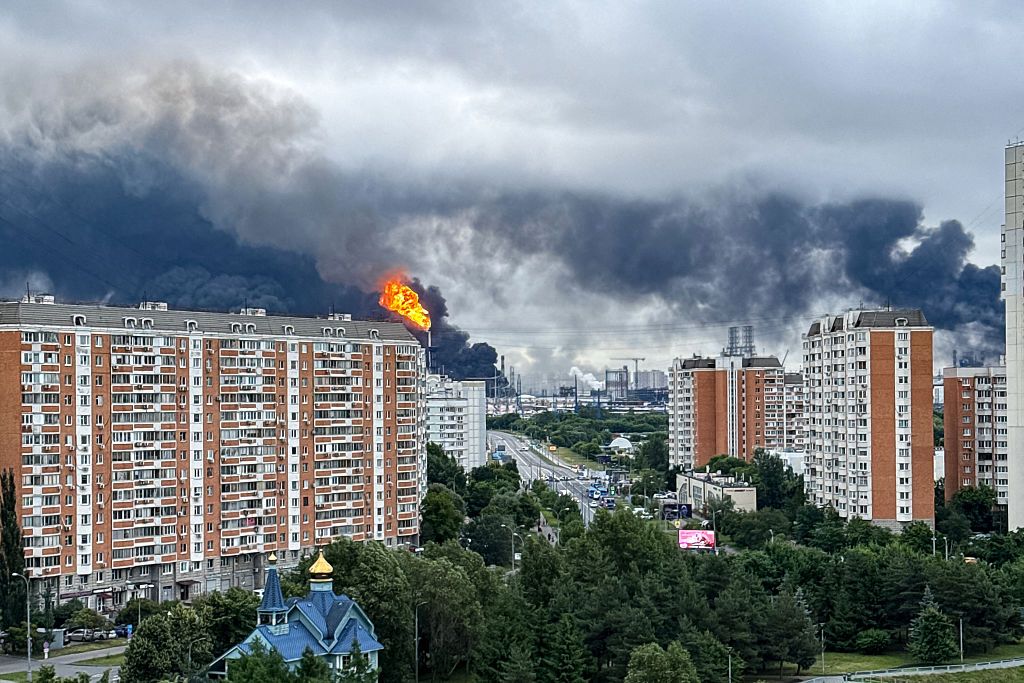
The attack on the Moscow Oil Refinery, a critical energy infrastructure, highlights Ukraine's increasing capability to strike deep into Russian territory and impacts Russia's domestic fuel supply.
Ukraine's General Staff confirmed on June 19 that the Moscow Oil Refinery had suspended operations indefinitely following a significant drone attack on the Russian capital the previous night. This strike, the largest drone assault on Moscow since the full-scale invasion began and the second on the facility in a week, reportedly damaged a combined oil processing unit and several oil storage tanks. The Moscow Oil Refinery is a critical piece of infrastructure, supplying approximately 40% of the Moscow fuel market and the majority of the region's gasoline. It also provides aviation fuel to all four of the capital's major airports and has an annual processing capacity exceeding 12 million tons of crude oil. These strikes are part of Ukraine's broader strategy to target Russia's oil infrastructure, which has already led to fuel shortages and gasoline sale restrictions across Russia. President Volodymyr Zelensky characterized the June 18 attack as a "just response" to Russia's continued bombardment of Ukrainian cities. In addition to the refinery strike, the General Staff also confirmed Ukrainian forces targeted railway bridges near Rozdolne and Vladyslavivka in occupied Crimea, which are used for Russian military transportation and logistics. Other confirmed strikes included a supply of Russian weapons near Sievierodonetsk and a fuel depot in Mariupol, as well as drone command posts in Donetsk and Zaporizhzhia Oblasts.
Pick the topics you care about. Get only what matters, on your cadence.