Key facts
- Montenegro's European Affairs Minister Maida Gorcevic offered to share expertise with Ukraine on EU accession reforms.
- Montenegro is in the final stages of its EU integration process.
- Ukraine's parliament is reportedly blocking reforms needed for its EU membership bid.
- Montenegro has a dedicated rule of law team that collaborates closely with European Commission officials.
- A cooperation agreement signed in March between Montenegro and Ukraine facilitates expert support for Ukraine's reforms.
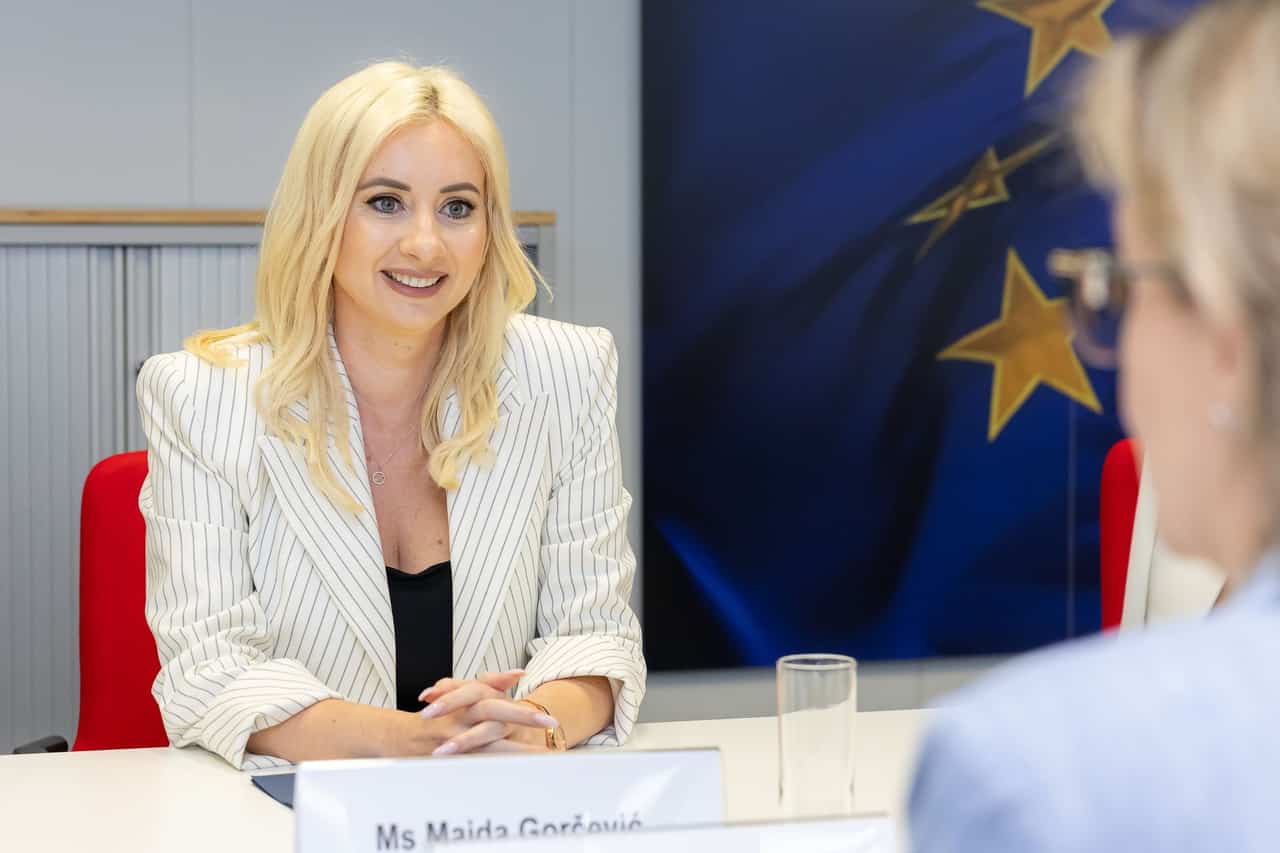
Montenegro is prepared to share its experience and best practices with Ukraine to aid its progress in the rule-of-law reforms essential for European Union membership, according to Montenegro's European Affairs Minister Maida Gorcevic. Speaking to the Kyiv Independent, Gorcevic highlighted that Montenegro, a Western Balkan nation on the cusp of joining the EU, understands the complexities and challenges involved in this process.
Gorcevic acknowledged that the reforms are often "not easy," "not popular," and "not easy to understand," particularly when EU legislation requires specific handling and amendments necessitate EU approval. She stressed that these changes are ultimately for the benefit of citizens. This sentiment was echoed by Belgian Foreign Minister Maxime Prevot during his visit to Kyiv in August.
Montenegro, which hopes to conclude its accession by the end of 2026, has developed significant expertise in rule-of-law requirements during its integration process. A dedicated rule of law team in Montenegro meets twice weekly with European Commission officials to meticulously review requirements and upcoming legislation. This detailed approach is seen as a best practice that could be shared with other candidate countries.
Furthermore, Montenegro has established cooperation agreements with Ukraine, Moldova, and Albania. The memorandum signed with Ukraine in March specifically outlines the provision of expert support from public administration officials to share practices in areas such as rule of law, judicial reform, anti-corruption, public administration reform, and economic criteria. The agreement also promotes regular meetings between negotiation teams and joint events to foster European integration.
Montenegro has successfully closed 18 out of the 33 negotiation chapters required for EU membership and aims to close more by the end of the year. In contrast, Ukraine has opened two of the six "clusters," which encompass seven of the 33 chapters, with a target to open all chapters by the end of 2026. Gorcevic also noted that Montenegro learns from other candidate countries as well.