All NewsEducationTVBrokers
Equities & FundsCrypto & Digital AssetsAI & TechnologyBusiness & CorporateUS Politics & PolicyGeopolitics & Global RiskMacro, Rates & FXCommodities & EnergyEuropean Politics & MarketsAsia-PacificReal Estate & Property
All NewsHome
← Back to European Politics & Markets

IMF report groups Moldova with Western Balkans, separating it from Ukraine

Created at 8 Sep · 4:36 PM1 source↑ Market-relevant
IN SHORT

An IMF report has grouped Moldova with the Western Balkans in its EU accession process, citing similar features and Ukraine's ongoing conflict and larger size. This separates Moldova from Ukraine, despite both having opened only two enlargement clusters.

Key Numbers

Sept. 8IMF report release date
sixenlargement clusters for EU accession
twoclusters opened by Moldova and Ukraine
35%potential GDP per capita increase after 10 years of EU membership
20%estimated productivity gains from EU membership
12%estimated capital investment gains from EU membership

Who's Involved

International Monetary Fund (IMF)
released report grouping Moldova with Western Balkans
Moldova
grouped with Western Balkans in EU accession process
Ukraine
separated from Moldova in EU accession process due to conflict and size
Kristalina Georgieva
IMF Managing Director, cited similar features for grouping Moldova
Marta Kos
EU's Enlargement Commissioner, called Moldova "best performer"
Valdis Dombrovskis
EU's Economy Commissioner, urged Ukraine to adhere to reform timetable
Serhii Koretskyi
Prime Minister of Ukraine, discussed reforms with Dombrovskis
IMF report groups Moldova with Western Balkans, separating it from Ukraine

↳ Why This Matters

The IMF's classification signals a potential divergence in the EU accession timelines for Moldova and Ukraine, impacting their respective reform efforts and future economic integration with the bloc. It also highlights the complex geopolitical landscape influencing EU enlargement.

Key facts

  • An IMF report released Sept. 8 has grouped Moldova with the Western Balkans in its EU accession process, separating it from Ukraine.
  • Moldova and Ukraine had their EU membership applications joined together when they opened six enlargement clusters.
  • Both Moldova and Ukraine have so far opened only two clusters: rule of law and external relations.
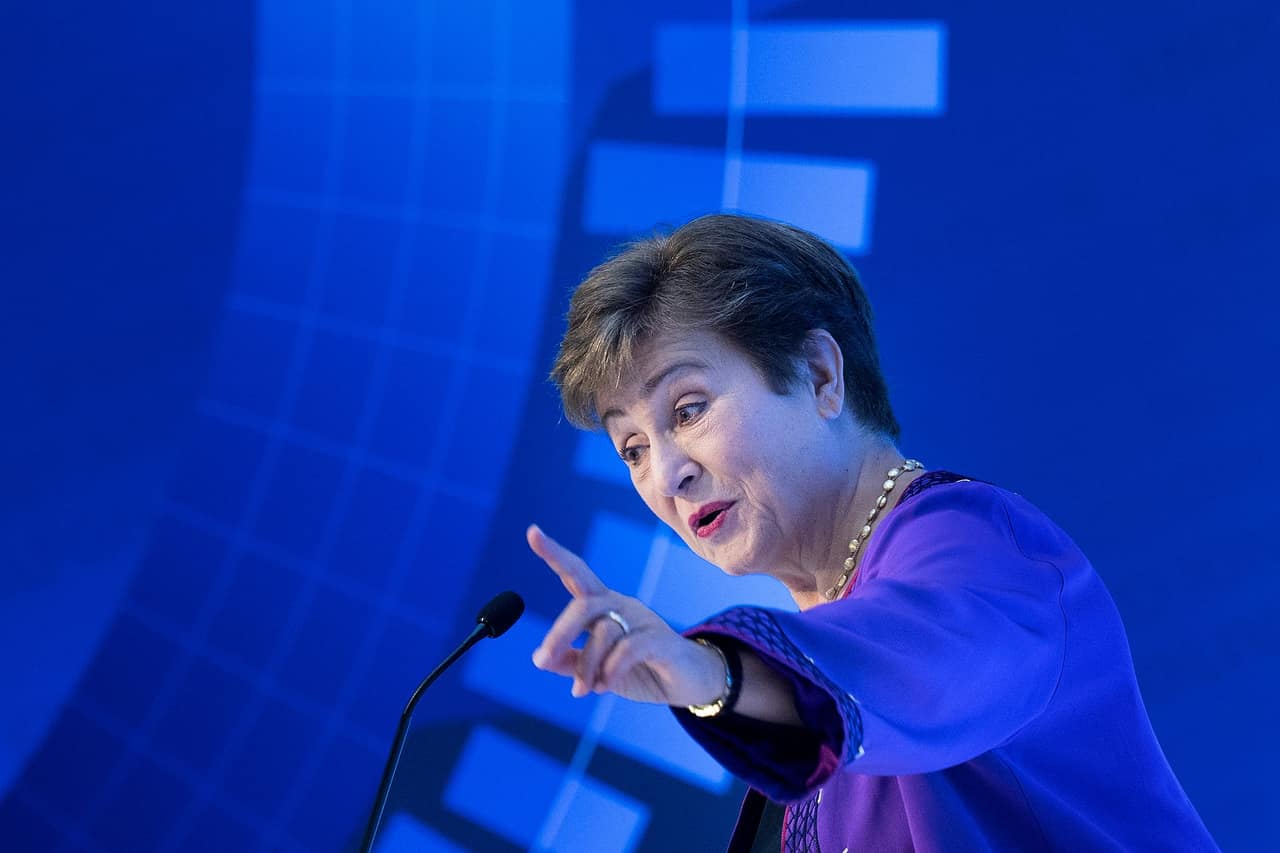
  • IMF Managing Director Kristalina Georgieva stated Moldova was grouped with the Western Balkans due to shared features.
  • The IMF report cited Ukraine's larger size and ongoing military conflict as reasons for its exclusion from the Western Balkans group.
  • The EU's Enlargement Commissioner Marta Kos previously identified Moldova as the "best performer" in accession talks.

An International Monetary Fund (IMF) report released on September 8 has altered the trajectory of EU accession for Moldova and Ukraine. While both countries had their membership bids initially processed in tandem, the IMF has now separated them, grouping Moldova with the Western Balkan states. This move suggests Moldova may be advancing at a faster pace in its integration with the European Union.

The IMF's decision stems from a comparative analysis of the countries' progress and characteristics. Managing Director Kristalina Georgieva stated that Moldova shares "very similar features" with the Western Balkan nations, justifying their inclusion. Conversely, the report points to Ukraine's "much larger size and ongoing military conflict" as primary reasons for its distinct classification. Both countries have opened only two of the six "enlargement clusters," which are reform agendas designed to align candidate countries with EU standards.

This development follows earlier recognition of Moldova's progress, with EU's Enlargement Commissioner Marta Kos having previously singled out Moldova as the "best performer" in accession talks. In contrast, Ukraine's parliament has reportedly struggled to implement the reforms required by the EU and the IMF, prompting discussions between EU officials and Ukrainian leadership to ensure adherence to the agreed reform timetable.

The IMF report also projected significant economic benefits for countries joining the EU, estimating a potential GDP per capita increase of roughly 35% over ten years, driven by factors such as participation in the single market, EU funding, and domestic reforms. However, the enlargement process faces geopolitical challenges. Commissioner Kos highlighted the "adversaries in the enlargement process," specifically naming Russia as seeking to prevent candidate countries from joining the bloc. The ongoing war in Ukraine and Russia's influence in Moldova's Transnistria region are cited as complicating factors. China's growing economic presence in candidate countries was also identified as a concern, potentially leading to its infiltration of the EU's single market once these nations join.

Frequently asked questions

The IMF report cited Moldova's similar features to Western Balkan countries and Ukraine's larger size and ongoing military conflict as reasons for the separation.

These are to-do lists of reforms that countries must complete to align with EU standards as part of their membership application process.

The IMF projects a roughly 35% increase in GDP per capita over 10 years, driven by single market participation, EU funds, and domestic reforms.

Russia's opposition to enlargement and China's growing influence in candidate countries are identified as significant geopolitical threats.

What Happens Next

01The EU Commissioner is set to discuss the reform timetable with IMF Managing Director Georgieva.
02Further progress on reforms will be crucial for Ukraine's EU accession timeline.
03Moldova's integration with the Western Balkans may accelerate its path to EU membership.

How It Developed

An IMF report separated Moldova from Ukraine in their EU membership bids.
Moldova was grouped with the Western Balkans, where several countries are further ahead in the accession process.
The IMF cited similar features between Moldova and the Western Balkans.
Ukraine's larger size and ongoing military conflict were cited as reasons for its separate grouping.
The EU's Enlargement Commissioner previously called Moldova the "best performer" in accession talks.
Ukraine's parliament has faced challenges in advancing required reforms.
The IMF report highlighted potential economic gains from EU membership for candidate countries.
Geopolitical factors, including Russia's actions and China's influence, were noted as threats to enlargement.

Sources

T1
IMF report groups Moldova with EU applicants ahead of UkraineThe Kyiv Independent

Related Stories

Germany needs new debt for defense, says Finance Minister Klingbeil
8 Sep · 11:21 AM
France proposes new EU taxes to fund €60B budget
8 Sep · 12:06 PM
EU trade chief to meet CEOs on China supply chain strategy
7 Sep · 6:31 PM
Organised crime driving illicit cigarette factory boom across EU states
8 Sep · 3:11 PM
Macron urges EU ban on social media for under-15s
8 Sep · 8:51 AM