Key facts
- Millions of hectares of protected tropical ecosystems are at risk from overlapping mining and oil/gas concessions.
- Research by Earth Insight found oil and gas blocks encroach on over 61 million hectares of tropical ecosystems.
- Mining concessions overlap with another 42.7 million hectares of protected areas.
- Current conservation pledges are projected to reach 23% by 2030, falling short of the 30% '30x30' target.
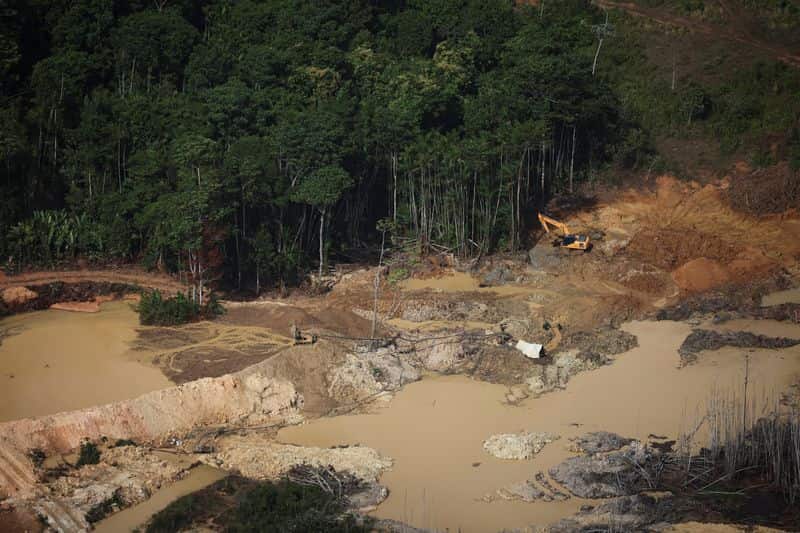
- Cambodia's Phnom Prich wildlife sanctuary lost 10,000 hectares to a gold mine.
- 21% of Cambodia's undisturbed tropical forest is threatened by mining, and 71% by oil and gas development.
Millions of hectares of protected tropical ecosystems are at risk from overlapping mining concessions and oil and gas blocks, researchers said on Thursday, potentially weakening a global treaty aimed at conserving 30% of the world's land, freshwater, and oceans by the end of the decade.
The research, led by US environment group Earth Insight, was released ahead of a new round of UN biodiversity talks scheduled to get underway in Yerevan, Armenia, on October 18. The COP17 meeting will see the publication of a global "stocktake" showing that existing government commitments were still way behind what was required to meet the "30x30" pledge.
Earth Insight said current pledges would raise conservation levels to 23% by 2030, but reaching the 30% target simply by "counting hectares" would not be enough if many of the areas covered were still vulnerable to industrial development. "To say that a third of the Earth's surface needs to be protected, and for that to be agreed upon by consensus by 196 countries, was a big deal, but the focus has just gone on that quantitative element," said Madhu Rao, chair of the World Commission on Protected Areas at the International Union for Conservation of Nature.
Earth Insight used spatial analysis to examine the overlap between major tropical ecosystems and extractive industries, and found that oil and gas blocks encroached on more than 61 million hectares (235,522 square miles), an area nearly the size of France. Mining concessions overlapped with another 42.7 million hectares of protected areas.
"A majority of those concessions haven't been licensed yet - certainly plenty are, but that means there's an opportunity for countries to remove those concessions," said Tyson Miller, Earth Insight's executive director. Some of the concessions have already caused damage to national parks across the world, including Cambodia's Phnom Prich wildlife sanctuary, which lost 10,000 hectares to make way for an open-pit gold mine. While 97% of Cambodia's undisturbed tropical forest lies within designated protected zones, 21% is threatened by mining and 71% by oil and gas development.
More than 40% of key marine biodiversity areas in the Amazon remain unprotected, with the figure rising beyond 50% in both Southeast Asia and Central America. Earth Insight said its findings were likely to be "conservative" and did not capture the full range of pressures on ecosystems. More concessions could be activated as countries rush to improve energy security, with Bangladesh already inviting companies to bid for oil blocks in biodiversity-rich waters in the Bay of Bengal, Rao said. "Given the energy crisis that we are in at the moment, many countries are taking the steps forward, getting into oil extraction in a way they hadn't done before."