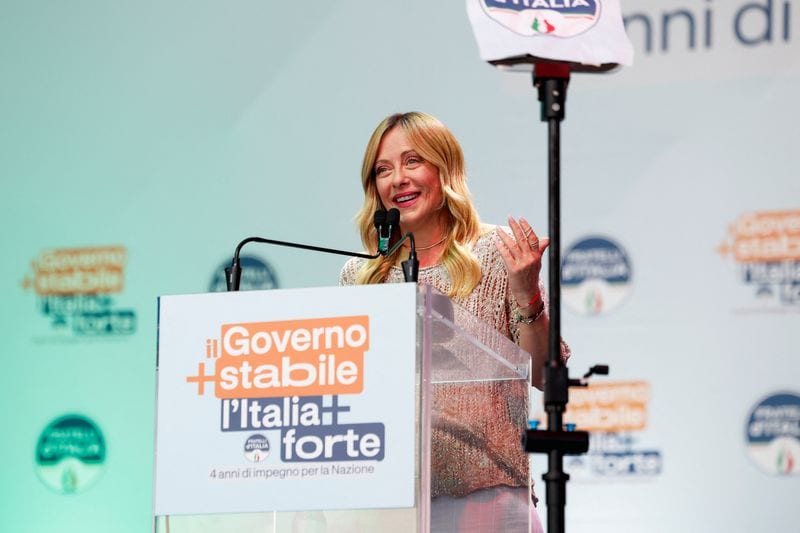
Italian Prime Minister Giorgia Meloni celebrated her government's record tenure, stating that political stability has strengthened Italy's standing in the EU and reassured financial markets. Critics, however, argue that fundamental reforms remain unaddressed.

Italy's political stability is crucial for its economic standing in the EU and its ability to manage its significant public debt. The government's perceived success in this area could influence investor confidence and borrowing costs, while a lack of progress on deeper reforms may continue to hinder long-term economic growth.
Prime Minister Giorgia Meloni marked a significant milestone as her right-wing coalition became Italy's longest-serving government of the postwar era, surpassing 1,400 days in office since taking power in October 2022. Meloni stated that this period of stability has transformed Italy's image within the European Union, moving it from a country "under watch" to one perceived as steady and financially disciplined.
Speaking at an event in Bari, Meloni highlighted political stability as her government's primary reform, asserting that it has reassured financial markets and helped reduce borrowing costs on Italian government bonds. She contrasted Italy's steadiness with the political volatility seen in countries like France and Britain, which have experienced multiple prime ministerial changes recently.
While analysts acknowledge Meloni's success in restoring confidence in Italy's public finances, critics argue that substantial reforms in public administration, healthcare, and education systems have not materialized. The government's key institutional reforms, including proposals to enhance the prime minister's powers, have stalled, and a referendum on judicial reform was rejected by voters. Giuseppe Conte, leader of the opposition 5-Star Movement, accused the government of "inactivity and inertia" and failing to address the country's persistent sluggish economic growth.
With national elections approaching next year, Meloni is expected to lead her coalition into the campaign. Current opinion polls show the center-left bloc holding a narrow lead over Meloni's alliance, whose support has been impacted by the rise of the far-right movement Futuro Nazionale, which has capitalized on concerns regarding immigration, security, and cultural changes.