Key facts
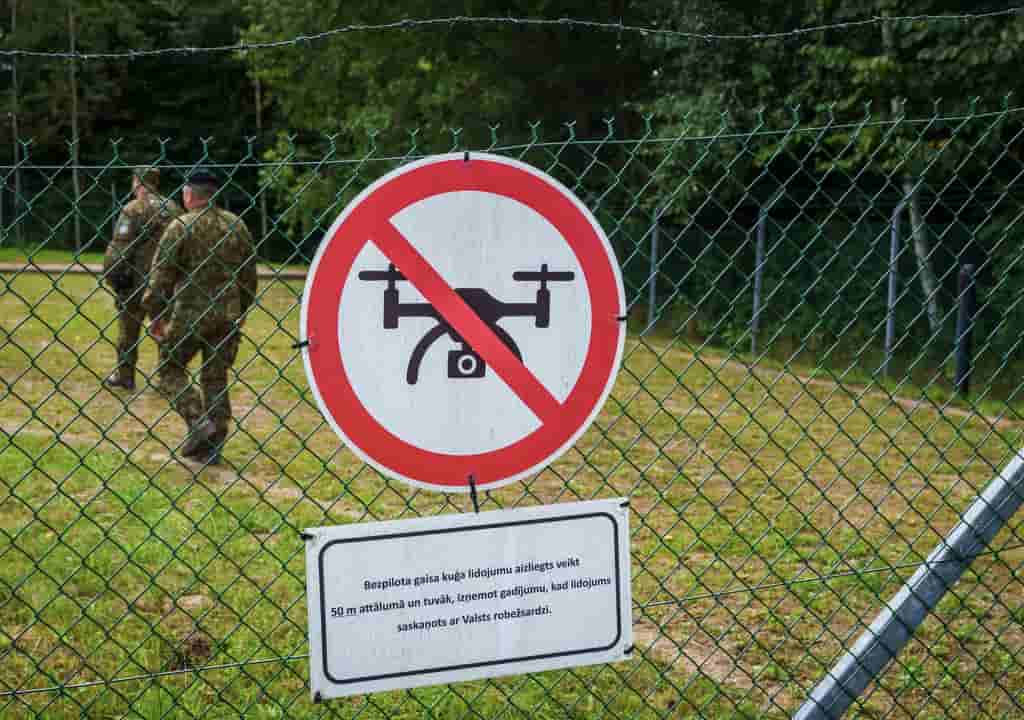
- Latvia's armed forces said on X there was a threat in the airspace and urged people not to approach suspicious objects.
- The military said about 30 minutes later that the unidentified object had left Latvian airspace and the threat had ended.
- The armed forces did not identify the object or say what it was.
- The Latvian military said it deployed a BLAZE interceptor drone and activated its self-destruct protocol to avoid entering Russian or Belarusian airspace.
- The incursion occurred around the border towns of Kraslava and Ludza in southeast Latvia.
Latvia's armed forces reported a brief intrusion into the country's airspace near the borders with Belarus and Russia on Sunday, November 1, 2026, and asked people in the area to stay inside for their safety during the incident.
The military said in a post on X: "We inform you that there is a threat in the airspace of Latvia. Go indoors, follow the two-wall principle!" It also urged people not to approach low-flying or suspicious objects. About 30 minutes later it said the unidentified object had left Latvian airspace and that the threat had ended. It did not say what the object was.
The incursion occurred around the border towns of Kraslava and Ludza in southeast Latvia. The Latvian military later said it had deployed a BLAZE interceptor drone in response and had activated its self-destruct protocol to avoid entering and violating Russian or Belarusian airspace. It is not yet clear where the flying device, likely a drone, originated from.
The incident follows repeated violations of airspace over Poland, the Baltic nations and other countries along NATO's eastern flank in recent months. An unidentified object, likely a drone, entered Lithuanian airspace and exploded on October 18, sending residents to shelters and damaging a civilian vehicle, according to Lithuanian President Gitanas Nauseda. On October 17, two Romanian F-16 fighter jets shot down two drones flying in Romanian national airspace, the country's Defense Ministry announced.
European leaders have warned that Russia could use drones to wage hybrid attacks on the alliance, testing its Article 5 commitments. Ukrainian drones have also unintentionally entered NATO airspace while launching attacks on targets deep in Russia. In June, a drone with a 5-kilogram warhead was found in southern Estonia after a Ukrainian attack on Russia.