Key facts
- Ladybird's rendering engine and its LibJS JavaScript engine were written from scratch rather than forked from Blink, Gecko or WebKit.
- Kling wrote that the browser around the engine is modest but functional, and that the release is still very early.
- The alpha is a rolling release channel that updates automatically; Windows support is planned but not available.
- The project is a 501(c)(3) nonprofit funded by sponsorships and donations, with no sponsored search engine deals, and its default search engine is None.
- Kling wrote that the project makes no promises about security and wants security researchers to test the build.
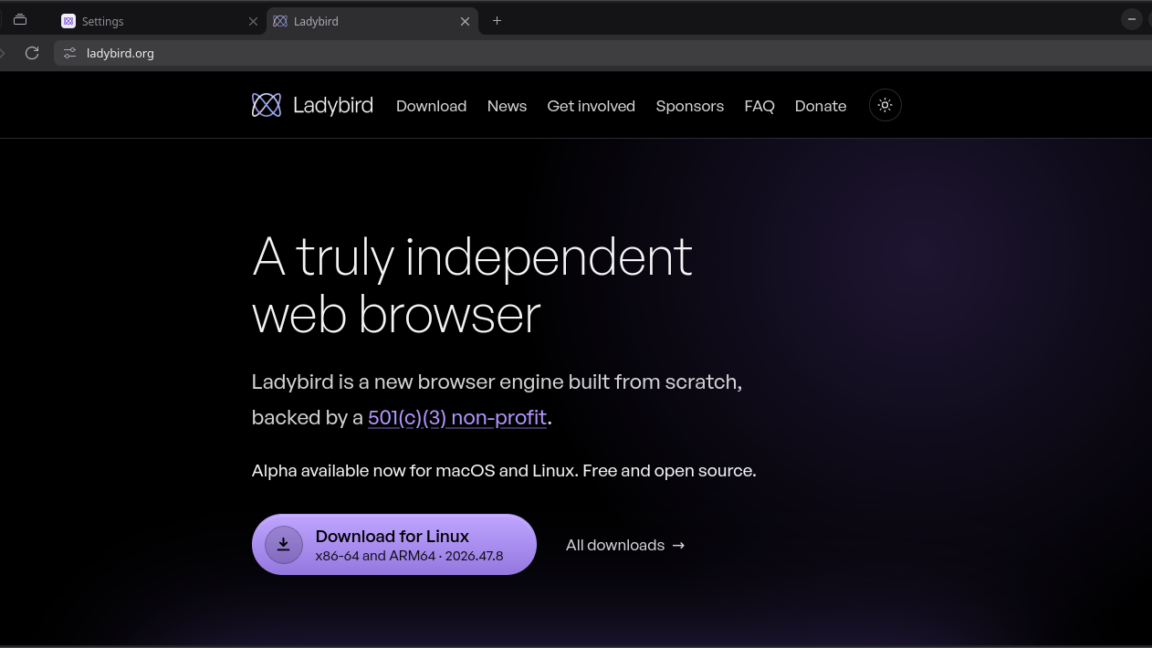
The Ladybird project released its first downloadable alpha on November 23, offering prebuilt versions for macOS and Linux after four years of work building a browser engine from scratch. Users previously had to compile the browser from its source; the alpha is an installable package with automatic updating.
Ladybird differs from Chrome, Edge, Brave and Opera, which run on Google's Blink engine, and from Firefox, which depends on Gecko. Its rendering engine and its LibJS JavaScript engine were written from scratch. "The engine is our own, built from the ground up, and not a fork," project lead Andreas Kling wrote in the announcement. "The browser around it is modest, but functional."
Nearly the entire modern web runs on three engines: WebKit, Gecko and Blink. The article argues that an independent implementation of web standards adds competition and can reveal where sites depend on Chromium behavior rather than published specifications.
The project grew out of Kling's SerenityOS, an attempt to build an independent operating system from scratch, before splitting off. Kling formed the Ladybird Browser Initiative, a 501(c)(3) nonprofit funded by sponsorships and donations. The project's site states that it has no sponsored search engine deals and that sponsors have no say in the roadmap; the default search engine is None.
The browser began in C++ and the project has started shifting toward Rust, beginning with its JavaScript engine. The build includes a tool for reporting sites that fail to render or crash the browser. Kling wrote: "We want security nerds to hack it! A new browser gets hacked, over and over, and that's part of the process, so we make no promises about security today." Windows support is planned but the alpha is macOS and Linux only.
The article's author tested alpha version 2026.47.8 on a mini PC running Fedora Linux 44 and reported that tabbed browsing, a 50MB video download, Google Maps, GitHub and YouTube worked, and that the browser stalled only after repeated seeking in a 4K video streamed from a personal Jellyfin server with about 10 tabs open.