Key facts
- Perseverance's primary UHF radio failed to respond on October 30, and NASA said the backup was transmitting at about half expected power.
- NASA said it stopped using both UHF radios and paused rover science work while it evaluates the cause.
- Odyssey lost a reaction wheel in early November and has two working, below the three NASA says it needs.
- NASA said Odyssey's hydrazine would last one to two months without three healthy reaction wheels.
- NASA awarded Blue Origin a $700 million contract in September 2026 for a Mars relay orbiter, now on hold after a Rocket Lab protest.
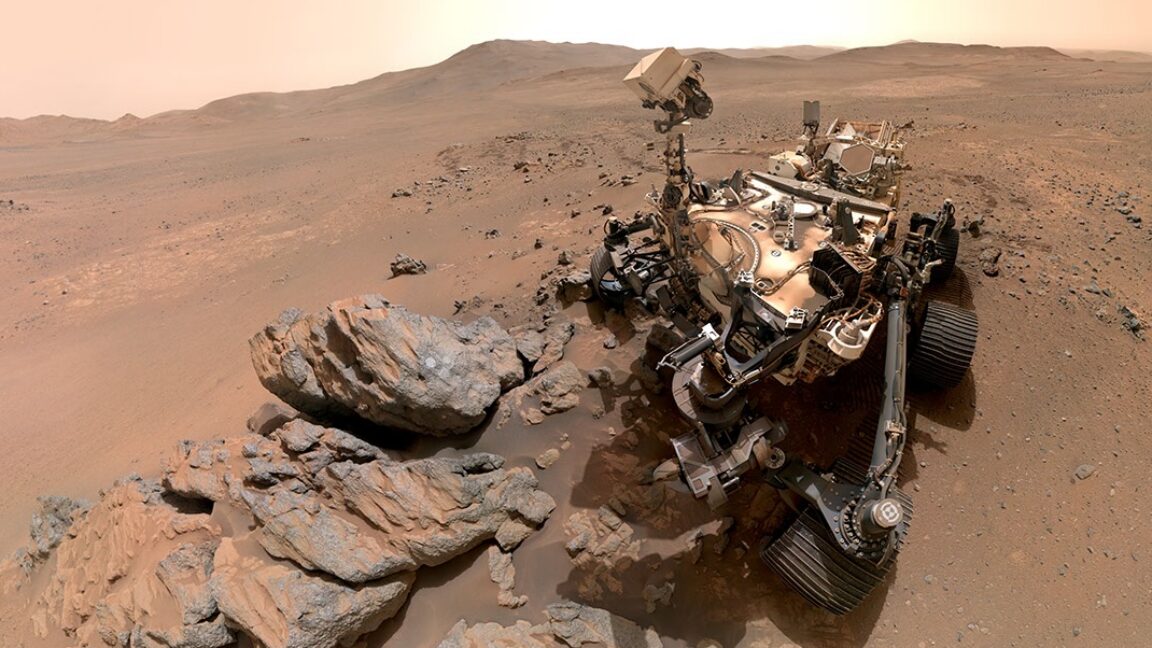
Two of NASA's four missions operating at Mars have suspended science operations after separate technical issues, Ars Technica reported on November 24. The affected craft are the Perseverance rover and the Odyssey orbiter, both operating beyond their original design lifetimes.
Perseverance's trouble is in its communications. One of its two redundant UHF radios, used for high-rate links to orbiters that relay data to Earth, was unresponsive when it powered up on October 30, triggering an automatic switch to the backup radio and placing the rover in safe mode. NASA said in a statement the week before November 24 that the backup radio was transmitting at about half its expected power output. "The team has stopped using both radios until they can evaluate potential causes of the issues and one or both are deemed safe to resume operating," NASA said.
The rover is now sending signals directly to Earth in X-band, which NASA said provides a "significantly lower data rate" than the orbiter relay. Mission managers paused science work "out of an abundance of caution" and are focused first on getting the backup radio running. "The team is hopeful the rover could return to science by the end of November." In October 2026 Perseverance passed the 28.06-mile (45.16-kilometer) distance record set by Opportunity, which stopped working in 2018.
Odyssey, in orbit since 2001 and the longest-lived Mars mission, lost one of its four reaction wheels in early November, leaving two working after a first failure in 2013. NASA said the craft needs at least three wheels to stay oriented and must otherwise rely solely on its hydrazine thrusters. Jeffrey Plaut, Odyssey's project scientist at NASA's Jet Propulsion Laboratory, said in a presentation earlier in 2026 that the orbiter had enough fuel to operate through at least the end of 2028 on extremely low usage, assuming no further wheel failures. Without three healthy wheels, NASA said engineers estimate the hydrazine supply would last one to two months. Ground teams had some initial success troubleshooting the wheel, and further testing is needed to judge whether it is recoverable.
NASA is preparing replacements. In September 2026 it awarded Blue Origin a $700 million contract for the Mars Telecommunications Network, a dedicated relay orbiter NASA wanted completed by the end of 2028 and operational at Mars in 2030. The work is on hold after Rocket Lab, which lost the bid, protested to the Government Accountability Office, which is expected to rule in December 2026.