Key facts
- Kazakhstan's new constitution officially took effect on Wednesday.
Kazakhstan's new constitution, which streamlines parliament and creates a vice-president role, has taken effect. President Kassym-Jomart Tokayev signed a decree for snap parliamentary elections to be held on August 23.
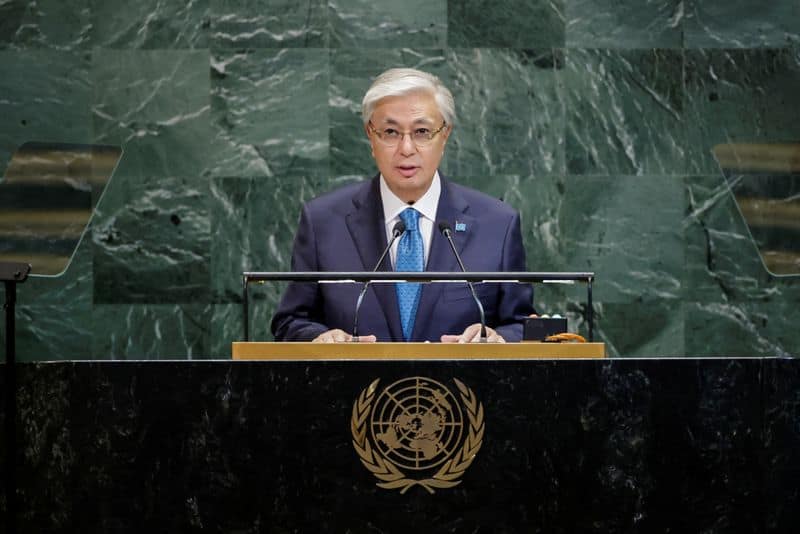
The constitutional changes and snap election signal a significant political realignment in Kazakhstan, potentially altering the country's leadership succession and its approach to governance and economic policy.
Kazakhstan's new constitution has officially taken effect, marking a significant step in the nation's political transition. The revised basic law, approved by referendum in March, streamlines the previous two-chamber parliament into a smaller, one-chamber legislature and introduces a new post of vice-president. President Kassym-Jomart Tokayev signed a decree on Wednesday scheduling snap parliamentary elections for August 23.
Tokayev, who assumed office in 2019 and is limited to a single term ending in 2029, has been driving a broad overhaul of the political landscape in Central Asia's largest economy. He has increasingly distanced himself from his predecessor, Nursultan Nazarbayev, whose three-decade rule Tokayev has characterized as corrupt and a period of unrestrained corruption. This shift is underscored by the recent merger of the ruling Amanat party, founded by Nazarbayev, with Tokayev's Adilet party.
The constitutional changes and upcoming elections are viewed by analysts as a new mechanism for power transition in the authoritarian state, which is a major exporter of minerals and energy.
Pick the topics you care about. Get only what matters, on your cadence.