

Key facts
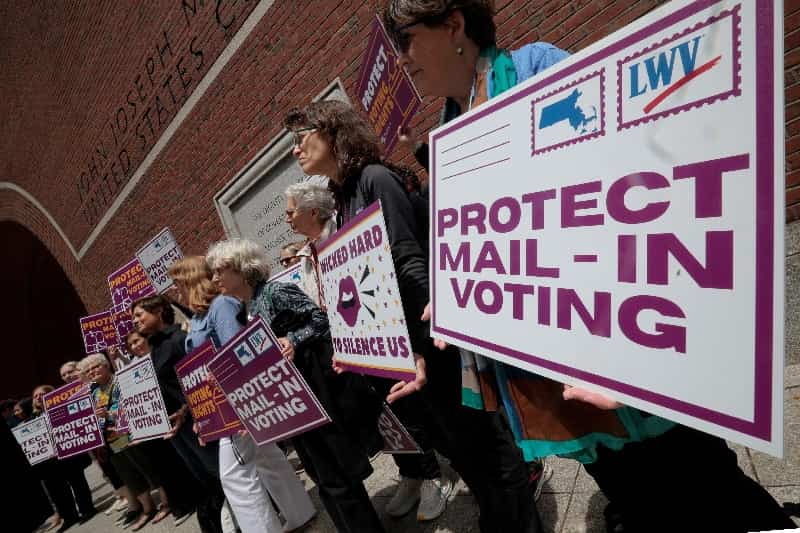
- The U.S. Supreme Court declined to allow the Postal Service to enforce a rule targeting mail-in ballots.
- The decision is a setback to President Donald Trump's effort to restrict voting by mail ahead of the midterm elections.
- Justices Samuel Alito and Justice Clarence Thomas dissented from the decision.
- Another federal judge, U.S. District Judge Carl Nichols, also ruled against the new rule.
The U.S. Supreme Court has rejected President Donald Trump's plan to restrict voting by mail before November's midterm elections, upholding a federal judge's order that had temporarily blocked the U.S. Postal Service (USPS) from moving forward with new requirements for postal ballots. Justice Brett Kavanaugh agreed with the ruling but indicated he might rule in favor of the Trump administration after the elections. Trump argued the rules would help combat electoral fraud and signed an executive order directing the USPS to deliver ballots only to voters on lists of citizens. Some states and critics argued the rules stepped on states' rights to run elections. Justice Kavanaugh wrote that there was "at least a fair prospect that the final rule falls within the Postal Service's statutory authority," but argued that "applying the rule in the 2026 elections would be arbitrary and capricious." Justices Samuel Alito and Clarence Thomas dissented, writing that the challenge to Trump's order was a "Hail Mary pass" unlikely to succeed ultimately, adding, "The Postal Service has broad authority to regulate the mail."