Key facts
- South Korea, the U.S., and Japan will conduct the trilateral military exercise Freedom Edge from Sept. 7-11.
- The drills will take place in international waters east and south of Jeju Island.
- The exercise is described as defensive and aims to counter North Korean nuclear and missile threats.
- Enhanced real-time data sharing and synchronized coordination will be featured.
- The drills follow a scaling back of U.S.-South Korea bilateral exercises and North Korea's missile launches.
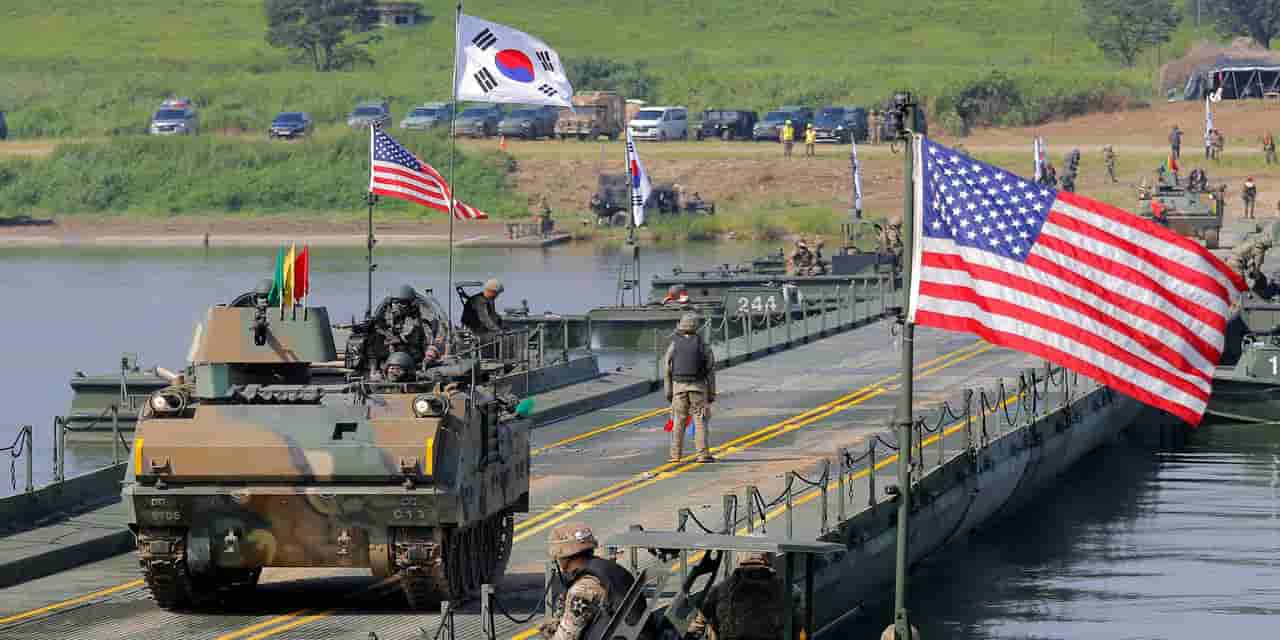
South Korea, the United States and Japan will conduct their trilateral military exercise, Freedom Edge, from September 7-11 in international waters east and south of Jeju Island. The drills are described as defensive in nature and are intended to counter North Korean nuclear and missile threats, as well as safeguard regional peace and stability.
This year's exercise will feature enhanced real-time data sharing and synchronized coordination among the three nations to defend against evolving regional threats. It will also incorporate multi-national maritime and aviation capabilities, and introduce enhanced air defense scenarios, medical evacuation training, and maritime interdiction operations.
The upcoming drills follow the scaling down of the bilateral Ulchi Freedom Shield exercise between Seoul and Washington, a move seen as a conciliatory gesture toward North Korea. North Korea has consistently denounced military drills involving South Korea and the U.S. as rehearsals for invasion, rejecting the allies' position that they are defensive.
President Donald Trump had instructed the Pentagon to adjust the Ulchi Freedom Shield drills, stating they could send an "inappropriate and hostile" message to Pyongyang. The Freedom Edge exercise, a key outcome of the trilateral Camp David summit in August 2023, marks a significant step in institutionalizing three-way security cooperation among the U.S. and its key Asian allies.