Key facts
- Nine senior security and oil officials were dismissed after the investigation into smuggling focused on Jurf al-Sakhar.
- Investigators found a punctured crude pipeline, concealed pumping equipment and a small concealed refinery, two security sources said.
- The 26-inch pipeline carries at least 200,000 barrels per day of crude, per an Iraqi Oil Ministry document.
- Kataib Hezbollah denied the smuggling and said the crackdown aims to force it to give up its weapons.
- In May, Washington sanctioned Iraq's deputy oil minister over alleged diversion of Iraqi oil for Iran and its proxy militias.
Iraqi Prime Minister Ali al-Zaidi has ordered additional forces around Jurf al-Sakhar in Babil province and told commanders to prepare for government troops to enter the town, escalating a confrontation with Kataib Hezbollah over an oil smuggling network, senior Iraqi security, army, police and oil officials told Reuters.
The officials said the group, branded a terrorist organization by the US, has drawn hundreds of millions of dollars from oil stolen from the state, with accomplices among some security and oil officials, dating back to 2021. Nine senior security and oil officials have been dismissed after a high-level government investigation. Al-Zaidi dismissed the Babil police chief, the province's intelligence and security commanders and the director of the state-run Oil Pipelines Company, and ordered all suspects referred to the courts.
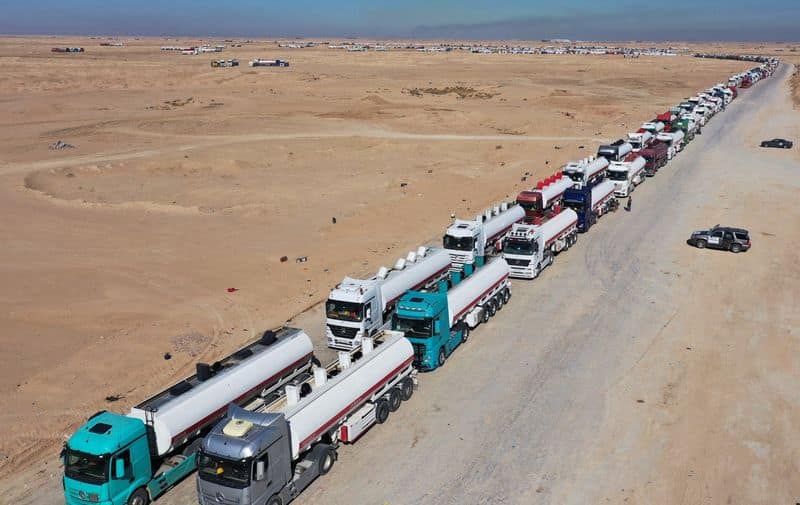
Two security sources who took part in an inspection mission on Saturday to Jurf al-Sakhar, about 50 km (30 miles) south of Baghdad, said investigators found a crude oil pipeline that had been punctured, with crude siphoned into makeshift storage pits. The 26-inch pipeline carries at least 200,000 barrels per day of crude, according to an Iraqi Oil Ministry document reviewed by Reuters. The sources said investigators found concealed pumping equipment inside hangars used to avoid aerial surveillance while loading tanker trucks, and a small oil refinery concealed in the area.
Two Iraqi oil officials with direct knowledge of the investigation said it was too early to quantify losses without knowing how long the tapping points had been operational, but estimated the value of crude potentially siphoned since 2021 could amount to hundreds of millions of dollars.