Key facts
- First vice president Mohammad Reza Aref said cargo unloading and clearance through non-southern borders had risen significantly.
- Aref said strategic goods reserves were strong and supplies plentiful, without giving figures.
- Aref said the government was seeking to prevent increases in basic goods prices for at least three months.
- Iran's October consumer prices were 88.7% higher than a year earlier, per the Statistical Centre of Iran.
- Annual average inflation in Iran accelerated to 76.8%, the Statistical Centre of Iran reported.
- Food and beverage prices in Iran rose 112.6% year-on-year, the Statistical Centre of Iran reported.
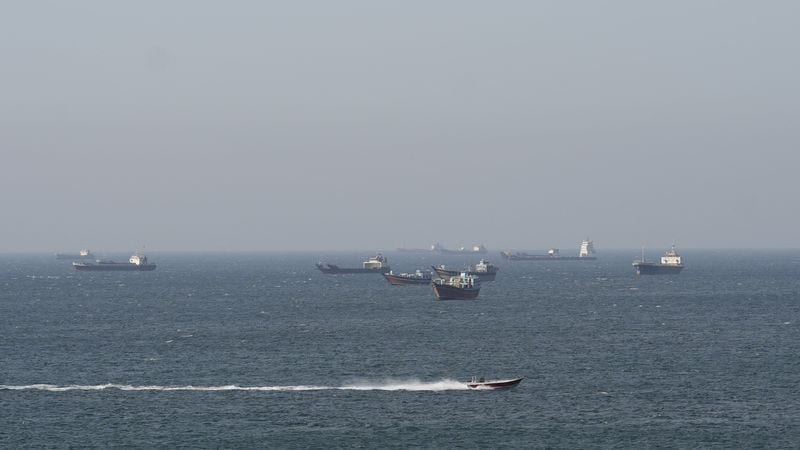
Iran's first vice president, Mohammad Reza Aref, said on November 25, 2026 that Tehran was not concerned about a US naval blockade, citing a significant increase in cargo through other borders. "The increase in the unloading and clearance of goods through non-southern borders sends the message that we are not concerned about the enemy's naval blockade," Aref said, according to Reuters.
Aref said strategic goods reserves were strong and supplies plentiful, without giving figures. He said the government was seeking to prevent increases in basic goods prices for at least three months.
The US reimposed its naval blockade on Iranian ports in July 2026 and earlier in November announced Task Force Iron Gate to restrict the movement of weapons and sanctioned materials across Iran's land borders and the Caspian Sea.
Iran is facing one of its worst inflation surges in decades, driven by the nearly nine-month-old Iran war, with a particularly sharp rise in food prices. Consumer prices in October were 88.7% higher than a year earlier, while annual average inflation accelerated to 76.8%, according to the Statistical Centre of Iran. Food and beverage prices rose 112.6% year-on-year.
In a separate meeting, President Masoud Pezeshkian said the government was seeking to direct more budget resources and energy savings toward improving living standards in poorer communities.