Key facts
- Cancer rates have emerged as a key issue in Iowa's competitive midterm races.
- Five of six candidates appearing at the Iowa State Fair discussed the state's high cancer rates.
- Iowa has the second-highest cancer rate in the U.S., behind Kentucky.
- The state's cancer rate has been rising since 2014.
- Concerns about water pollution from nitrates and chemicals are driving voter worries.
- Candidates are pledging actions ranging from increased cancer screening to improved water quality monitoring.
Cancer rates have become a prominent issue in Iowa's midterm elections, with candidates from both major parties highlighting the problem and proposing solutions. Republican Congressman Zach Nunn and his Democratic challenger, State Senator Sarah Trone Garriott, both addressed the issue at the Iowa State Fair, reflecting its bipartisan appeal.
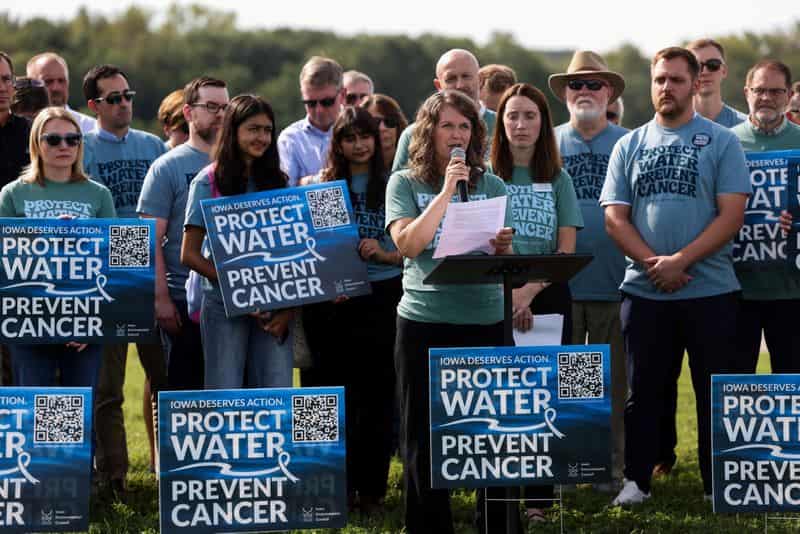
Candidates and advocacy groups point to Iowa's rising cancer rate, which has been the second highest in the U.S. since 2023, as a major concern for voters, alongside cost of living. While the causes of cancer are complex, many Iowans are worried about the potential link between worsening water pollution from nitrates and other chemicals and the spike in cases. The state's farmland, largely dedicated to fertilizer-heavy crops, contributes to high nitrate levels in waterways, which regularly exceed EPA standards.
Democrats have used the cancer issue to criticize Republican support for policies that could reduce healthcare access, such as changes to Medicaid under President Trump's tax and spending law. Republicans, like Representative Ashley Hinson, have emphasized their support for legislation aimed at improving cancer screening access and conservation efforts for water quality.
Scientists have not reached a consensus on the direct link between nitrate-contaminated drinking water and cancer, with some studies showing associations and others not. An interim report from a state-commissioned study found Iowa has similar demographic and behavioral risk factors to neighboring states but also higher rates of binge drinking and obesity. The Iowa Farmers Union advocates for expanding farmers' options to reduce runoff and improve water quality, noting that the state's voluntary Nutrient Reduction Strategy has not been sufficient.