Key facts
- Nepal needs about $5 billion to rebuild flood-damaged infrastructure, nearly a tenth of its economy.
- Shisir Khanal said in a statement the Indian package is the largest financial assistance Nepal has ever received.
- Indian aid disbursement to Nepal was over fourfold China's in the 2024-25 fiscal year ended mid-July, per Nepali government data.
- China provided cash and five batches of relief supplies after the August floods, spokesperson Guo Jiakun said.
- Chinese official institutions committed nearly $2.2 trillion in overseas loans and grants from 2000 to 2023, per AidData.
- Indian grants and concessional credit totaled about $46 billion over the same period, per AidData.
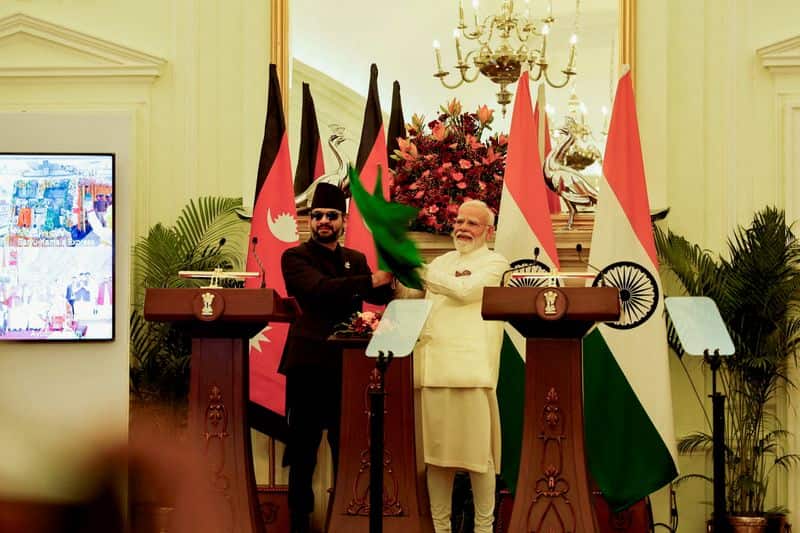
India announced a $1.62 billion package of grants and credit for Nepal's flood reconstruction on November 23, as Prime Minister Balendra Shah made his first bilateral visit to New Delhi since taking power in March. Nepal's Minister for Foreign Affairs Shisir Khanal said in a statement that the package is the largest financial assistance Nepal has ever received. Nepal needs about $5 billion to rebuild damaged infrastructure, nearly a tenth of its economy.
India was the first foreign government to respond to the floods in August, sending relief supplies and helping restore communications. Indian aid disbursement to Nepal was over fourfold higher than China's in the 2024-25 fiscal year that ended in mid-July, according to Nepali government data. Shah described India as a "dependable and trusted neighbour", invited Indian investment and signed agreements to deepen cooperation in education, satellite communications and sustainable urban development.
China provided cash and five batches of relief supplies after the floods, sent more than 20 rescue and forensic experts and shared weather, water and geological data with Nepal, Chinese Foreign Ministry spokesperson Guo Jiakun said on Monday in a question-and-answer transcript. Chinese trade with Nepal has more than tripled over the past decade, driven overwhelmingly by Chinese exports, and the Confucius Institute hosted by Kathmandu University has trained about 50,000 high school level learners since 2007.
Ashok Mehta, an expert on India-Nepal relations, said the package could help bolster Shah at home while giving New Delhi an opportunity to repair ties, as it did with Sri Lanka during its 2022 economic crisis. "This resembles the Sri Lanka model. India-Sri Lanka ties are now stronger than ever, whereas before Sri Lanka's turmoil, relations were at a low point," Mehta said. Atlantic Council analyst Michael Kugelman said smaller South Asian states "continue to rely heavily on Indian largesse, especially development aid."