Key facts
- The ICJ ruled on November 19, 2026 that Myanmar's army committed genocide against the Rohingya.
- Analysts said the ruling may end any hopes of a political comeback for Aung San Suu Kyi.
- Myanmar's Ministry of Foreign Affairs said nine of 15 judges backed the genocide finding and six disagreed.
- The military government said Rohingya verified as Myanmar residents who wish to return would be allowed to do so when conditions permitted.
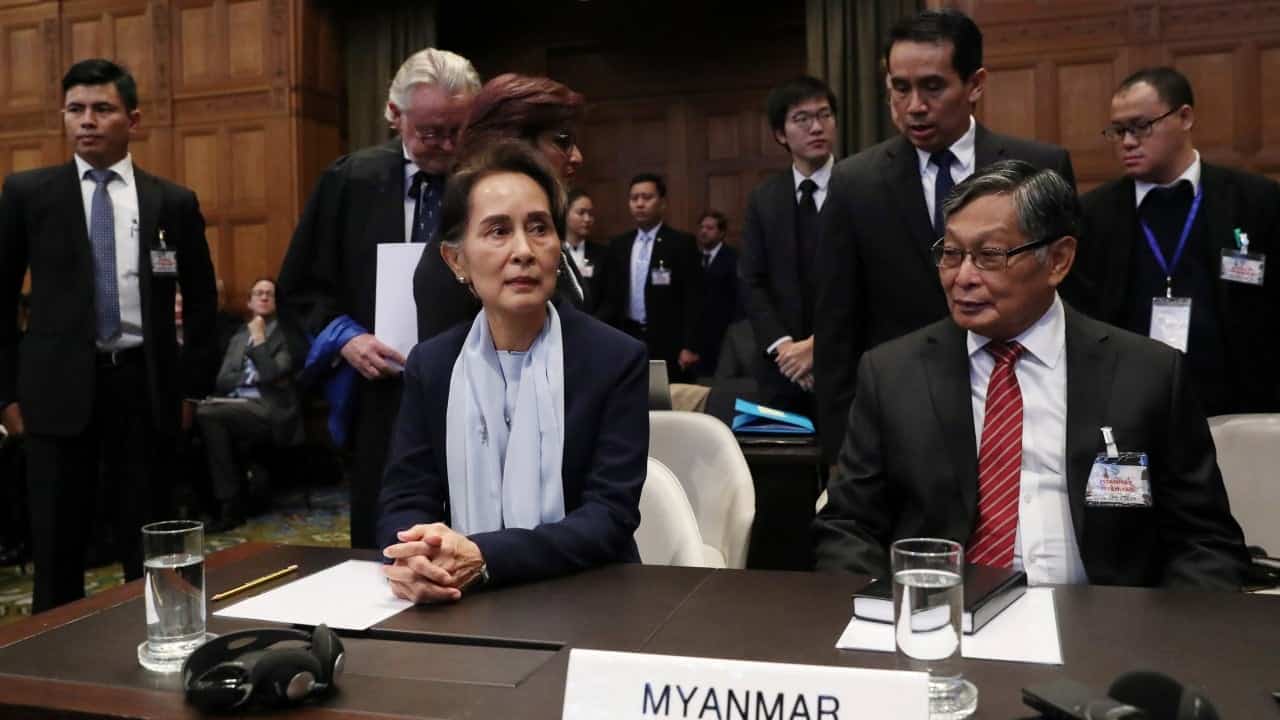
The International Court of Justice ruled on November 19, 2026 that Myanmar's army committed genocide against the Rohingya, the first time the court has held a state responsible for genocide. Aung San Suu Kyi had defended Myanmar's army at the same court in 2019.
Analysts said the ruling would change little inside Myanmar, where roughly 90 percent of the population is Buddhist and hostility toward the mostly Muslim Rohingya is deep rooted, according to the primary report. They said it may end any hopes of a political comeback for Suu Kyi.
Myanmar's military government, led by Min Aung Hlaing, held a press conference in Naypyidaw a day after the ruling and described the ICJ decision as unfair, according to MoeMaKa. The following day the Ministry of Foreign Affairs issued a three-page statement saying the decision was not unanimous, with nine of the 15 judges voting in favor of finding that genocide had been committed and six disagreeing. The statement also challenged the sources of evidence, saying some lacked established expertise or clearly defined authority and that certain accounts rested on secondhand information.
On displaced people sheltering in Bangladesh, the statement said those verified as having genuinely resided in Myanmar and wishing to return voluntarily would be allowed to return through verification and repatriation procedures when conditions permitted. The government said it would take time to study the ruling.