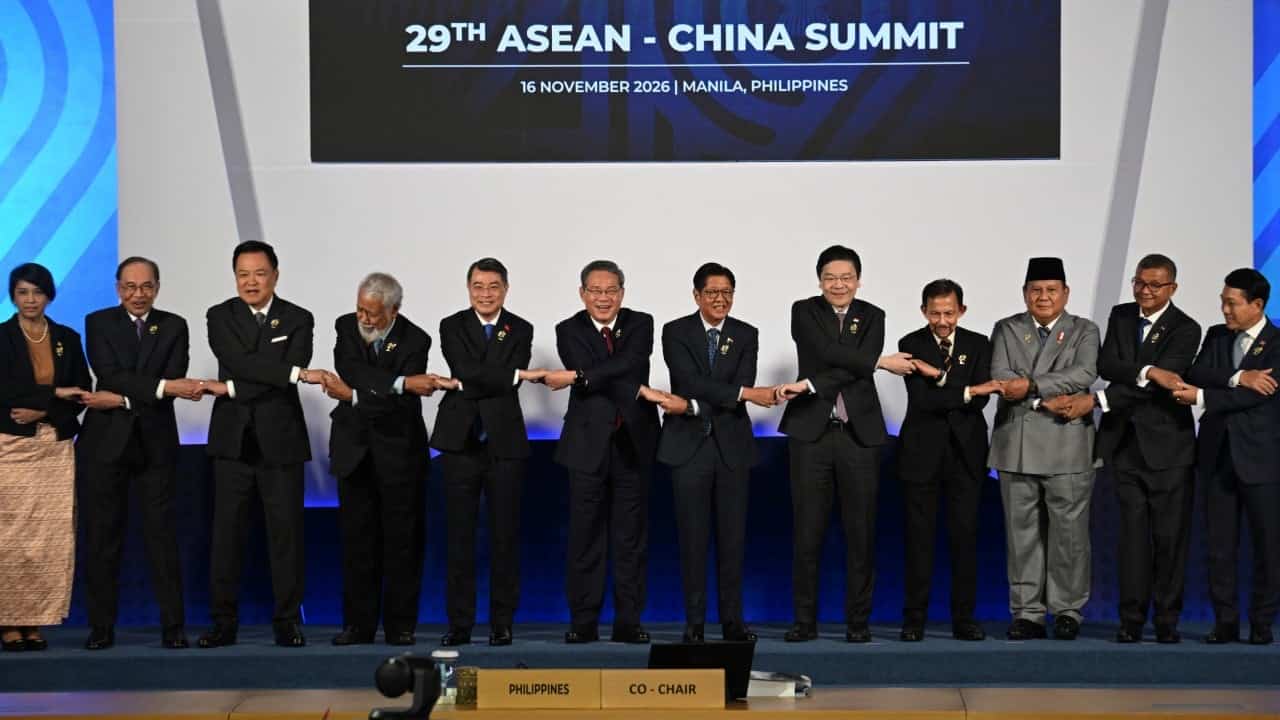
Key facts
- Philippine Foreign Secretary Theresa Lazaro said about 80% of the code of conduct text had been negotiated.
- Disputes remain over whether the code is legally binding, its geographic scope and the definition of an incident.
- Political scientist Andreas Ufen said China has no real interest in a legally binding agreement.
- Felix Heiduk of SWP said there is no consensus on whether the code should be legally binding.
- Sharon Seah of Singapore's ISEAS said China's growing influence does not automatically translate into trust in Southeast Asia.
China and the Association of Southeast Asian Nations failed to conclude a code of conduct for the South China Sea at a summit in Manila in mid-November 2026, abandoning a goal the Philippines had set for its ASEAN presidency. Philippine Foreign Secretary Theresa Lazaro said about 80% of the text had been negotiated but key areas of dispute remained unresolved, according to DW.
The disagreements center on whether the code should be legally binding, its geographic scope and the definition of an incident. Felix Heiduk, head of research division Asia at the German Institute for International and Security Affairs, told DW there is no consensus on binding force. Andreas Ufen, Southeast Asia expert at the German Institute of Global and Area Studies, said China has no real interest in a legally binding agreement.
The South China Sea is a shipping route, fishing ground and possible holder of oil and gas reserves, and China claims a large portion of it under its Nine-Dash Line, overlapping claims by the Philippines, Vietnam, Malaysia and Brunei. Hanoi wants the Paracel Islands, known in China as Xisha and in Vietnam as Hoang-Sa, included in the code's scope, which China rejects, DW reported.
Separately, China-ASEAN Week 2026 opened in Chongqing on November 23, 2026, the 35th anniversary of dialogue relations and the fifth of their comprehensive strategic partnership. At a forum during the event, Sharon Seah, head of the ASEAN Studies Centre at Singapore's ISEAS-Yusof Ishak Institute, said China has become Southeast Asia's most influential economic power but that its growing influence does not automatically translate into trust, according to Lianhe Zaobao. Xu Liping of the Chinese Academy of Social Sciences said turning influence into trust takes time and urged faster talks on the code.