Key facts
- Grossi said the planned deal's inspection terms are very satisfactory even without the Additional Protocol.
- The US-Saudi text allows snap inspections but only at declared sites, Reuters reported.
- Saudi Arabia has not signed the Additional Protocol, which permits inspections at undeclared sites.
- The 123 agreement has yet to be approved by US lawmakers and faces criticism from nonproliferation experts.
- Crown Prince Mohammed bin Salman has said Saudi Arabia would develop nuclear weapons if Iran does.
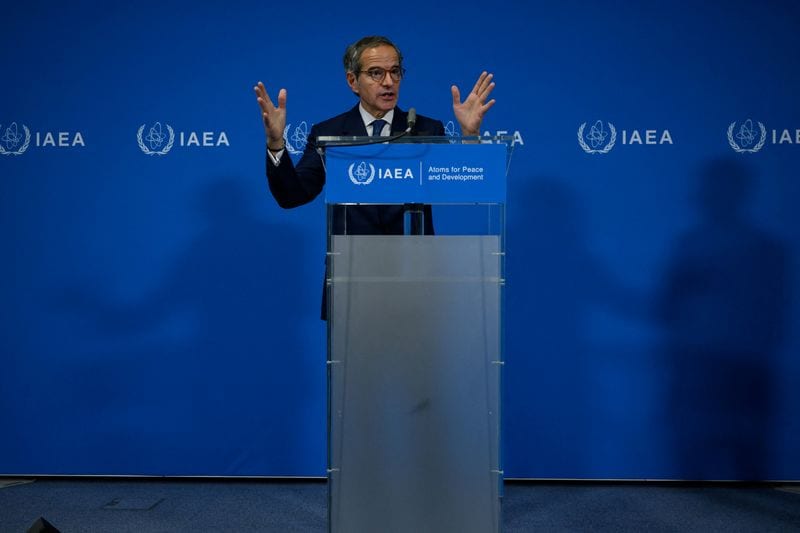
IAEA Director General Rafael Grossi said on November 18 that the inspection provisions in a planned US-Saudi civil nuclear cooperation agreement are "very satisfactory," even though they do not include the Additional Protocol, the UN watchdog's chief told a press conference during a quarterly IAEA Board of Governors meeting in Vienna.
The proposed deal, known as a 123 agreement, has yet to be approved by US lawmakers and has been criticized by nonproliferation experts for not barring Riyadh from enriching uranium or reprocessing spent reactor fuel, two potential pathways to a nuclear weapon. Saudi Arabia has a nascent nuclear program and recently signed a Comprehensive Safeguards Agreement with the IAEA, which sets core obligations such as allowing inspections of declared nuclear facilities.
Saudi Arabia has not signed the Additional Protocol, which would grant the IAEA more intrusive powers, including snap inspections at undeclared sites. A US-Saudi text on nuclear safeguards sent to the IAEA for board approval and seen by Reuters allows snap inspections but only at declared sites. The text says enrichment and reprocessing activities will only occur "on a location on a covered site."
Saudi Arabia will grant the IAEA "short notice access" to any place on a covered site, and the IAEA will give Riyadh advance notice "of at least 2 hours when the Agency is already on a covered site, or otherwise advance notice of at least 24 hours," according to the text.
Grossi said the Additional Protocol provides more access and is considered by many as the standard. "We think it's good that countries have Additional Protocols and perhaps this will be the case in the future," he said. Grossi is running to be UN secretary-general and would need the support or acquiescence of the five permanent members of the UN Security Council, including the United States.