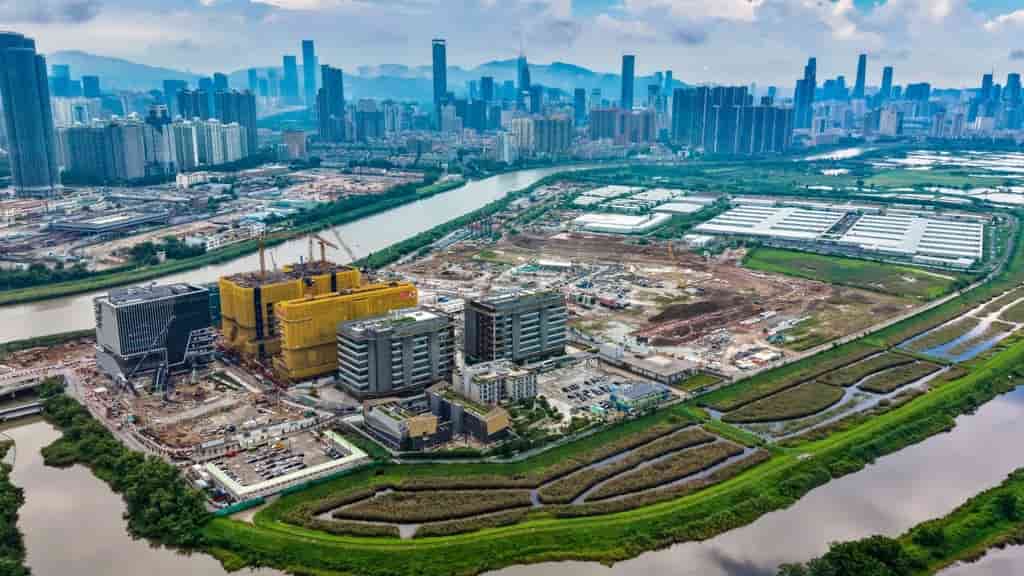
Key facts
- Lawmakers passed the Northern Metropolis Development Bill at third reading unanimously on November 12, 2026.
- The bill is Hong Kong's first dedicated legislation for a single large district, lawmakers said during debate.
- Secretary for Development Bernadette Linn said the bill passed about a month and a half ahead of the government's end-2026 target.
- Linn said the government will aim to table subsidiary legislation in January and have facilitation measures take effect in the first quarter of 2027.
- Bills Committee chair Leung Mei-fun said the law covers land planning and land administration procedures but not tax incentives or the low-altitude economy.
Hong Kong's Legislative Council passed the Northern Metropolis Development Bill at third reading on November 12, 2026, unanimously, after the second reading debate resumed on November 11 and ran for about eight hours. The government says the dedicated law will help it meet targets in the city's first five-year plan for the megaproject near the border with mainland China.
Secretary for Development Bernadette Linn told lawmakers before the vote that the government had aimed to pass the bill by the end of 2026 and did so about a month and a half early, which she said showed good executive-legislative interaction. Linn said the government will seek to table subsidiary legislation in January and have the facilitation measures take effect in the first quarter of 2027. She said not all existing laws applying to the Northern Metropolis need to be folded into the dedicated ordinance, and that citywide rules on governance, transport and labor will continue to be handled under the relevant ordinances.
Leung Mei-fun, who chaired the Bills Committee, said the ordinance focuses on land planning and land administration procedures and does not cover tax incentives or the low-altitude economy. She said the main law must be read alongside 17 existing Hong Kong ordinances, including those on town planning, land, environmental protection and noise. RTHK reported that the Bills Committee finished its scrutiny in 12 meetings lasting nearly 30 hours.
During the debate, lawmaker Andrew Lam of the Election Committee said society had a strong consensus on accelerating the project in speed, quality and efficiency. The DAB's Yiu Ming suggested the government publish quantitative indicators and report to the Legislative Council every six months instead of once a year. Tam Chun-kwok said the hub would carry functions including innovation and technology industries, higher education and modern logistics.