Key facts
- Middle Eastern oil producers are using ship-to-ship transfers and pipelines to bypass the Strait of Hormuz.
- The East-West pipeline, damaged by Houthi strikes, has restarted, impacting oil prices.
- Ship-to-ship transfers in the Gulf of Oman add to the end price of crude.
- Freight costs for moving oil from the Middle East to China have risen to $30 per barrel.
- UAE oil exports are on track to exceed last year's levels despite Hormuz risks.
Middle Eastern oil producers are increasingly relying on alternative export routes, including ship-to-ship transfers and pipelines, to circumvent the Strait of Hormuz amidst heightened security risks. The region's oil flow has been significantly impacted, with daily volumes through Hormuz dropping substantially compared to pre-conflict levels.
Saudi Arabia's East-West pipeline, which previously carried about 4 million barrels daily to the strait before being damaged by Houthi drone attacks, has restarted. This restart has helped to ease some pressure on oil prices, highlighting the market's sensitivity to energy infrastructure status in the Middle East. However, the pipeline's previous shutdown forced Saudi Aramco to reroute crude back to the Persian Gulf, increasing reliance on Hormuz and ship-to-ship transfers.
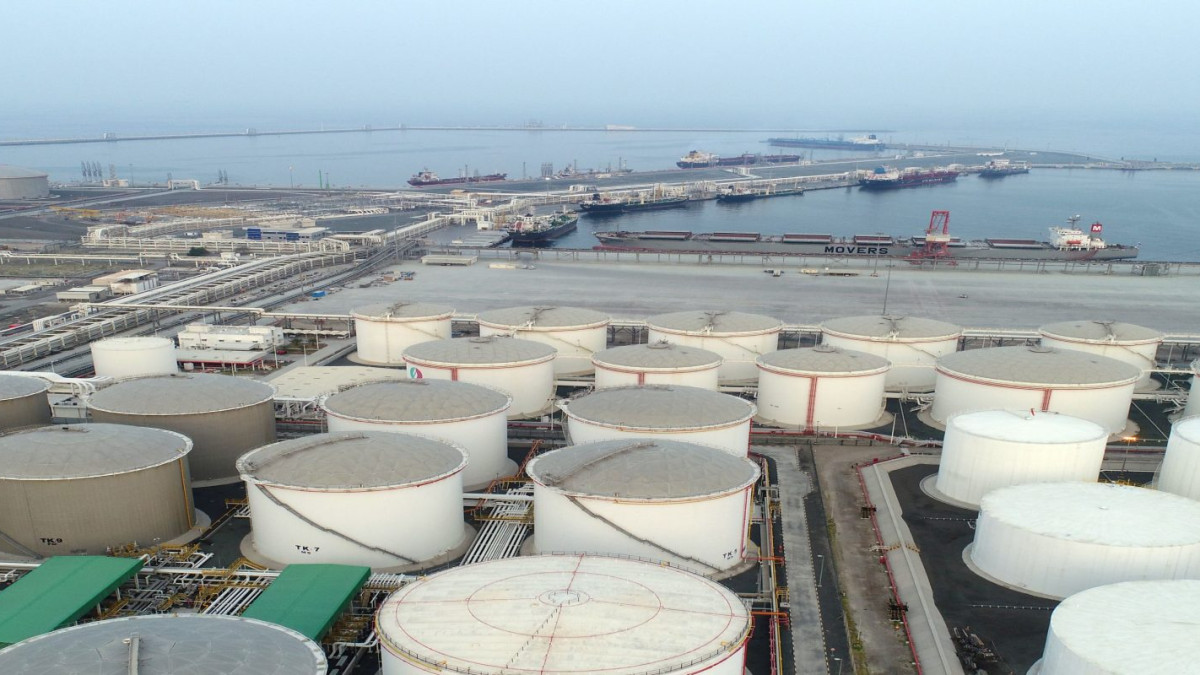
Ship-to-ship transfers, a practice previously used by sanctioned nations, have become a regular occurrence in the Gulf of Oman, outside the Strait of Hormuz. This method involves loading crude onto smaller vessels that then transfer the cargo to larger tankers. While a viable workaround, it adds to the final cost of oil, prompting Gulf exporters, notably Iraq, to discount their crude.
According to Kpler data cited by Reuters, oil flows via the Strait of Hormuz have averaged approximately 6.5 million barrels daily this month, a significant decrease from the roughly 20 million barrels daily that flowed out of the Persian Gulf before late February. Despite this reduction, traders appear to have adapted to the new export rates, with news of increased production or exports leading to price drops.
The increased freight costs associated with these rerouted shipments are substantial. Freight rates for a very large crude carrier on the Middle East to China route have surged to $30 per barrel, an all-time high, driven by shipping risk and a shortage of supertankers. This has motivated the UAE to boost its oil exports, with loadings estimated at 3.6 million barrels daily this month, potentially exceeding last year's levels.
Oil producers are adapting to a new reality of lower export rates, which are expected to persist. This adaptation, coupled with the market's relative calm despite geopolitical tensions, suggests a degree of resilience in global oil supply, even with reduced volumes from the Persian Gulf.