Key facts
- The largest budget line, titled "Ukraine support," accounts for 9 billion euros ($10 billion) of the 11.6 billion euro total.
- Germany earmarked 649 million euros ($710 million) for the European Peace Facility, an EU fund for procuring weapons for Ukraine.
- The budget includes 25 million euros ($27 million) for medical treatment of Ukrainian soldiers.
- EU Economy Commissioner Valdis Dombrovskis said the IMF cannot continue support unless Kyiv has a sound budget.
- Germany is the third-largest donor to Ukraine since 2022, behind the U.S. and the EU, per Kiel Institute data.
- Chancellor Friedrich Merz is pushing for the EU to agree longer-term financial support for Ukraine by the end of the year.
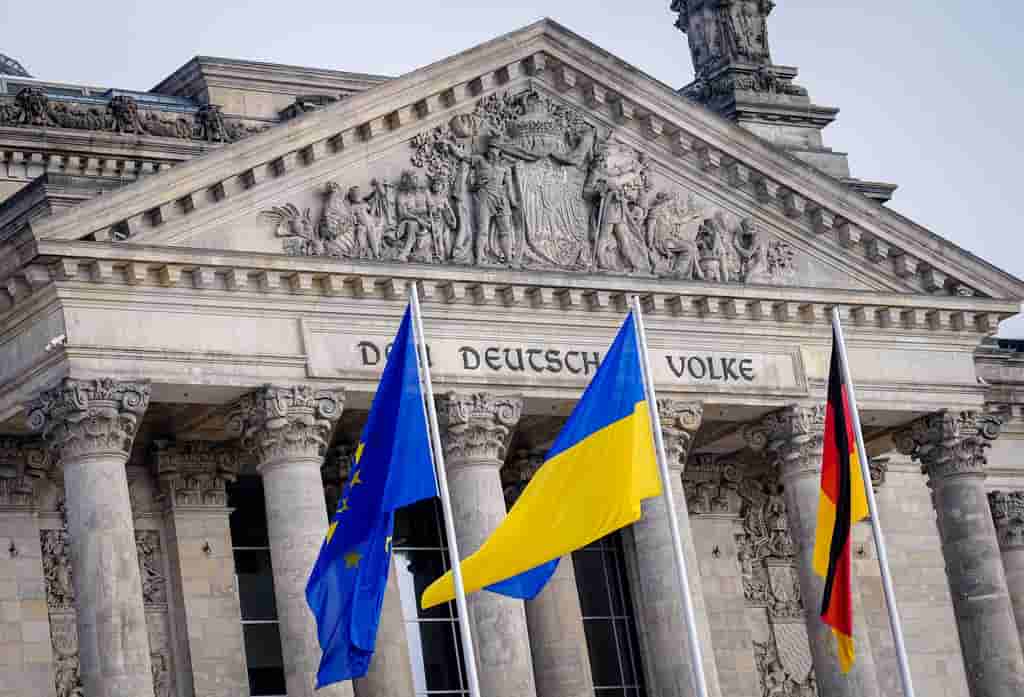
The German Parliament approved 11.6 billion euros ($12.7 billion) in support for Ukraine as part of the country's 2027 budget, which was voted through on November 27, 2026. The final draft of the budget partially breaks down the total, with the largest share, titled simply "Ukraine support," accounting for 9 billion euros ($10 billion).
Smaller amounts are listed for capacity building within Ukraine's government, specifically in the defense and foreign ministries, plus 25 million euros ($27 million) earmarked for the medical treatment of Ukrainian soldiers. Germany has also earmarked 649 million euros ($710 million) for the European Peace Facility, an EU pot of money funded directly by member-state contributions that can be used to procure weapons for Ukraine. A week earlier, EU countries agreed to provide 1 billion euros in military support for Ukraine by drawing from the EPF.
President Volodymyr Zelensky identified a 70 billion euro ($77 billion) hole in Ukraine's finances for 2027, and Kyiv is counting on partners to cover that gap. Failure to do so would mean the International Monetary Fund cannot continue its support for Ukraine, which requires Kyiv to have a sound budget, the EU's Economy Commissioner Valdis Dombrovskis told the Kyiv Independent. Negotiations are ongoing for the EU to agree a 45 billion euro ($49 billion) loan by the end of 2027, but that still leaves 25 billion euros ($27 billion) for Ukraine's allies to find and provide. Germany's new budget will bridge almost half of that shortfall on its own.
Germany is the third-largest donor to Ukraine since Russia initiated its full-scale invasion in 2022, behind only the U.S. and the EU, according to data compiled by the Kiel Institute. Chancellor Friedrich Merz is one of the loudest voices pushing for the EU to agree on longer-term financial support for Ukraine by the end of the year, backed by all 27 member states with no opt-outs.