Key facts
- Witt said the Senate's failure to pass the Clarity Act was "a failure of American leadership."
- Witt said the bill ran out of time before the midterms and that the ethics debate consumed the discussion.
- Witt said Trump had agreed to two ethics provisions, including one barring federal officials from issuing digital assets.
- Witt said he expects US market structure to be written more in the Federal Register than on Capitol Hill.
- Witt said SEC Chair Paul Atkins and CFTC Chair Michael Selig are committed to moving markets on chain.
- Witt said he is "not bearish on the industry overall" despite Democrats winning both chambers.
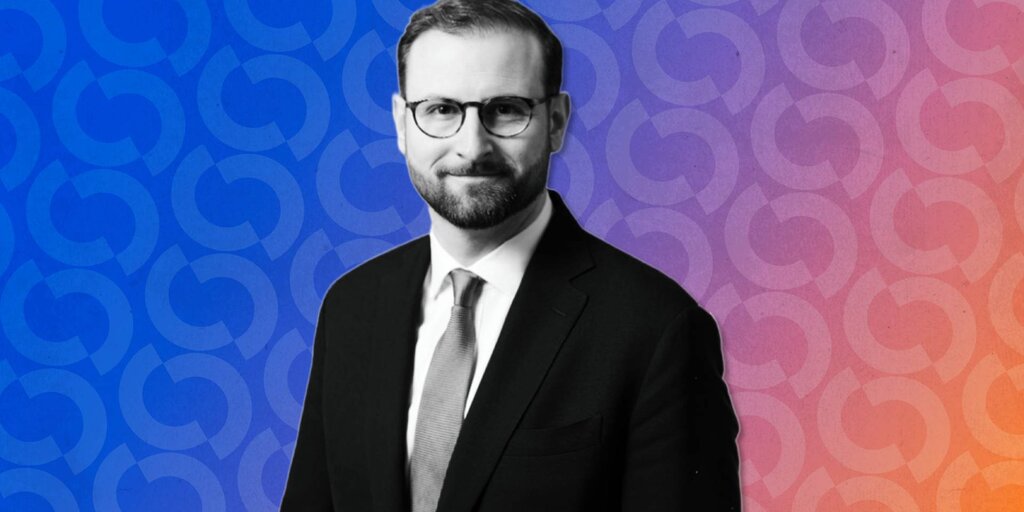
Patrick Witt, President Donald Trump's former top crypto adviser, said the Senate's failure to pass the Clarity Act was "a failure of American leadership," speaking in an on-stage interview at Solana's Breakpoint conference in London, Decrypt reported on November 16, 2026.
Witt served as executive director of the President's Council of Advisers for Digital Assets until October 2026 and led the White House push for the bill, which would have set out a framework for regulating crypto markets. It failed a key procedural vote in the Senate in September 2026. "We ultimately lost against the clock," Witt said, adding that the policy was good and that nearly all policy differences had been resolved.
Witt said the "political issue of ethics really consumed everything else" as the midterm elections approached. Democrats had raised concerns over the Trump family's crypto ventures. Witt acknowledged that Trump's involvement in crypto was "arguably the issue," but said the president had agreed to two ethics provisions. The second would have barred federal officials, including the president, from issuing or sponsoring digital assets, forced the president to divest certain digital assets or put them in a blind trust, and let state attorneys general enforce violations. "There's no precedent for those kinds of things in American law," he said.
Witt compared the bill with the GENIUS stablecoin bill, which also lost an initial procedural vote in 2025 but recovered because it came early in Trump's term. With Clarity, he said, "we knew that we were going to get one shot at it, and unfortunately we just came up short."