Key facts
- Johnson told Solana's Breakpoint conference in London he still cannot see who is in charge of Bitcoin.
- Johnson was asked about his March Daily Mail column calling Bitcoin a "giant Ponzi scheme."
- Michael Saylor posted on March 13, 2026 that Bitcoin has no issuer, promoter or guaranteed return.
- Johnson said his doubts about crypto do not extend to blockchain, which he said London should lead.
- Lord Ross Kempsell said the UK is close to creating a lot of crypto regulation.
- The FCA finalized its crypto rulebook in June 2026 ahead of a mandatory regime due in late 2027.
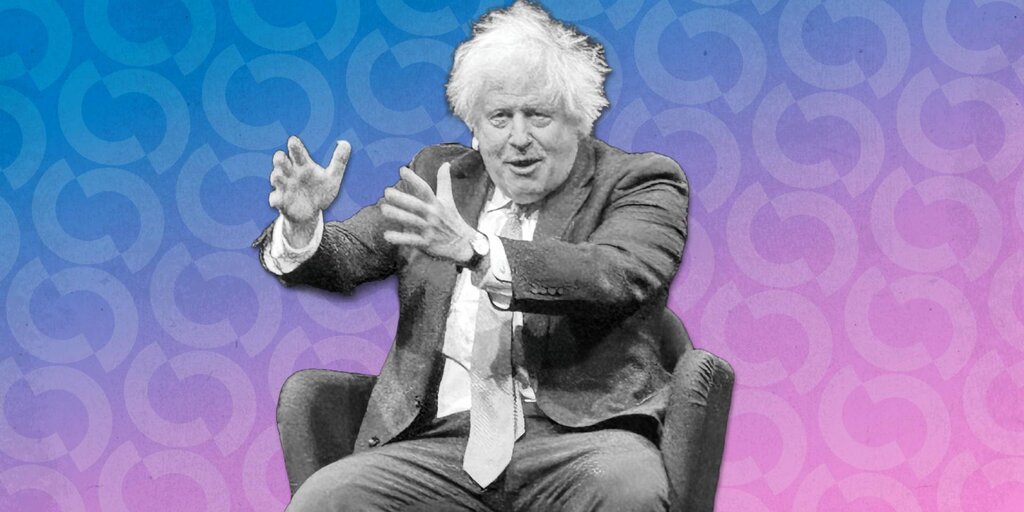
Former UK Prime Minister Boris Johnson told Solana's Breakpoint conference in London on November 16, 2026 that he remains skeptical of Bitcoin, saying he could not see who is in charge of the largest cryptocurrency. He joked that the only authority he could name was "Yakimoto Nakasori," deliberately mangling the name of Bitcoin's pseudonymous creator, Satoshi Nakamoto.
Johnson said he would not know whom to approach if money were stolen from a cryptocurrency. He was asked about a column he wrote in March for the Daily Mail in which he called Bitcoin a "giant Ponzi scheme," a claim that drew pushback from Strategy executive chairman Michael Saylor, who posted on March 13, 2026 that Bitcoin has no issuer, promoter or guaranteed return.
On stage, Johnson said he is "not a great crypto buff" and holds little, if any, crypto himself. He said his view was shaped by a man in his Oxfordshire village who had lost thousands and kept paying more in the hope of recovering his losses. He also questioned the name itself, noting that "crypto" comes from the Greek for "hidden."
Johnson drew a line between Bitcoin and the technology behind it, saying his doubts about crypto did not mean he wanted to slow blockchain development, and that London should be at the forefront of tokenizing assets. Moderator Gareth Jenkinson, head of multimedia at The Block, pushed back when Johnson suggested Bitcoin was valuable to drug dealers, arguing blockchains are far more traceable than cash. Asked who guarantees Bitcoin, Jenkinson replied: "No one has to guarantee it. That's the beauty of the protocol."