Key facts
- LSEG data show a net $49.77 billion October outflow from seven Asian equity markets, the largest since June.
- Taiwan lost a net $30.68 billion in October, the most since at least January 2008, per LSEG.
- South Korea recorded a net $14.59 billion October outflow, per LSEG data.
- The MSCI Asia Pacific ex-Japan index fell 6.91% in October, versus a 1.69% decline in the MSCI All Country World Index.
- Wael Makarem of Exness said the outflows reflect a retreat from AI-linked positions on doubts about AI infrastructure spending and profitability.
- HSBC's Herald van der Linde said the bank upgraded India to overweight on resilient earnings and more reasonable valuations.
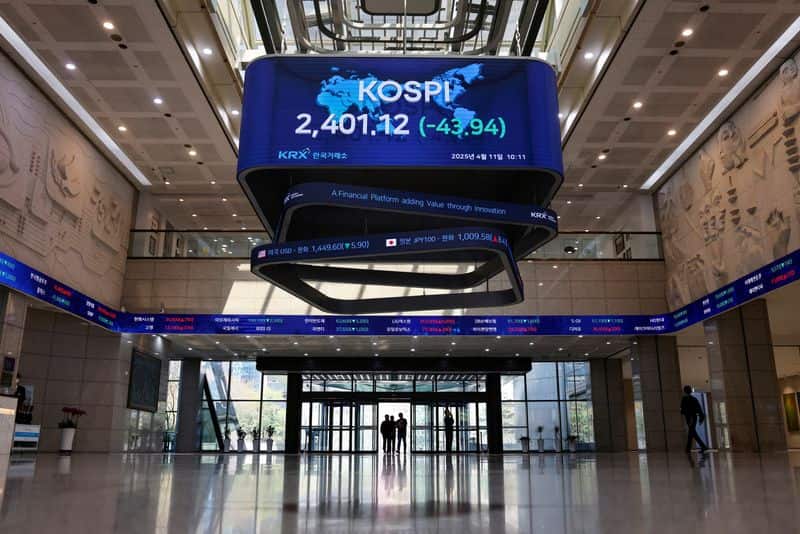
Foreign investors pulled a net $49.77 billion out of equities in South Korea, Taiwan, India, Indonesia, Thailand, Vietnam and the Philippines in October, the largest monthly net outflow since June, according to LSEG data reported by Reuters on November 11.
Taiwan accounted for the bulk of the selling, with a net $30.68 billion withdrawn, the most since at least January 2008, LSEG data show. South Korea recorded a net $14.59 billion outflow. India posted a second consecutive monthly foreign outflow of $3.6 billion, while Indonesia and Thailand saw outflows of $938 million and $199 million, respectively. Vietnam and the Philippines recorded inflows of $122 million and $109 million.
The selling continued into November. Foreigners offloaded a further $22.6 billion from the seven markets through the report date, including $19.76 billion from Taiwan and $8.32 billion from South Korea. India bucked the trend, drawing a net $5.68 billion of foreign money in November.
Wael Makarem, lead financial market strategist at brokerage firm Exness, said the outflows reflect a retreat from AI-linked positions amid increased doubts about AI infrastructure spending and profitability. He said tighter environmental reviews and regulations were seen ahead of the US midterm elections as hindering data center construction and chip demand. Democrats' victories in last week's midterm elections, including in states where opposition to new data centers has grown, kept those concerns alive, Reuters reported.
Scarlett Liu, Asia-Pacific equity derivatives strategist at BNP Paribas, said international investors may have been drawn to the relative resilience of the S&P 500 compared with the MSCI Asia ex-Japan index during the month. She also said some investors may have increased allocations to US Treasuries as the 10-year Treasury yield rose to 5.3% in early October.
The MSCI Asia Pacific ex-Japan index fell 6.91% in October, compared with a 1.69% decline in the MSCI All Country World Index, Reuters reported, citing analysts who said money may be moving from Asia to developed markets.
Herald van der Linde, head of equity strategy for Asia Pacific at HSBC, said in a note on Monday that the bank upgraded India to overweight, citing resilient earnings and more reasonable valuations.