Key facts
- The Nasdaq fell 5.5% on Thursday, November 5, 2026, per Reuters.
- $3 trillion was wiped off S&P 500 companies, Reuters reported.
- The Philadelphia Semiconductor Index fell 12.2%, per Reuters.
- The Nasdaq sat 12% below its record high close a month earlier, per Reuters.
- Seoul trading was halted after the open on Friday when stocks plunged 8%, per Reuters.
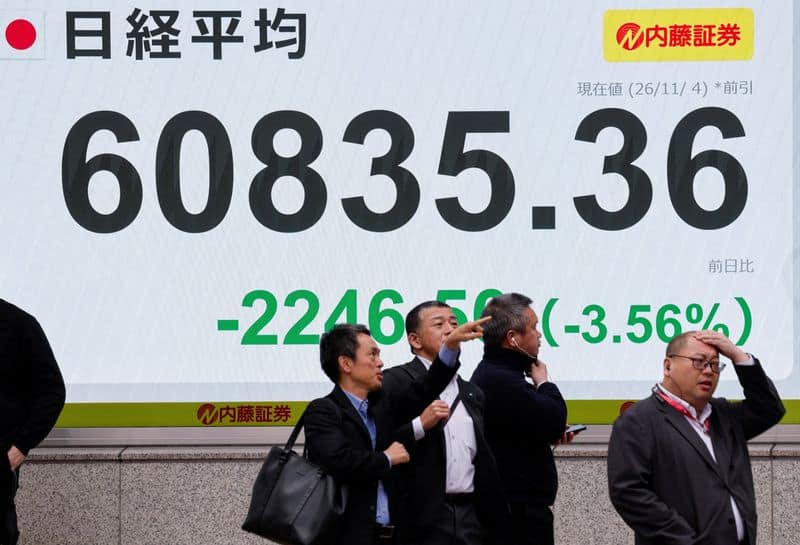
- The Nikkei slumped more than 6% in Tokyo on Friday, per Reuters.
The Nasdaq fell 5.5% on Thursday, November 5, 2026, in its biggest drop since the tariff-triggered Liberation Day rout in 2025, Reuters reported. $3 trillion was wiped off S&P 500 companies. Investors were worried that Democrats, who swept the midterm elections, would apply the brakes to the AI boom that has been propelling US growth and computer component supply chain stocks worldwide, Reuters reported.
The Philadelphia Semiconductor Index fell 12.2%, and the Nasdaq sat 12% below its record high close a month earlier, per Reuters. In Asia on Friday, November 6, 2026, Seoul trading was halted after the open when South Korean stocks plunged 8%, and the Nikkei slumped more than 6% in Tokyo, Reuters reported.
Michael McCarthy, chief executive for Australia and New Zealand at online brokerage Moomoo, said: "It's pretty clear there's been a real shift in sentiment." He said market turning points are often accompanied by strong disagreement, and that "last night's emphatic sell-down suggests that is the direction that we're now headed in."
Mark Fuchs, chief investment officer at Fuchs Capital Partners in Singapore, said Democrats had come in with a more circumspect view on data centers and AI, implying a spending reduction through higher bars on data centers. He said Asia tech was getting further repriced downward on expectations that demand would be more constrained, and that markets were pricing cost of capital higher since the Fed started raising rates in September. Fuchs said the sector had been repricing downward for well over a month, and that his firm prefers non-AI related sectors and countries with higher nominal GDP and durable domestic growth stories like domestic India, while hedging currency and index.