Key facts
- Equinor said the attack is not a virus and cannot spread, and that it has found no data theft.
- Equinor said it is too early to say how long restoring its systems will take.
- Equinor said it has not named the source of the attack and is working with Norway's national security authorities.
- Norway's National Security Authority raised its cyber threat level to the second-highest tier in October 2026.
- Check Point counted nearly 70% more attacks on U.S. utilities in the first eight months of 2024 than a year earlier.
- Dragos tracked 119 ransomware groups targeting industrial companies in 2025, up from 80 the year before.
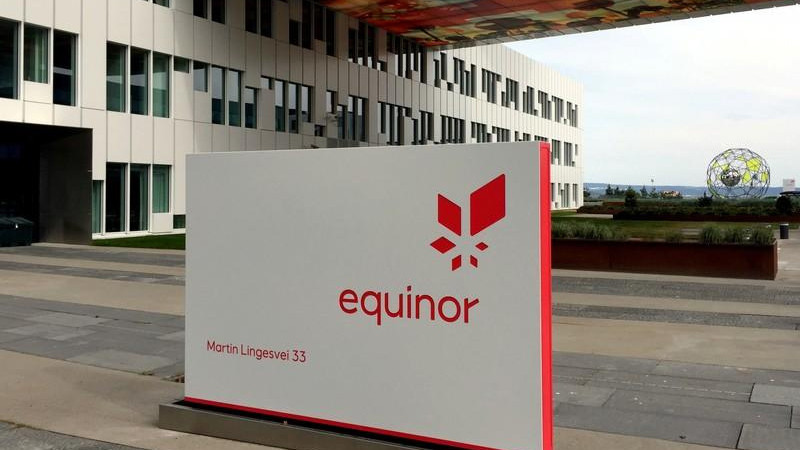
Equinor, the largest supplier of pipeline gas to Europe, said on Wednesday, November 18, 2026 that it is fighting a cyberattack on its IT systems. The company said it now knows how the attack was carried out and which systems were hit, that the attack is not a virus and cannot spread, and that it has found no data theft and no effect on oil and gas output. It said it is too early to say how long restoring its systems will take and that it has not named the source of the attack, with which it is working with Norway's national security authorities to contain.
The report places the Equinor incident within a series of attacks on energy infrastructure. Pro-Russian hackers took control of a hydropower dam at Lake Risevatnet in western Norway in April 2025 and opened a valve for four hours, according to the head of Norway's domestic intelligence service. On December 29, 2025, hackers tied to the Russian state attacked more than 30 wind and solar farms and a large combined heat-and-power plant in Poland, damaging remote terminal units, protection relays and communications equipment and cutting operators' remote view and control of the sites. Poland's national cyber emergency team, CERT Polska, tied the attack to the Russian group known as Berserk Bear, while ESET and Dragos tied it to Sandworm.
In December 2025, 26 Western security agencies warned that Cyber Army of Russia Reborn, NoName057(16), Z-Pentest and Sector16 had broken into poorly secured industrial equipment in the energy, water and food sectors. The U.S. Justice Department says the Kremlin paid for Cyber Army of Russia Reborn's DDoS-for-hire subscriptions. In April, Sector16 member Artem Revenskii agreed to plead guilty in California over attacks on oil and gas infrastructure in the United States, Ukraine, Germany, France and Latvia.
Norway's National Security Authority raised its cyber threat level to the second-highest tier in October 2026. The FBI warned the previous week that state-aligned hackers and criminals are using an AI-powered tool to break into corporate networks in under three hours. Check Point counted nearly 70% more attacks on U.S. utilities in the first eight months of 2024 than in the same period of 2023, and by May 2026 found U.S. energy and utility companies fielding about 1,755 attacks a week each. Dragos tracked 119 ransomware groups targeting industrial companies in 2025, up from 80 the year before.
The report also describes attacks attributed to Iran and to criminal groups. Since April, the FBI, NSA, Energy Department and CISA have warned that Iranian state hackers are targeting internet-connected controllers made by Rockwell, Siemens and Schneider Electric at U.S. water and energy providers. The Qilin ransomware group claimed nearly a terabyte of data from Conpet, Romania's oil pipeline operator, in February, though Conpet said oil transport was not affected. The Gentlemen group encrypted systems at Oltenia Energy Complex, Romania's largest coal-fired power producer, in December 2025. TrendAI researchers found a German renewable energy firm's internal database listed for 12 bitcoin, about $748,000.
Dragos chief executive Robert M. Lee said in February that "adversaries are mapping how control systems work." Brian Proctor, an industrial technology expert, said of AI-generated scripts that "the barrier that used to be expertise is now time, and time is getting shorter."