Key facts
- The EPA said the National Air Emissions Monitoring Study data were too old and too limited to support methods farms could rely on.
- The agency's Oct. 30 announcement came days before the midterm elections and was cast as relief for farmers.
- The 2005 Air Consent Agreement gave thousands of CAFOs safe harbor from Clean Air Act suits in exchange for joining an industry-funded study.
- The EPA's Office of Inspector General faulted the agency in 2017 for slow-walking the emissions methodology work.
- Tarah Heinzen of Food & Water Watch said the EPA has no intention of holding factory farms accountable under the Clean Air Act.
- Rob Brenneman of the National Pork Producers Council said the move confirms there is no one-size-fits-all model for farms.
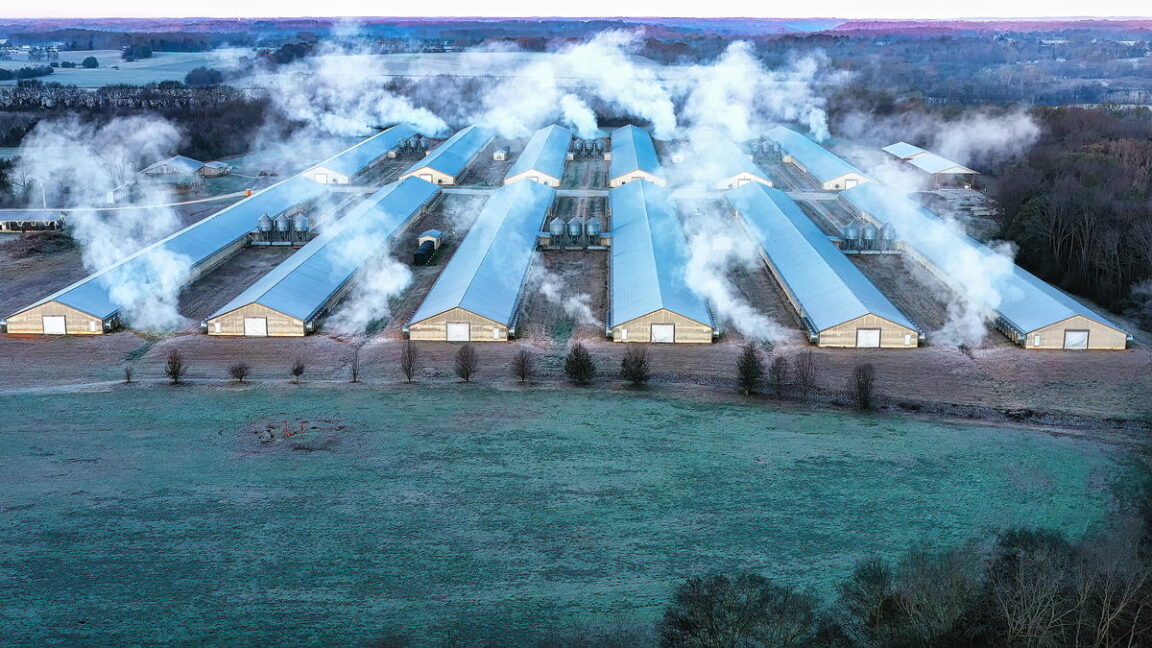
The Environmental Protection Agency announced on October 30 that it would end a more than 20-year effort to develop methods for monitoring air pollution from factory farms, effectively shuttering its stop-and-start attempts to regulate the facilities under the Clean Air Act. The announcement came days before the midterm elections and was characterized by the agency as a long-awaited reprieve for farmers.
The arrangement dates to the early 2000s, when the agency tried to prosecute concentrated animal feeding operations, or CAFOs, for exceeding limits on pollutants. The industry argued there was no adequate way to measure emissions, and the agency worked with industry groups on the Air Consent Agreement, adopted in 2005, which granted thousands of CAFOs safe harbor from legal action in exchange for participation in an industry-funded study. The study was meant to produce tools and models for determining whether facilities needed Clean Air Act permits or notifications under the Superfund Act and the Emergency Planning and Community Right-to-Know Act.
Since the agreement, the agency has not produced emissions estimating methodologies, prompting a 2017 report from its Office of Inspector General that faulted it for slow-walking the process. In its Oct. 30 announcement, the agency said many farms have modernized barns and manure systems in the two decades since the National Air Emissions Monitoring Study. "Good science requires good data, and these data are too old and too limited to support methods that farms could rely on," said Abigale Tardif, acting assistant administrator for the Office of Air and Radiation.
Tarah Heinzen, legal director for the advocacy group Food & Water Watch, said the agency has been dismantling its own tools to regulate emissions. She said the Clean Air Act still requires permits for facilities that exceed emissions thresholds and that the amnesty no longer applies now that the agreement has concluded. She pointed to California, which has models for livestock emissions it uses to enforce its own air regulations.
Rob Brenneman, president of the National Pork Producers Council, said in a statement: "This move confirms what farmers have long known: Every farm is different, and there is no one-size-fits-all model to apply to them." The Air Compliance Agreement did not extend to methane, and Congress effectively blocks livestock facilities from reporting methane emissions in annual spending bills.