All NewsEducationTVBrokers
Equities & FundsCrypto & Digital AssetsAI & TechnologyBusiness & CorporateUS Politics & PolicyGeopolitics & Global RiskMacro, Rates & FXCommodities & EnergyEuropean Politics & MarketsAsia-PacificReal Estate & Property
All NewsHome
← Back to Commodities & Energy

El Niño stronger than in 1,000 years, study finds

Created at 31 Aug · 4:11 PM1 source↑ Market-relevant
IN SHORT

A new study analyzing fossilized corals in the Galapagos found that El Niño events in the eastern Pacific are now more violent than at any point in the last millennium. Researchers attribute this intensification to human-caused global warming.
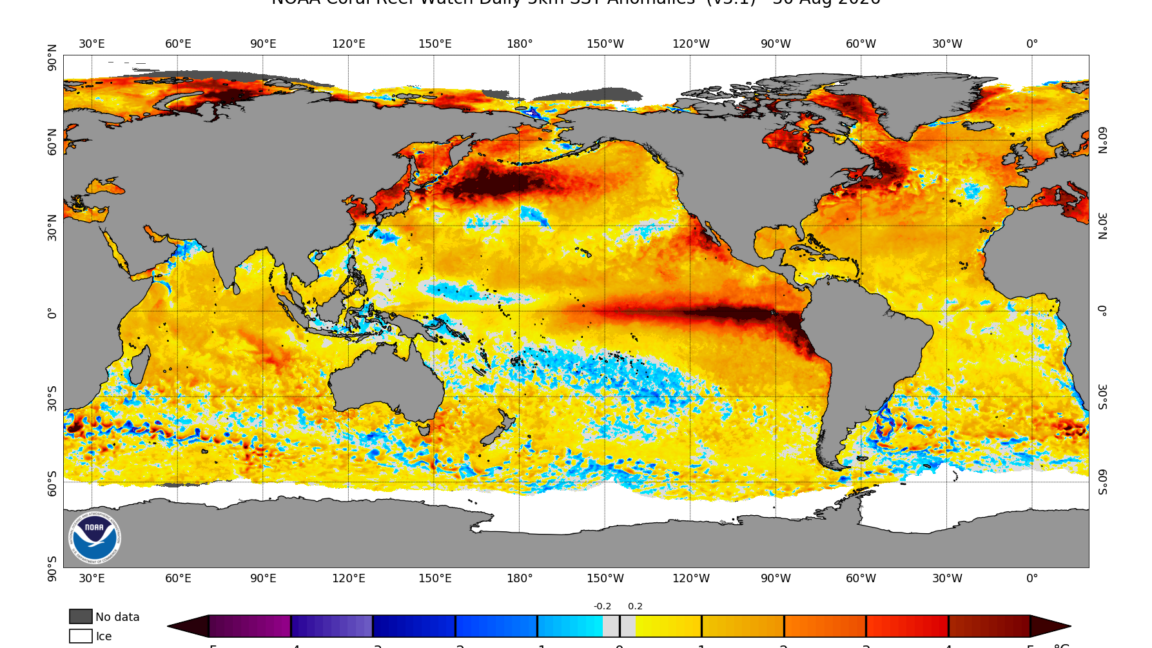
Key Numbers

1,000 yearstimeframe of coral record
36.5 percentincrease in temperature variability since 1984 vs. preindustrial era
16.2 percentincrease in temperature variability from 1851-1982 vs. preindustrial era
99 percentconfidence level for human influence on ENSO

Who's Involved

Julie Cole
environmental scientist at the University of Michigan and lead author of the study
NOAA
provided the image credit for the study
El Niño stronger than in 1,000 years, study finds

↳ Why This Matters

This study provides strong evidence that human-induced climate change is not only warming the planet but also intensifying major climate patterns like El Niño, leading to more extreme weather events globally. This has significant implications for agriculture, water resources, and disaster preparedness worldwide.

Key facts

  • El Niño events are now more violent than at any point in the last 1,000 years, according to a study using fossilized Galapagos corals.
  • The intensification of El Niño is attributed to human-caused global warming and the use of fossil fuels.
  • Temperature variability in the eastern Pacific ENSO pattern has increased by 36.5% since 1984 compared to the preindustrial era.
  • Climate models simulating natural factors alone could not replicate the observed increase in ENSO variability.
  • Global warming is expected to intensify El Niño's hydrological consequences, leading to more extreme floods and droughts.
  • A study analyzing fossilized corals from the Galapagos Islands has revealed that El Niño events in the eastern Pacific are now more intense than at any point in the last millennium. The research, published in Science, suggests this intensification is linked to human-caused global warming.

    Researchers reconstructed a thousand-year ocean surface temperature record by examining the chemistry of fossilized corals. They found that temperature variability since 1984 is 36.5% higher than during the preindustrial period (1000-1850 CE) and that warmer El Niño events have become significantly stronger. This finding contrasts with climate models that only incorporated natural factors, which did not show such a pronounced increase in ENSO variability.

    The study's authors attribute the current ENSO intensification to human activity, specifically the use of fossil fuels. They note that global warming is already expected to worsen the hydrological impacts of El Niño, leading to more extreme floods and droughts, and that the strengthening of temperature swings compounds these effects. The researchers also observed that the faster emergence of this trend in the eastern Pacific aligns with climate model predictions for human-caused changes.

    Frequently asked questions

    El Niño and its cool counterpart, La Niña, are swings of the El Niño–Southern Oscillation (ENSO) system. ENSO is the largest source of year-to-year climate variation on Earth, shifting rainfall patterns globally.

    Researchers analyzed the chemistry of fossilized corals from the Galapagos Islands. The strontium-to-calcium ratio and oxygen isotopes in coral skeletons act as a 'limestone thermometer,' recording water temperature over time.

    The study indicates that current El Niño events are more extreme than any observed in the last thousand years, suggesting a significant impact of human-caused global warming on this major climate system.

    Global warming is expected to intensify El Niño's hydrological consequences, leading to more severe floods and droughts, especially as the temperature swings themselves are also strengthening.

    What Happens Next

    01Further monitoring of El Niño events to observe ongoing trends.
    02Continued research into the specific impacts of intensified El Niño on global weather patterns.
    CME Headlines
    • Iran tensions drive crude higher.
      31 Aug · 3:30 PM
    • Iran tensions drive crude higher.
      31 Aug · 3:30 PM
    • Iran tensions drive crude higher.
      31 Aug · 3:30 PM

    How It Developed

    El Niño and La Niña are part of the El Niño–Southern Oscillation (ENSO) system, the largest source of year-to-year climate variation.
    Scientists reconstructed a thousand-year-long ocean surface temperature record using fossilized Galapagos corals.
    The study found that El Niño events in the eastern Pacific have never been as violent as they are now.
    Temperature variability since 1984 is 36.5% higher than in the preindustrial era (1000-1850 CE).
    Warmer events, specifically El Niño, have become stronger, indicating a positive skewness in ENSO swings.
    Climate models incorporating only natural factors did not show such a significant increase in ENSO variability.
    Researchers attribute the current ENSO intensification to human activity, primarily the use of fossil fuels.
    Two strong El Niño events have occurred since the study's coral logs concluded, with another developing.

    Sources

    T1
    El Niño is now stronger than at any point in the last 1,000 years, study findsvar abtest_2169824 = new ABTest(2169824, 'impression');Ars Technica

    Related Stories

    Indonesia's Wildfires Intensify Amid Super El Niño Conditions
    31 Aug · 4:17 AM
    Air conditioning saves lives but worsens global warming, experts say
    31 Aug · 3:21 PM
    Nepal floods expose risks to hydropower in a warming Himalayas
    31 Aug · 11:36 AM
    China LNG Imports May Drop 18% in August Amid Soaring Prices
    31 Aug · 12:56 PM
    Oil price climbs above $90 as Iran says US diplomacy ‘isn’t possible’
    31 Aug · 9:51 AM