Key facts
- The faculty senate approved the no-confidence resolution 75-50, with five abstentions and five senators not voting.
- The resolution did not call for the resignation of Cornell President Michael Kotlikoff.
- Board Chair Anne Smalling said the Board of Trustees supports Kotlikoff and the administration.
- Faculty senator Risa Lieberwitz, a co-sponsor, said the administration failed to address the issue systemically.
- Dean of Faculty Chris Schaffer opposed the resolution, saying it lacked specific failures or expected changes.
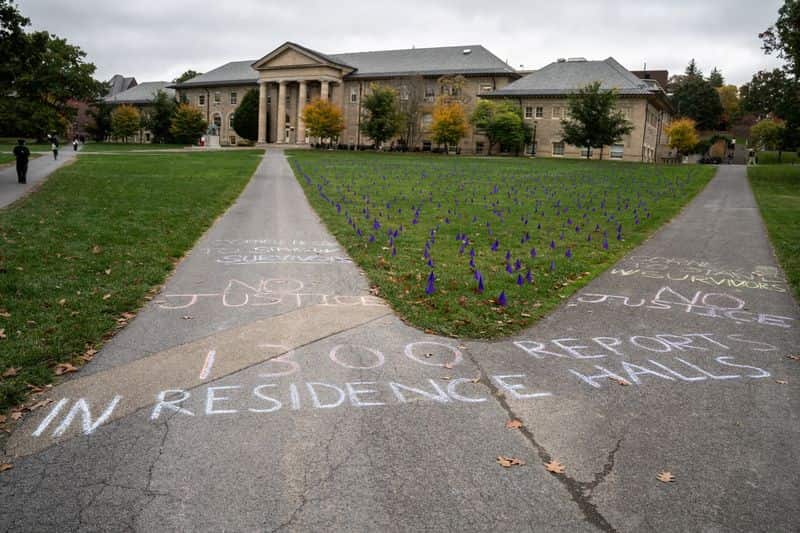
Cornell University's faculty senate approved a resolution declaring no confidence in the school's central administration on Friday, November 6, 2026, over its handling of what the resolution calls a sexual assault crisis. Cornell spokesperson Rebecca Valli said 55.6% of elected faculty senators voted in favor, 37% against and 7.4% abstained.
The resolution states: "The Faculty Senate has no confidence in the ability of the central administration to effectively address the ongoing crisis of sexual assault at Cornell University." It did not call for the resignation of Cornell President Michael Kotlikoff, and the faculty body has no power over the university's top leaders.
The vote followed weeks of debate over whether Kotlikoff and other administrators handled allegations by a former student properly. The student, identified in the context as Jane Doe, filed a lawsuit in September against Cornell and seven former members of the Chi Phi fraternity, saying she was given ketamine and raped at a fraternity house in October 2024. All of those men have denied the allegations, saying the sex was consensual or that they were not involved.
The local district attorney initially decided the woman had consented and that no crime had been committed, but the investigation has since been reopened and handed to New York's attorney general. Cornell disciplined several accused students after a months-long Title IX investigation: two were expelled, two received suspensions and probation, and two were required to write reflection papers and complete bystander training, according to records obtained by the New York Times. A seventh man had already graduated and was barred from campus.
Kotlikoff convened a taskforce on campus sexual misconduct that released recommendations. He said the day before voting began on October 29 that faculty debate was "an important component of Cornell's shared governance" and cited added staff in the civil rights office, expanded prevention education and new victim advocacy staff.
Board Chair Anne Smalling said the board supports Kotlikoff and the administration, and that the vote "reflects the deep anger across our campus." Faculty senator Risa Lieberwitz, a co-sponsor, said the administration failed to address the problem systemically. Dean of Faculty Chris Schaffer opposed the resolution, writing that it did not "articulate the specific failures underlying its judgment or the consequences it seeks."