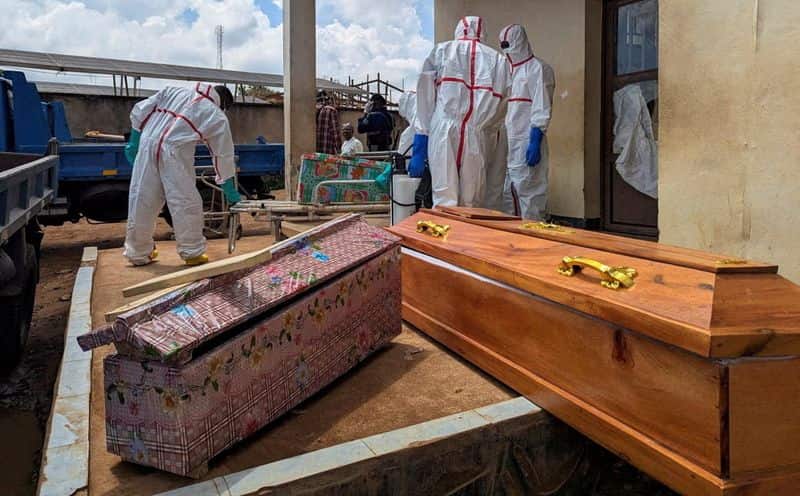
Key facts
- Confirmed infections total 12,021 and 5,904 people have died, government data showed.
- The outbreak was declared in mid-May in Ituri province and has spread to 8 of Congo's 26 provinces.
- There are no approved treatments or vaccines for the Bundibugyo species of the Ebola virus.
- Only 15% of new cases come from contacts known to health authorities, per Africa CDC data.
- The epidemic is the second-largest and deadliest on record behind the 2014-2016 West African outbreak.
Confirmed Ebola cases in Democratic Republic of Congo have passed 12,000, with 12,021 infections and 5,904 deaths, according to government data reported by Reuters on November 26.
The outbreak is caused by the rare Bundibugyo species of the Ebola virus and was declared in mid-May in Ituri province in northeastern Congo. It has since spread to 8 of Congo's 26 provinces. There are no approved treatments or vaccines for this species.
Delayed detection, conflict and strained health services have led to a more rapid spread than in previous outbreaks, the report said. The epidemic is the second-largest and deadliest on record behind only the 2014-2016 West African outbreak, which infected more than 28,600 people and killed more than 11,000.
The outbreak is not yet under control: only 15% of new cases come from contacts known to health authorities, according to data presented by Africa CDC earlier in November. That means many chains of transmission continue to be missed.
A Reuters analysis of satellite imagery found the official death toll may be largely underestimated in two of Congo's hardest-hit areas.