Key facts
- Maritime rescue service data showed more than 2,100 migrants arrived in the Canary Islands over 24 hours.
- The previous single-day record was about 1,500 arrivals, set two weeks before November 25, 2026.
- Most boats reached El Hierro island, which has about 11,400 residents.
- One migrant was found dead in a boat and another gave birth during the crossing, the rescue service said.
- Arrivals so far in 2026 reached 28,103 as of late November, below the 46,843 all-time high recorded in 2024.
- Sanchez said Spain needed to open legal migration pathways for workers in sectors such as housing.
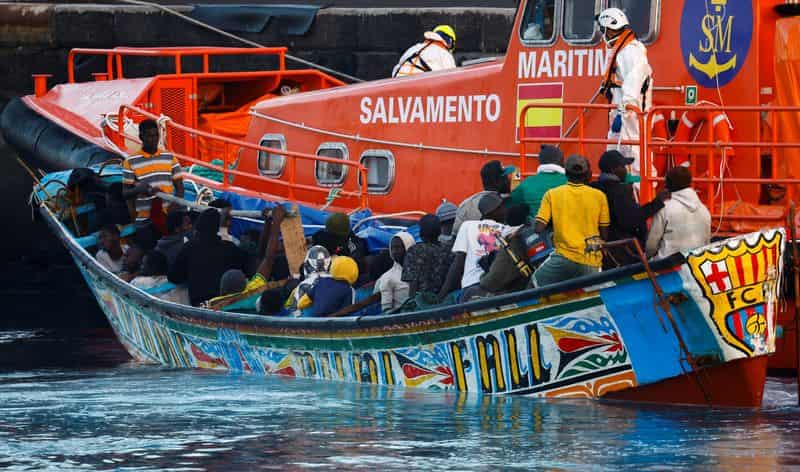
More than 2,100 migrants arrived in Spain's Canary Islands over 24 hours in overcrowded boats, maritime rescue service data showed on November 25, 2026, surpassing the previous single-day record of about 1,500 set two weeks earlier. One migrant was found dead in a boat and another gave birth during the crossing from West Africa, the rescue service said.
Most of the boats arrived at El Hierro island, home to about 11,400 residents and one of Europe's key entry points for migrants arriving from West Africa. The regional government described the situation as unsustainable earlier in November 2026.
Prime Minister Pedro Sanchez, who has faced criticism of his open stance on migration during the campaign ahead of a parliamentary election on November 29, 2026, said Europe needed a comprehensive approach to migration, including stronger border controls in cooperation with Senegalese and Gambian authorities. He also said Spain needed to open legal migration pathways for workers in sectors such as housing that are short of qualified labor.
The Atlantic route from West Africa to the Canary Islands is one of the world's deadliest migration crossings, with thousands attempting the journey each year despite rough seas, strong currents and long distances. Arrivals tend to pick up in the autumn months, when sea conditions are generally calmer.
Arrivals so far in 2026 had climbed to 28,103 as of late November, more than last year's total but below an all-time high of 46,843 recorded in 2024, when most crossings occurred during the first nine months of the year. Nearly 21,000 people have reached the archipelago in the last two months.