Key facts
- Texas halted the execution of Jamaal Howard, scheduled for Wednesday, due to concerns over lethal injection drugs.
- Howard's lawyers cited the botched execution of Christa Pike in Tennessee as a reason for their halt request.
- Pike survived two doses of pentobarbital and is conscious but suffering from pneumonia and injured arms.
- Howard's attorneys argued that Texas's execution drugs are likely degraded and past their beyond-use dates.
- Pike was sentenced to death in 1996 for the 1995 torture and murder of her schoolmate Colleen Slemmer.
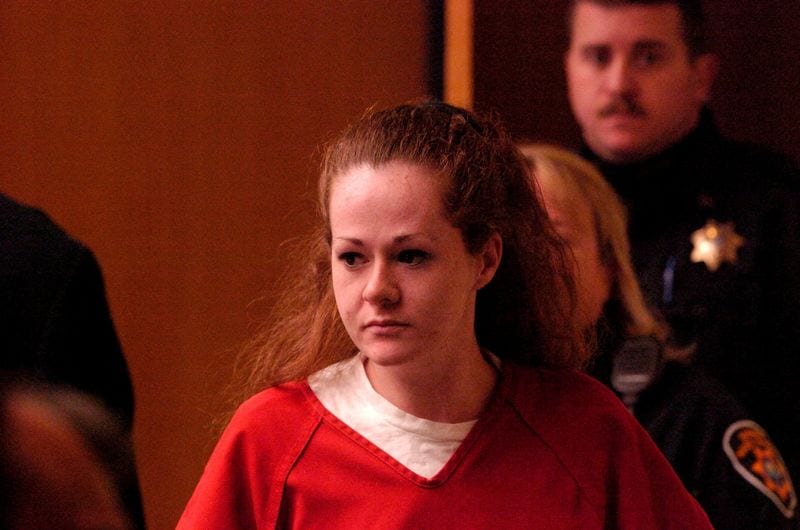
Texas has halted the execution of Jamaal Howard, who was scheduled to be put to death on Wednesday, due to concerns over the quality of lethal injection drugs. Howard's lawyers cited the recent botched execution of Christa Pike in Tennessee as a reason for their request, arguing that Texas's execution drugs are likely degraded and past their beyond-use dates.
Pike survived two doses of pentobarbital on September 30 and was transported to a hospital, where she was intubated. Her lawyers announced six days later that she was "conscious and speaking." Tennessee Governor Bill Lee has ordered an independent investigation into the incident and suspended all executions for the rest of the year.
Pike, who has been on death row for 30 years for murdering Colleen Slemmer in 1995, is now in a "mysterious grey area" regarding her fate. Dr. Joel Zivot, an anesthesiologist for Pike's defense team, suspects the lethal chemical spread under her skin instead of her bloodstream, and the large dose may take days or weeks to fully assess her health.
At a hearing on Wednesday, an attorney for Tennessee stated that the decision on scheduling a new execution date rests with the state's supreme court. Pike's lawyers are seeking to have her death sentence commuted to life in prison without parole. Governor Lee has the power to pardon Pike or commute her sentence but has not indicated his decision.
Experts told the BBC that Tennessee could attempt to execute Pike again by lethal injection, but this would face significant legal challenges based on constitutional protections against cruel and unusual punishment. Defense attorney Stephen Ross Johnson noted that Tennessee has botched two executions in one year, which could provide grounds to argue against the constitutionality of the state's lethal injection protocol. Pike's lawyers could also argue that the protocol is "unconstitutional as applied" to Pike due to her medical condition, including small veins and thrombocytosis, a blood-clotting disorder, which they had warned about prior to the execution attempt.
Alternatively, the state might attempt execution by a different method, which would require additional legal approvals. Some political leaders in Tennessee have called for alternative methods, such as the electric chair or hanging. However, using the electric chair would require Pike to waive her right to lethal injection in writing, as she committed her murder before the state changed its execution laws. Professor Chris Slobogin of Vanderbilt University noted that if Pike has suffered brain damage, executing someone mentally incapable of understanding the reason for their execution could be considered cruel and unusual punishment.
Tennessee is currently observing a significant pause in capital punishment. The execution of Tony Carruthers in May was also suspended after officials could not find a vein for lethal injection. Slobogin suspects the governor may commute Pike's sentence, especially if the investigation uncovers missteps by state officials, citing legal precedent for commuting a death sentence due to a botched execution and an inmate's poor medical state, such as the case of Doyle Hamm in Alabama.