Key facts
- The gradient electrodes were designed to overcome trade-offs between uniformly soft and rigid electrodes, the report said.
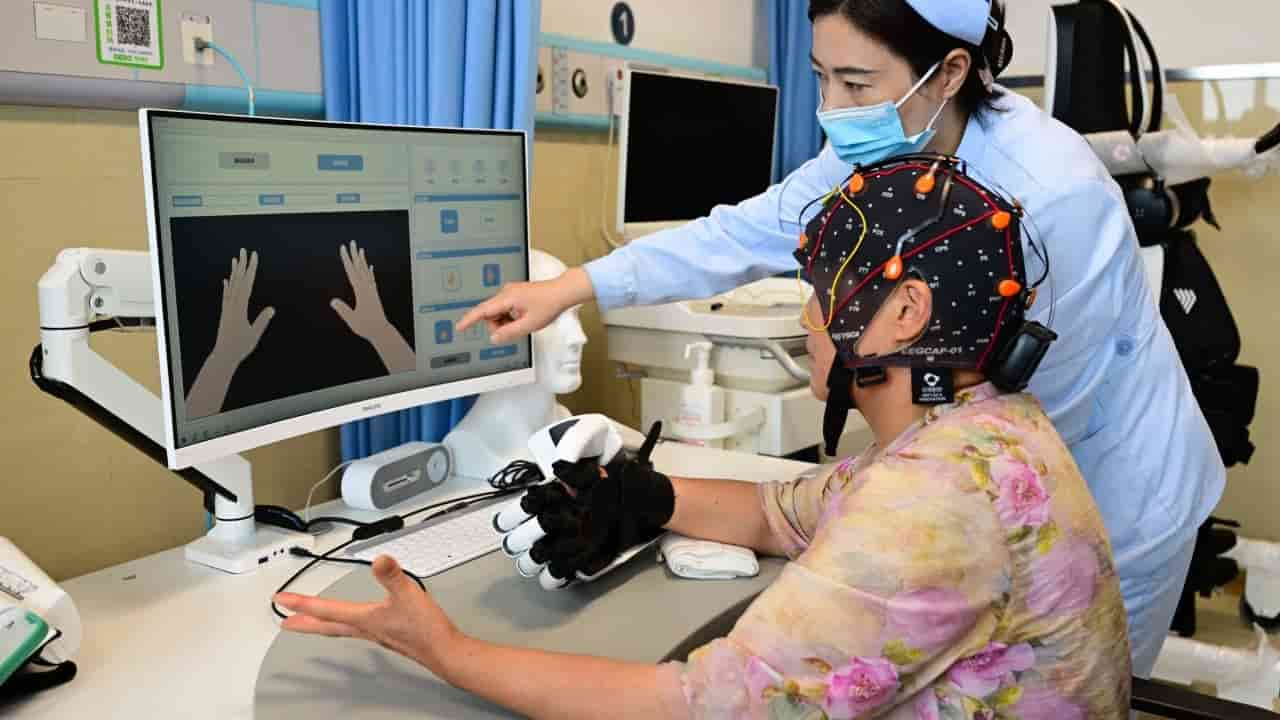
- The electrodes were integrated into a commercial electroencephalogram cap and tested at rest over 14 hours.
- The electrodes supported eight hours of stable EEG recording, according to the report.
Researchers in China have built a gradient electrode for non-invasive brain-computer interfaces that reached more than 94% accuracy in visual mind-typing tests during day-long use, according to a report dated November 9, 2026.
The electrodes were designed to overcome the trade-offs of conventional uniformly soft or rigid electrodes, the report said. They were integrated into a commercial electroencephalogram (EEG) cap, which records electrical activity at the scalp, and tested during rest over a span of 14 hours.
The report said the electrodes enabled eight hours of stable EEG recording. The body of the report was truncated at that point and gave no further detail on the participants, the experimental protocol or where the work was published.