All NewsEducationTVBrokers
Equities & FundsCrypto & Digital AssetsAI & TechnologyBusiness & CorporateUS Politics & PolicyGeopolitics & Global RiskMacro, Rates & FXCommodities & EnergyEuropean Politics & MarketsAsia-PacificReal Estate & Property
All NewsHome
← Back to AI & Technology

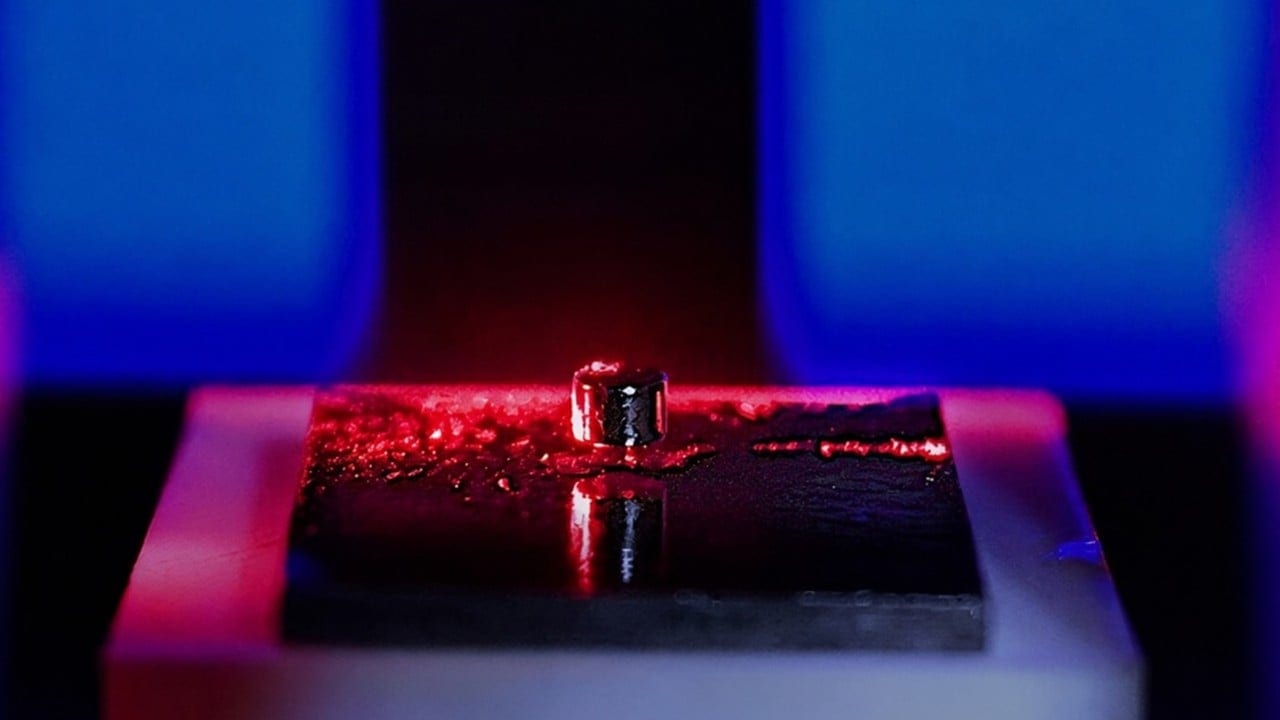
Chinese-German team builds ultra-sensitive ‘floating compass’ to hunt dark matter

Created at 5 Sep · 12:06 PM1 source↑ Market-relevant
IN SHORT

A collaborative effort between Chinese and German scientists has resulted in the creation of an ultra-sensitive ‘floating compass’ designed to detect dark matter. This novel device aims to overcome limitations of previous dark matter detection methods.

Who's Involved

Chinese-German team
developed an ultra-sensitive dark matter detection device
Chinese-German team builds ultra-sensitive ‘floating compass’ to hunt dark matter

↳ Why This Matters

The development of more sensitive dark matter detection tools is crucial for advancing our understanding of fundamental physics and the composition of the universe. This new device could potentially lead to breakthroughs in identifying dark matter particles, which have eluded direct detection for decades.

Key facts

  • A Chinese-German team has developed a new device for dark matter detection.
  • The device is characterized as an ultra-sensitive ‘floating compass’.
  • This technology aims to enhance the search for dark matter particles.

Scientists from China and Germany have collaborated to create a novel device for the detection of dark matter. Dubbed an 'ultra-sensitive floating compass,' this technology represents a new approach in the ongoing scientific quest to identify and understand dark matter, a mysterious substance believed to constitute a significant portion of the universe's mass.

The development aims to overcome some of the challenges faced by previous dark matter detection experiments, potentially offering greater sensitivity and more precise measurements. The specifics of how the 'floating compass' operates and its expected advantages over existing methods are central to this scientific endeavor.

Frequently asked questions

Dark matter is a hypothetical form of matter that is thought to account for approximately 85% of the matter in the universe. It does not emit, absorb, or reflect light, making it extremely difficult to detect directly.

The 'floating compass' is a new type of dark matter detector developed by a Chinese-German research team. It is described as ultra-sensitive and is designed to improve the methods used to hunt for dark matter particles.

Detecting dark matter is crucial for understanding the structure, evolution, and fundamental composition of the universe. Its discovery could revolutionize physics and cosmology.

What Happens Next

01Further testing and calibration of the 'floating compass' device.
02Deployment of the device in experimental settings for dark matter searches.
03Analysis of data collected to identify potential dark matter signals.
CME Headlines
  • Risk Management and Monitoring Notice: Multi-Factor Authentication Updates - September 12
    3 Sep · 5:00 AM

How It Developed

A Chinese-German team has developed a new dark matter detection device.
The device is described as an ultra-sensitive ‘floating compass’.
It aims to improve upon existing dark matter hunting techniques.

Sources

T1
Chinese-German team builds ultra-sensitive ‘floating compass’ to hunt dark matterSouth China Morning Post

Related Stories

China plans 3D satellite network for solar and cosmic event monitoring
5 Sep · 1:06 PM
China debuts robot guide dog amid shortage of assistance animals
4 Sep · 1:36 PM
BepiColombo mission sheds propulsion module ahead of Mercury orbit insertion
4 Sep · 10:55 PM
Male fruit fly brain map completed, complementing female fly brain map
4 Sep · 4:31 PM
Japan plans AI-powered satellites for faster counterstrike decisions
4 Sep · 3:11 PM