Key facts
- Chinese humanoid robot makers are increasing their presence in South Korea.
- South Korea and Japan are prioritizing physical AI development to compete with China.
- Korea aims for a 20% global share in humanoid robots.
- Japan targets over 30% share in AI robots by 2040, with a 20 trillion yen market goal.
- Japan plans a 10.5 trillion yen public-private investment in physical AI by 2040.
- Korea will focus on actuators, robotic hands, and sensors; Japan on analog semiconductors.
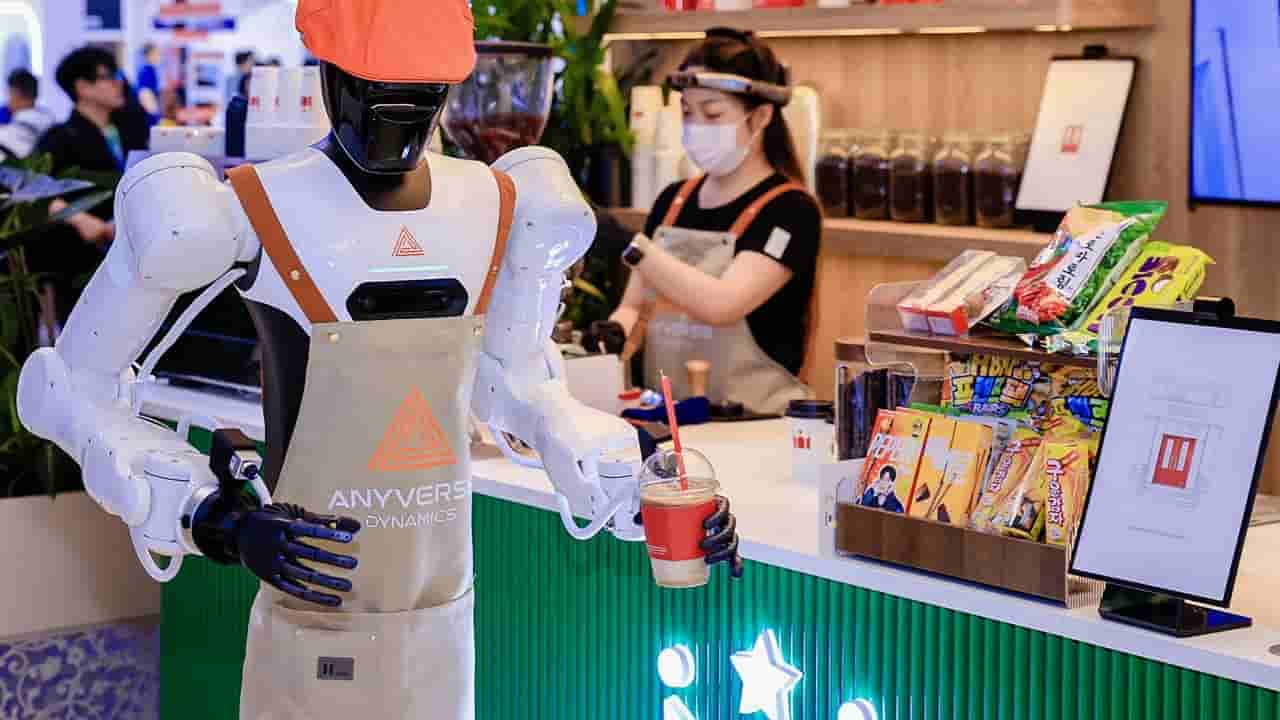
Chinese humanoid robot makers are increasing their efforts to establish a presence in South Korea, moving beyond demonstrations to factory trials and commercial deployments. This push coincides with Seoul and Tokyo designating physical artificial intelligence (AI) as a top national priority to catch up with China's advancements.
South Korea and Japan unveiled their strategies in June, with Korea announcing "Three Mega Projects" and Japan its "Strategic 17 Sectors." Korea aims to capture a 20% share of the humanoid robot market, while Japan targets over 30% in AI robots, including humanoids, by 2040. Japan's Takaichi cabinet plans to invest 10.5 trillion yen in the sector by 2040 to bolster manufacturing competitiveness, aiming for a 20 trillion yen market.
Both nations are focusing on technology development, including foundation models for AI robots. Korea will concentrate on actuators, robotic hands, and sensors, while Japan will support analog semiconductors for real-time robot control. The urgency is driven by China's accelerating mass production, with Morgan Stanley raising its forecast for China's humanoid robot shipments this year to 50,000 units.