Key facts
- China successfully recovered its first reusable orbital-class booster using a net system.
- The Long March 10B rocket launched from Wenchang, Hainan Island.
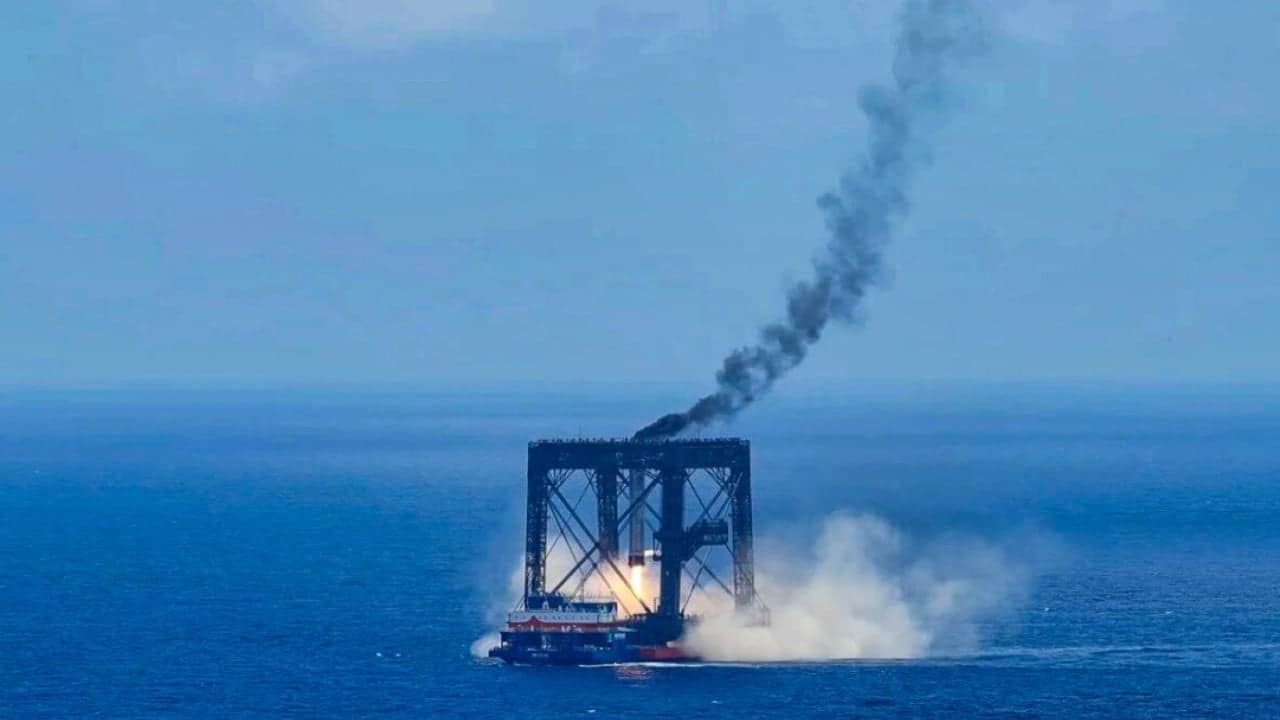
- The booster was captured by a net deployed on an offshore vessel in the South China Sea.
- This achievement marks China's first controlled rocket recovery and a step toward reusable launch capabilities.
- The Long March 10B is a medium-lift rocket with a payload capacity of approximately 16 metric tons to low-Earth orbit.
China successfully recovered its first reusable orbital-class booster for the Long March 10B rocket in the South China Sea, employing a novel net-capture system. The milestone mission, announced by the China Aerospace Science and Technology Corporation (CASC), involved the rocket launching from the Wenchang Commercial Space Launch Site and its booster being caught by tensioned cables on an offshore vessel.
This controlled recovery marks China's first successful demonstration of reusable launch technology, positioning CASC and its subsidiary, the China Academy of Launch Vehicle Technology (CALT), as the third entity globally to achieve such a feat after SpaceX and Blue Origin. The Long March 10B, a medium-lift rocket with a payload capacity of approximately 16 metric tons to low-Earth orbit, utilized seven kerosene-fueled engines on its booster. The recovery method, which avoids the need for landing legs and extensive fuel for descent, is seen as a way to reduce the impact on payload capacity.
Chinese officials, including Foreign Ministry spokesperson Mao Ning, hailed the flight as a "complete success" and a "major leap toward reusable launch capabilities." CASC stated that the test flight validated key core technologies for a reusable launch architecture, such as multiple engine restarts, high-altitude ignition, and high-precision navigation and control. The company plans to continue optimizing the vehicle's performance and aims to complete its first stage reuse flight test by the end of the year.
The development is viewed by some US military officials, like Maj. Gen. Brian Sidari, as a significant advancement that could enhance China's ability to deploy capabilities in space more rapidly. The Long March 10 program is also a critical component of China's broader space ambitions, including its goal to land astronauts on the Moon by 2030 with a heavier configuration of the Long March 10 rocket.