Key facts
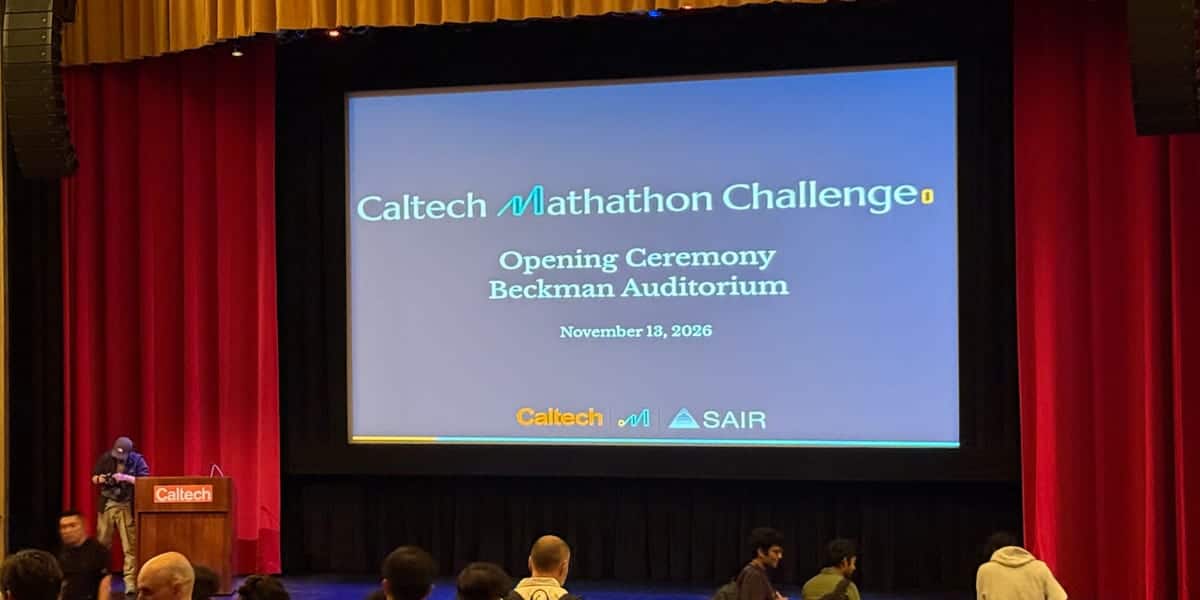
- Caltech's mathathon drew participants from Ph.D. programs across the world to the Pasadena campus.
- Mayla Ward, a Caltech Ph.D. student, initially called for the event's cancellation and later became involved in its organization.
- Organizers dropped Anthropic as a sponsor as part of the changes, according to the report.
- Caltech mathematics professor Sergei Gukov said the AI debate divided close friends and research collaborators, some of whom stopped working together.
- Jack McCarthy, a student mathematician and research collaborator at Meta, said the event offered ideas of what a new era of math might look like.
Undergraduate organizers of Caltech's mathathon reached a compromise with critics of the event during a video call on a Friday in early September 2026, according to a report published November 23, 2026. The organizers remade the competition's parameters and in return received support from the wider math community, the report said.
Hundreds of mathematical luminaries and graduate students had called for the event's cancellation, saying it would promote AI slop. The changes included parting ways with Anthropic as a sponsor and taking so-called open problems off the table, in favor of tasking participants with finding alternative ways to solve old problems.
"It felt like a miracle," Mayla Ward, a Caltech Ph.D. student who was present at the meeting, said in the report. Ward initially called for the event's cancellation but later became involved with its organization.
The competition drew participants from Ph.D. programs across the world. Jack McCarthy, a student mathematician and research collaborator at Meta, said there was an opportunity to get ideas of what the new era of math might look like.
Caltech mathematics professor Sergei Gukov said the debate over AI in mathematics divided close friends and research collaborators, some of whom stopped working together. "Everything was so cohesive and united, and suddenly it's not," Gukov said in the report.
The report said OpenAI solved the Navier-Stokes Millennium Prize question in September, setting off the debate. On a Friday, an Anthropic employee said he used Claude to solve what is arguably the field's most famous open problem, and hours later another mathematician said he had also solved the problem without using AI, according to the report.