
Key facts
- Levent Alpoge of Anthropic announced the claim on November 20, 2026, saying he used the company's Claude model.
- Alpoge released about 17 million lines of Lean formalization code in 14 compressed volumes instead of a paper.
- The Lean and Mathlib communities said the formal proof passed verification and matched the Riemann hypothesis.
- Fields Medalist James Maynard said he is 98% or 99% confident the proof is correct.
- A separate 940-page manuscript by Alessandro Masullo circulated the same day; Ravi Vakil later said readers using AI models found doubts in it.
A US-based mathematician has claimed to have solved the Riemann hypothesis, a problem posed in 1859 that concerns the deep patterns behind the distribution of prime numbers and is one of the Clay Mathematics Institute's seven Millennium Prize Problems, which carry a $1 million prize. The claim was made on November 20, 2026, the day a conference opened in Shenzhen, China, to mark the 200th anniversary of the birth of Bernhard Riemann, the German mathematician behind the problem. The conference runs until Monday.
According to the Chinese-language report by Science and Technology Daily, republished by The Paper, the mathematician is Levent Alpoge of the AI company Anthropic, and he said he found the proof method with the help of the company's Claude large language model. He also announced that he had solved the generalized Riemann hypothesis by extending the method. Rather than a traditional paper, Alpoge released about 17 million lines of Lean formalization code in 14 compressed volumes; he said that expanded into human-readable text the argument would run to more than 250,000 pages.
The Lean and Mathlib communities then issued a joint statement confirming that the formal proof passed verification and that the formalized proposition was indeed the Riemann hypothesis. The report said passing formal verification does not mean the result has been generally accepted by the mathematics community.
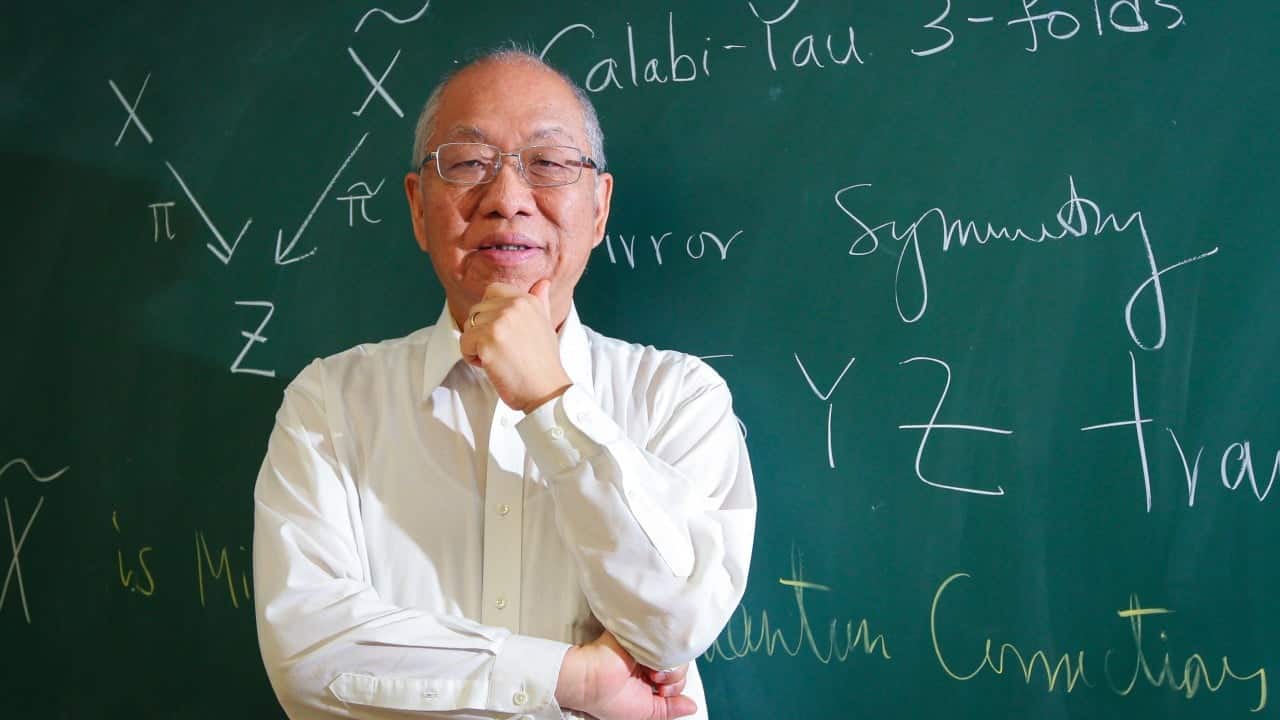
Fields Medalist Shing-Tung Yau, dean of Tsinghua University's Qiuzhen College, called the result a milestone and said mathematics research had "entered a new era." Fields Medalist James Maynard of Oxford University said he was 98% or 99% confident the proof is correct, based on Lean's checking of the logical steps and his knowledge of Alpoge's earlier work, while cautioning that several additional checks beyond formal verification should not be ignored. Both said understanding the proof, extracting theory and posing new questions still have to be done by humans.
On the same day, a separate roughly 940-page manuscript on the generalized Riemann hypothesis by Alessandro Masullo, a Stanford mathematics PhD who the report said spent 12 years on it without AI, circulated in academic circles. Ravi Vakil, president of the American Mathematical Society and a Stanford mathematics professor, posted it on his personal blog. About eight hours later, Vakil updated the blog to say several people had used different AI models to find doubts in the proof and reported them to him.