Key facts
- A dispute arose in Cairo over new recycling machines that offer phone credit for empty bottles and cans.
- The zabaleen, informal waste collectors, expressed concern that the machines would threaten their work.
- The machines were built by ZeroPrime Technologies, founded by Eslam El-Refaey.
- El-Refaey plans to deploy 20,000 machines nationwide by 2030.
- The Giza governorate agreed to allow zabaleen to empty the machines and pay ZeroPrime for the contents.
- Officials stated they would work on integrating the zabaleen into the system.
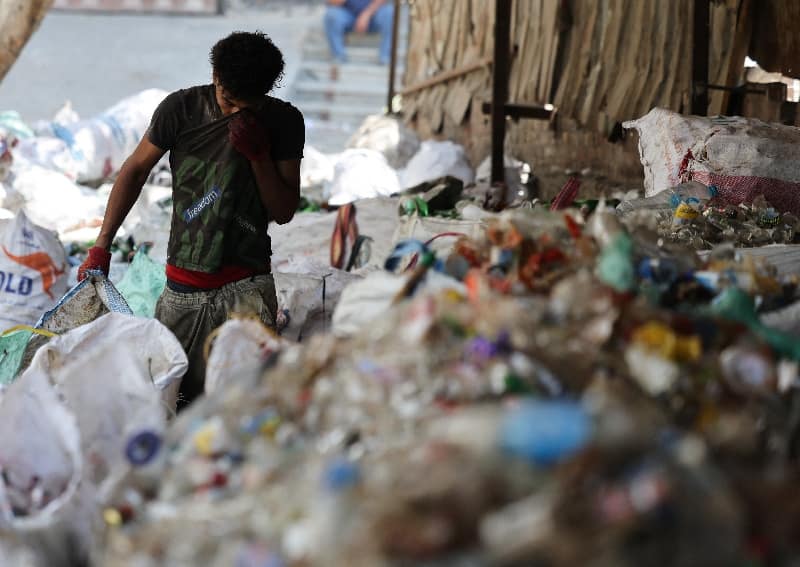
A plan to expand a recycling scheme in Cairo has ignited a dispute, highlighting the complex and often fraught politics of waste management in the Egyptian capital. Two machines, built by ZeroPrime Technologies, that offer phone credit in exchange for empty bottles and cans were installed in the Dokki district late last month. This move drew the ire of the zabaleen, a community of informal waste collectors, predominantly from Egypt’s Coptic Christian minority, who have been collecting much of the city's refuse by hand for nearly a century.
Shehata El-Moqaddas, head of the zabaleen syndicate, voiced concerns that the new machines would deprive his community of their livelihood, despite acknowledging the technology itself. He argued for the integration of the zabaleen into such systems rather than their exclusion. Cairo currently lacks a cohesive waste management system, leading to accumulated rubbish and pollution, with the zabaleen estimated to collect about half the city's waste and recycle 80% of it.
Following the public dispute, the Giza governorate, where Dokki is located, agreed that the zabaleen could empty the machines and pay ZeroPrime for the contents. Mohamed Marei, spokesman for the Giza governorate, stated that the dispute was being resolved and that efforts would be made to integrate the zabaleen. Previous waste reform attempts in Cairo have faltered, often due to a failure to integrate the full waste chain, including informal collectors. Experts like Wael Fahmi, a professor at Cairo’s Capital University, have compared the situation to informal housing residents being displaced for development, suggesting that arguments of backwardness could be used to "appropriate" valuable waste streams. Former environment minister Laila Iskandar advocates for formalizing the zabaleen rather than replacing them. A new facility northeast of Cairo, funded by the World Bank, aims to process 15,000 tons of waste daily as part of a modernization push.