Key facts
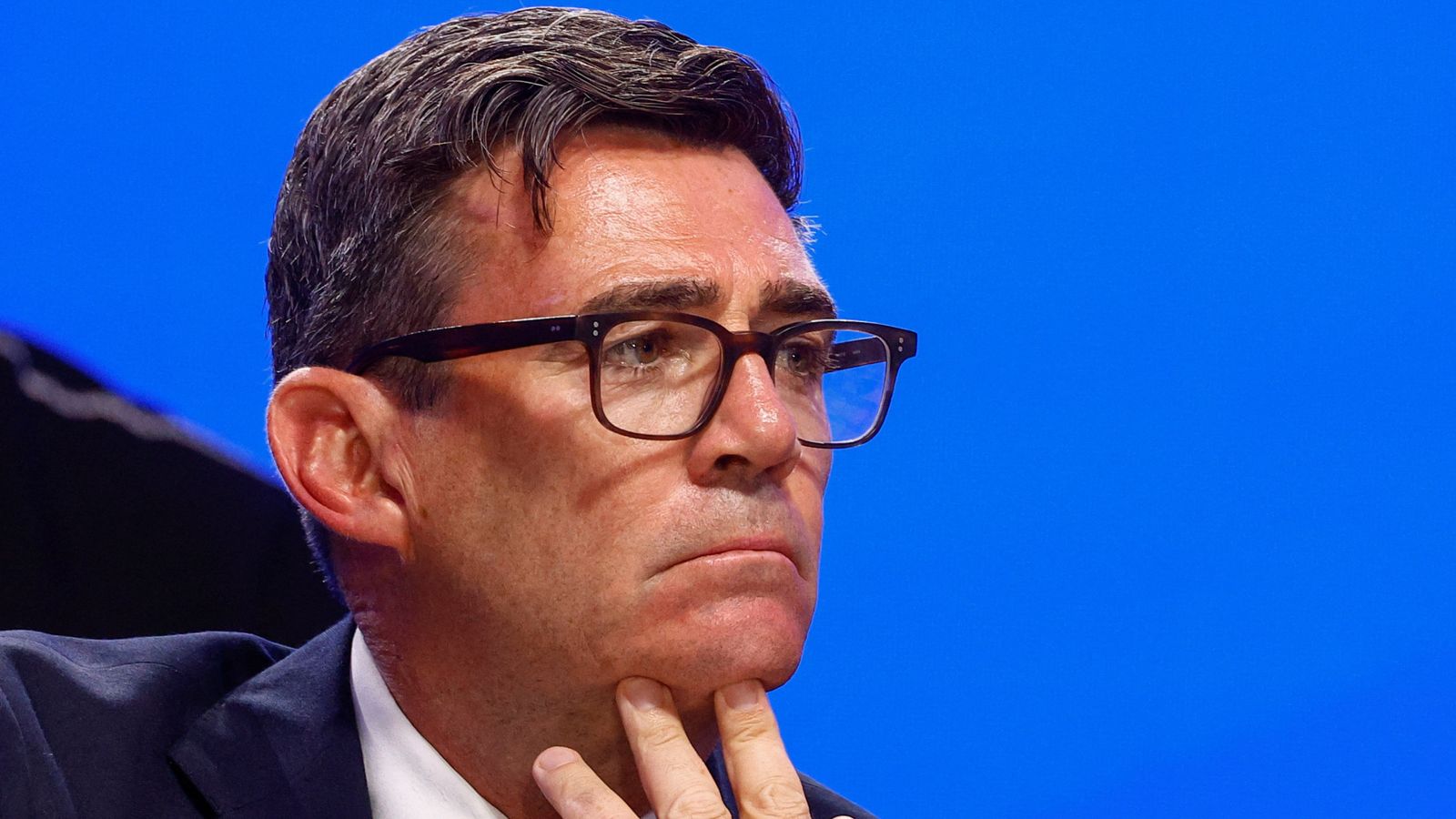
- Andy Burnham was appointed British prime minister on July 20, 2026.
- Keir Starmer's tenure as prime minister lasted just over two years.
- Reform UK has dominated polls for the past year.
- Images of fascists from Patriot Platform protesting in Dover and Portsmouth were noted in mid-September.
- Burnham's government, through foreign secretary Ed Miliband, imposed sanctions on Israeli West Bank settlements.
Andy Burnham was appointed the sixth British prime minister in a decade on July 20, 2026, following the resignation of Keir Starmer. Burnham's Labour party saw a rise in opinion polls, temporarily eclipsing Reform UK, the far-right party that had dominated polls for the past year. The fall of Starmer, who served just over two years and achieved record unpopularity, raises questions about the difficulty of surviving as prime minister and the potential for Burnham to reverse the rise of the far right.
Burnham's appointment comes amid a shifting political landscape. In mid-September, even as Reform UK faced scandals, images of fascists from Patriot Platform protesting in Dover and Portsmouth highlighted an emergent threat further to the right. Burnham's government, through Foreign Secretary Ed Miliband, has already imposed sanctions on Israeli West Bank settlements.
Starmer's political trajectory is traced back to the legal establishment during the "New Labour" era, adapting social democracy to a neoliberal consensus. Biographies suggest he became eager to ingratiate himself with senior politicians and the state machine, with his parliamentary route in 2015 facilitated by figures close to Tony Blair and Gordon Brown. The "soft left" notion, which Starmer and his allies defined themselves against, emerged in the 1980s. Starmer's leadership was marked by an attempt to break or drive out the left of the party, including what is described as "slavish support for Israel as it enacted its genocide in Gaza."
Burnham, speaking to Labour MPs on September 1, declared, "We are a fighting force. We can win the next election. We have an opportunity now. We’ve got the initiative." This has led to speculation about a potential early election, though Downing Street and senior aides deny this prospect. Advisers suggest Burnham aims to be a transformational figure, pledging significant change to Britain's political and economic model, including plans to end rough sleeping, solve the social care crisis, and reindustrialize Britain. These pledges are reportedly intended to be within the confines of the 2024 manifesto.