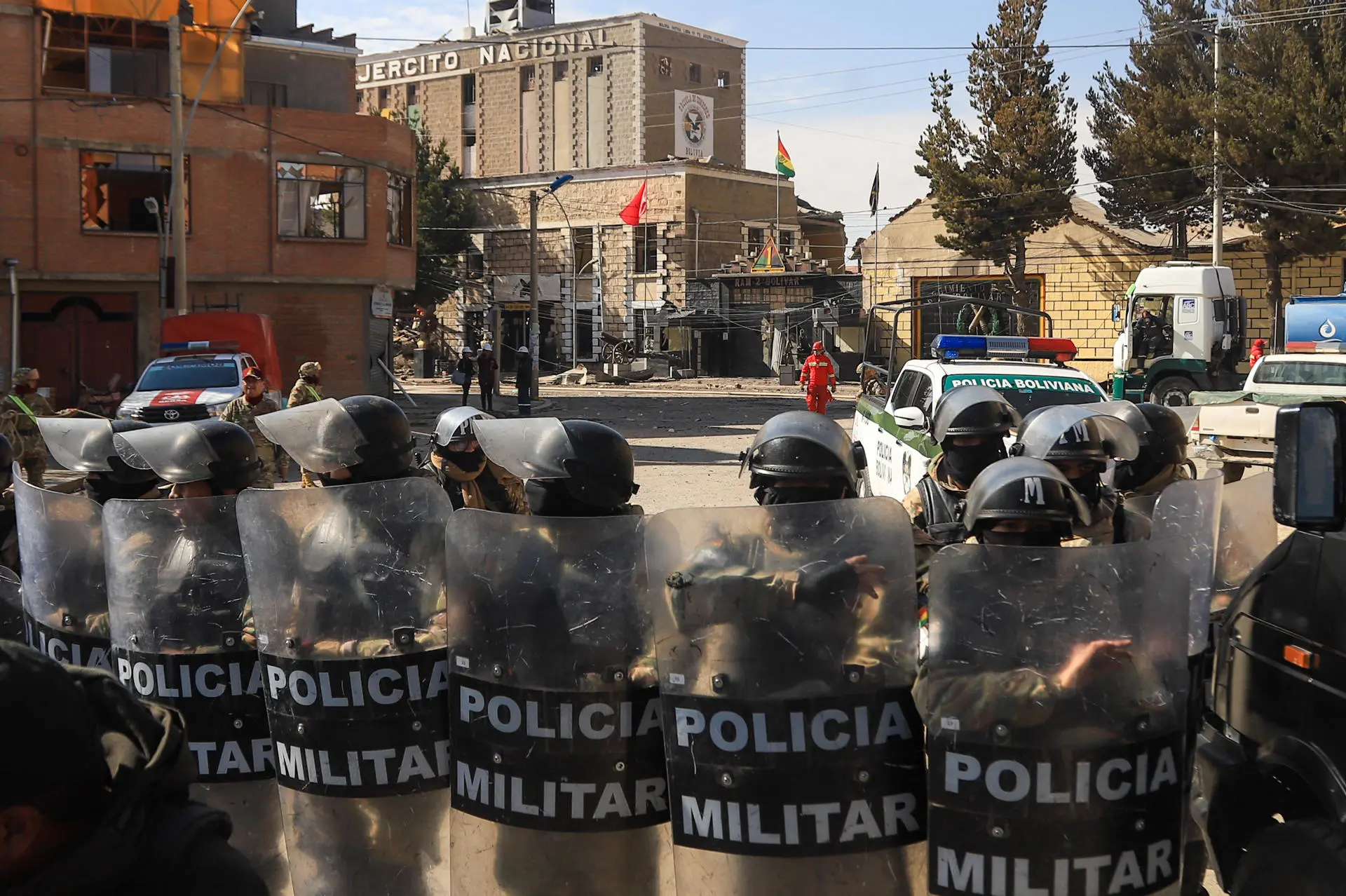
Key facts
- Bolivia's Assembly extended a state of emergency for 90 days on Thursday.
- The extension was requested by President Rodrigo Paz's government.
- Ministers of Government and Defense justified the extension citing threats of further mobilizations.
- Some social sectors and opposition lawmakers questioned the need for the extension.
- The original state of emergency was declared in June following over 50 days of road blockades.
LA PAZ, Sept. 17 (Reuters) - Bolivia's Assembly extended a state of emergency for 90 days on Thursday, citing persistent risks that demonstrators protesting the government's policies could mount new road blockades disrupting supplies and economic activity. The assembly's decision approves the extension requested by President Rodrigo Paz's government as the initial period was set to expire Friday.
The original 90-day emergency measure was declared in June, following more than 50 days of road blockades that caused shortages of food, fuel and medicine and worsened the economic crisis. Bolivia's Ministers of Government, Marco Antonio Oviedo, and Defense, Ernesto Justiniano, appeared before the Assembly to justify the extension, pointing to police and military reports warning of threats and the risk of further mobilizations.
Some social sectors and opposition lawmakers questioned the need to prolong the state of emergency. Opposition lawmaker Gabriel Corvera warned the measure treated symptoms rather than Bolivia's underlying problems.
According to EFE, the decision was approved by an absolute majority of 100 votes out of 158 assembly members. The Minister of Government, Marco Antonio Oviedo, explained that the extension is to "care for the life of citizens" and the country's economy, preserving rights to education, commerce, work, and free transit. Defense Minister Ernesto Justiniano stated that conflictivity had "considerably decreased, but not disappeared" since the state of exception was applied, mentioning 72 conflictivity events. The previous blockades, which occurred between May and June, led to shortages and at least 16 deaths, 13 of them due to lack of medical attention.
Telesur English reported that the move has been widely criticized by various social sectors as an attempt to criminalize protests against neoliberal policies. Presidential spokesman José Luis Galvez warned that the government is determined to impose a state of siege and militarize the country if social protests return.