Key facts
- Belarus is conducting military exercises near its borders with Poland and Lithuania from September 15-18.
- The Belarusian Defense Ministry described the drills as "defensive" and focused on protecting sovereignty.
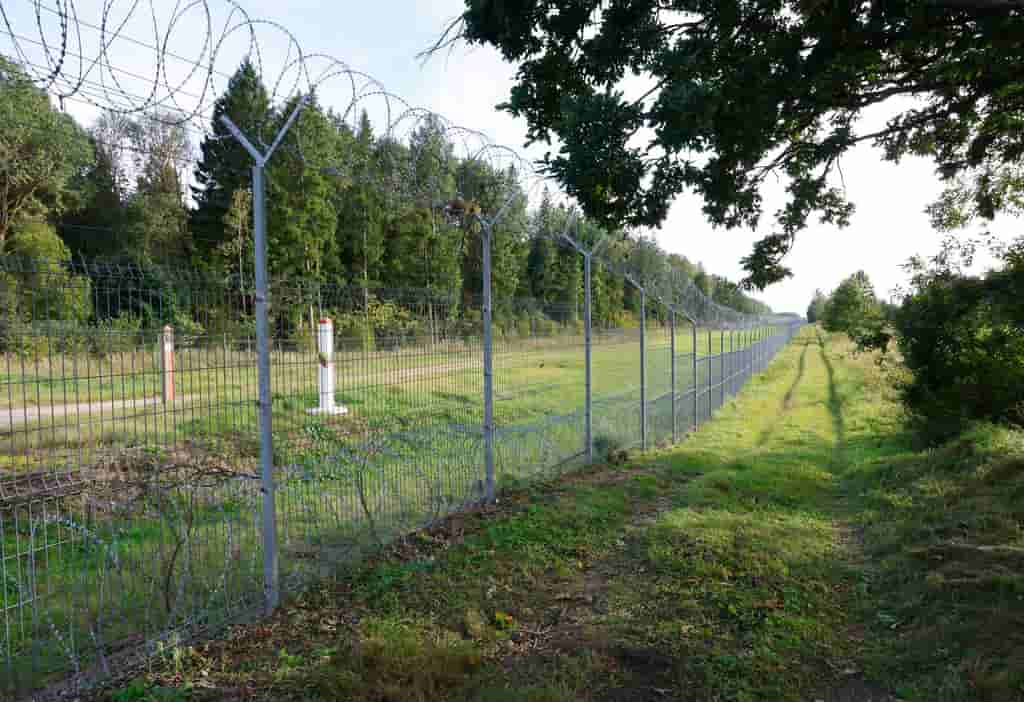
- Exercises are taking place at training grounds near the Lithuanian and Polish borders.
- Belarus previously allowed Russian forces to use its territory for the invasion of Ukraine.
- Ukraine has warned of a potential "northern front" being reopened to stretch its forces.
- Russia's 101st Missile Brigade is deployed in Belarus, equipped with Oreshnik ballistic missiles.
Belarus commenced military exercises near its borders with Poland and Lithuania on September 15, according to the Belarusian Defense Ministry. The ministry characterized the drills as "defensive," stating their purpose is to enhance the military's capacity to "protect the country's sovereignty and territorial integrity."
The exercises are centered on preparing troops for a "strategic military operation," which includes securing the border, countering alleged sabotage and reconnaissance groups, and engaging drones and light aircraft. These drills are taking place at the Gozhsky training ground, approximately 6 kilometers (4 miles) from the Lithuanian border, and at the Brestsky and Ruzhansky training grounds, situated roughly 15 kilometers (9 miles) and 60 kilometers (37 miles) from the Polish border, respectively.
Belarus has a history of strained relations with its NATO neighbors, Poland and Lithuania. Minsk has faced accusations of employing hybrid tactics, such as facilitating the movement of migrants from the Middle East and Africa to its EU borders, which led to a significant migration crisis. Furthermore, Belarus permitted Russian forces to utilize its territory as a staging ground for the full-scale invasion of Ukraine in 2022.
The current exercises coincide with an increase in military infrastructure along the Belarus-Ukraine border. This has prompted Kyiv to issue warnings that Moscow might be planning to involve its closest ally more deeply in the ongoing war. Michael Kofman, a senior fellow at the Carnegie Endowment for International Peace, suggested that the "threat of a reopened northern front is intended to stretch Ukrainian forces, pulling units from their current positions along the front line."
Ukraine's military intelligence chief, Oleh Ivashchenko, stated on September 7 that units of Russia's 101st Missile Brigade, armed with the Oreshnik intermediate-range ballistic missile system, are stationed in Belarus. Additionally, the Belarusian Railway Workers' Community reported on August 24 that new railway infrastructure is being constructed in the southern Gomel Oblast, designed to accommodate military trains carrying personnel and heavy equipment.
President Volodymyr Zelensky indicated on May 15 that Moscow and Minsk were engaged in discussions to persuade Belarusian dictator Alexander Lukashenko to "join new acts of aggression." Zelensky also suggested on May 21 that Ukraine was prepared to implement "preventive" measures against both Russia and Belarus in response to potential military threats along its northern border. However, in an interview published on June 15, Alexander Lukashenko denied that Belarus intended to enter the war, asserting that the country posed no military threat to Ukraine and would only become involved if attacked.