Key facts
- Garman wrote that trust in AI is built by engineering systems so outcomes are controlled regardless of what runs inside them.
- Garman said an AI agent should at most inherit the permissions of the human operating it, and often fewer.
- Garman warned that hype around AI safety can distract leaders from building better software that acts responsibly.
- Garman called for developers to stress test, continuously monitor and constrain their AI models.
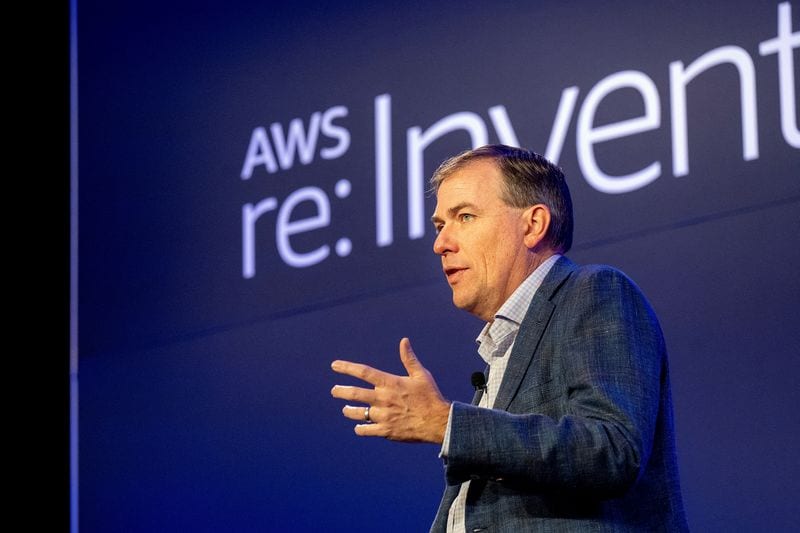
Amazon Web Services CEO Matt Garman argued in a 1,300-word blog post published on November 23, 2026 that safer AI comes from building better engineering controls, not from kill switches, according to a Reuters report.
"We've learned that trust isn't built by making promises about our intentions," Garman wrote. "It's built by engineering systems so that outcomes are controlled regardless of what's running inside them. That principle applies directly to AI." He compared AI safeguards to a car, saying the primary brakes, steering, suspension and navigation are engineered to work together, with the emergency brake a last resort.
Garman, who oversees much of Amazon's AI development and infrastructure including data centers, warned that hype around AI safety can distract leaders from building better software that acts responsibly. He said that might include halting production of new models, even though others release them without proper testing or with poor safeguards.
He called for developers to stress test the controls they put on their AI models, to continuously monitor them and to prevent them from acting outside established boundaries. "At most, an agent should inherit the permissions of the human operating it, and in many cases it should have significantly more constrained permissions than that human," he wrote.
Reuters reported that the post came as concerns over AI safety remain at the forefront, even as Anthropic held a record-setting IPO in November 2026. It said voters overwhelmingly rejected the aggressive buildout of data centers and pushed back on politicians who promised accelerated AI deployment, and that earlier in 2026 a slew of researchers warned the pace of AI development poses an existential threat to humanity amid reports that swarms of AI agents colluding together were able to breach computer systems and evade built-in safeguards. Amazon had previously called for more rigorous AI testing and said AI labs should only release models when they are safe.