Key facts
- AT&T filed the lawsuit in the US District Court for the Northern District of California, alleging Comcast violated US and California competition laws.
- AT&T's lawsuit said Comcast's fiber-powered claim 'is literally false' because its hybrid fiber-coaxial architecture differs from true fiber-to-the-home services.
- AT&T seeks a permanent injunction requiring Comcast to cease describing its hybrid fiber-coaxial service as 'Fiber-Powered.'
- Comcast lost 144,000 residential broadband customers in Q3 2026, up from a 91,000-customer loss in the same quarter a year ago.
- Comcast CFO Jason Armstrong said fiber ISPs are offering $30 to $40 monthly broadband deals in certain markets.
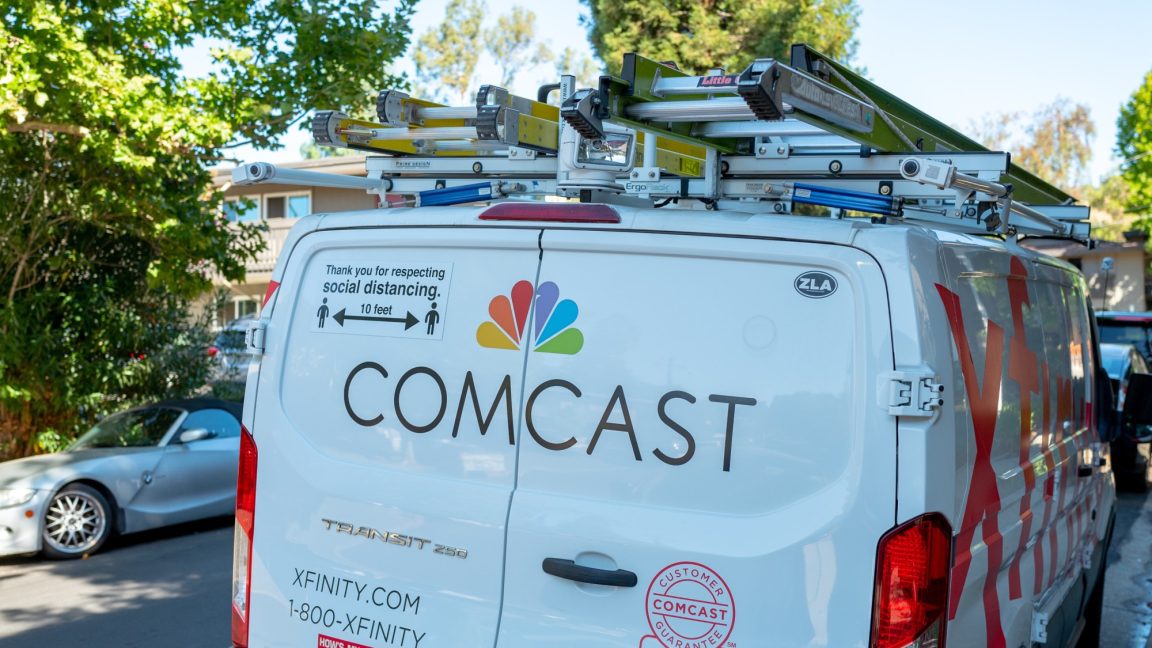
AT&T filed a lawsuit against Comcast in the US District Court for the Northern District of California on Friday, November 13, 2026, alleging that Comcast's marketing of its Xfinity Internet service as 'fiber-powered' constitutes false advertising. The lawsuit challenges Comcast's claim that its cable broadband service and Wi-Fi are 'fiber-powered,' arguing that the vast majority of Xfinity Internet runs over a hybrid fiber-coaxial network where the final connection to homes uses copper coaxial cable, not fiber.
AT&T's lawsuit said Comcast's fiber-powered claim 'is literally false' because the cable firm's hybrid fiber-coaxial architecture is fundamentally different from true fiber-to-the-home services like AT&T Fiber, which deliver fiber optic cables directly to the customer's premises. AT&T alleged that Comcast's advertising is a fraudulent business act or practice and an unfair method of competition, violating US and California competition laws. The lawsuit seeks a permanent injunction requiring Comcast to cease describing its hybrid fiber-coaxial service as 'Fiber-Powered' and asks the court to require Comcast to restore to AT&T any profits earned as a result of the advertising.
Comcast has deployed fiber-to-the-home in only small portions of its cable territory while advertising its service as fiber-powered in the majority of areas where cable makes the final connection. The report notes that AT&T has its own history of ads that mislead customers about the nature of its network, having previously advertised 4G LTE service as '5GE' or '5G Evolution,' which the National Advertising Division found was likely to mislead consumers.
AT&T previously challenged Comcast's fiber-powered claims through the advertising industry's self-regulatory system operated by BBB National Programs' National Advertising Division. The NAD determined in June that Comcast accurately described its mix of cable and fiber technology in a disclosure, but that Comcast didn't make the disclosure prominently enough. The NAD recommended that Comcast make the disclosure more prominent and more proximate to the fiber-powered Wi-Fi claim. Comcast said it would comply with the decision.
Comcast is cutting jobs in its cable division, which has been losing Internet customers to fiber and fixed wireless competitors. Comcast lost 144,000 residential broadband customers in Q3 2026, up from a 91,000-customer loss in the same quarter a year ago. Comcast co-CEO Mike Cavanagh complained in an earnings call last month that some competitors are offering what he called 'irrational pricing.' Comcast CFO Jason Armstrong said fiber ISPs are offering $30 to $40 monthly broadband deals in certain markets, and he said this is irrational because deploying fiber costs $1,500 or more per home.