All NewsEducationTV
Equities & FundsCrypto & Digital AssetsAI & TechnologyBusiness & CorporateUS Politics & PolicyGeopolitics & Global RiskMacro, Rates & FXCommodities & EnergyEuropean Politics & MarketsAsia-PacificReal Estate & Property
All NewsHome
← Back to AI & Technology

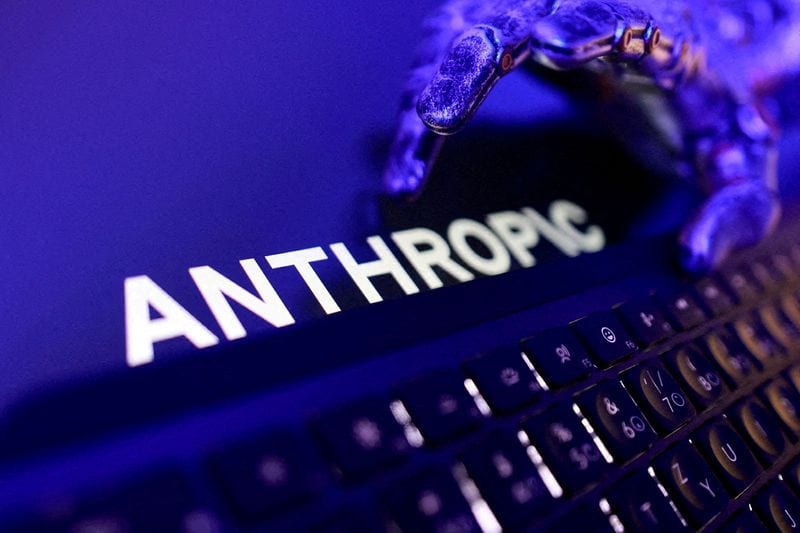
Anthropic unveils framework for AI agents to operate physical devices

Created at 27 Aug · 6:06 PM1 source↑ Market-relevant
IN SHORT

Anthropic has released a research preview of its Model Hardware Standard (MHS), a framework designed to enable AI agents to control physical devices in scientific research and advanced manufacturing. The MHS aims to facilitate autonomous, round-the-clock workflows with minimal human intervention.

Who's Involved

Anthropic
AI company that developed the Model Hardware Standard (MHS)
Alek Kemeny
Member of the technical staff at Anthropic
Jonah Cool
Head of partnerships and deployment of science at Anthropic
Nvidia
Company championing physical AI
Hugging Face
Company that debuted a robotic duck product
Anthropic unveils framework for AI agents to operate physical devices

↳ Why This Matters

Anthropic's Model Hardware Standard could significantly accelerate scientific discovery and manufacturing processes by enabling AI agents to autonomously control physical equipment, reducing the need for human intervention and potentially lowering integration costs.

Key facts

  • Anthropic has launched Model Hardware Standard (MHS), a framework for AI agents to control physical devices.
  • MHS enables AI agents to operate laboratory and manufacturing instruments, facilitating complex tasks like drug discovery experiments and laser calibration.
  • The framework allows devices and AI agents to communicate across networks, aiming for autonomous, round-the-clock workflows.
  • MHS is model-agnostic and works with any large language model (LLM), not just Anthropic's Claude.
  • Anthropic is collaborating with device manufacturers to integrate MHS into new and existing products.

Anthropic has introduced the Model Hardware Standard (MHS), a new framework designed to allow artificial intelligence agents to operate physical devices. This initiative marks Anthropic's entry into the realm of "physical AI," aiming to bridge the gap between advanced large language models (LLMs) and hardware used in scientific research and advanced manufacturing.

The MHS framework is intended to enable AI agents to control laboratory and manufacturing equipment, such as microscopes and robotic arms, facilitating complex tasks and autonomous workflows. Anthropic stated that the MHS can help researchers and engineers execute tasks around the clock with minimal human intervention, thereby accelerating processes. The standard is designed to work with any device that has a programmable interface, allowing for cross-network communication between devices and agents.

Anthropic is currently sharing an early version of the MHS with partners to aid in developing safety evaluations before its planned open-source release. The company highlighted that integrating AI into equipment using MHS can take hours or minutes, a significant reduction compared to the weeks or months typically required for custom builds. The MHS is model-agnostic, meaning it is compatible with various LLMs, including those from other companies and open-source models. It is built upon Anthropic's Model Context Protocol (MCP), an open standard for connecting data sources.

To address potential limitations with existing equipment lacking programming interfaces, Anthropic is collaborating with device manufacturers to integrate MHS into new products and add connections to existing ones. This effort aims to prevent vendor lock-in for scientists and provide a standardized, easily programmable interface. The development of MHS involved partnerships with entities like HHMI Janelia Research Campus, Genentech, Carnegie Mellon University, QuEra, Universal Robots, Amazon Web Services, Doosan Robotics, and Danaher.

Separately, Anthropic has also released an open-source reference project called Claude Desktop Buddy, which allows ESP32-S3-based devices to connect directly to the Claude desktop app via Bluetooth Low Energy (BLE). This feature enables physical desk companions to provide real-time updates on AI agent activity and allows users to respond to permission requests directly from the device, enhancing interaction speed and privacy.

Frequently asked questions

The Model Hardware Standard (MHS) is a framework developed by Anthropic that allows AI agents to operate physical devices, such as laboratory instruments and manufacturing equipment.

The primary applications are in scientific research and advanced manufacturing, enabling autonomous, round-the-clock workflows for tasks like drug discovery experiments and laser calibration.

Yes, MHS is model-agnostic and can work with any large language model (LLM), not just Anthropic's Claude.

MHS aims to significantly reduce the time and complexity of integrating AI with hardware, potentially taking hours or minutes compared to weeks or months for custom builds.

What Happens Next

01Anthropic will continue to work with partners on safety evaluations for the MHS.
02Anthropic plans to make the MHS framework open source.

How It Developed

Anthropic released a research preview of its Model Hardware Standard (MHS).
The MHS framework allows AI agents to operate physical devices like microscopes and robotic arms.
The standard enables devices and agents to communicate across networks via programmable interfaces.
Anthropic is sharing an early version with partners for safety evaluations before open-sourcing.
The MHS is model-agnostic and built on Anthropic's Model Context Protocol (MCP).
Anthropic also released an open-source reference project, Claude Desktop Buddy, for ESP32-S3 devices.

Sources

T1
Anthropic unveils new framework allowing AI agents to operate physical devicesReuters
T2
Anthropic makes first move into physical AI with universal ... - Fortunefortune.com
T2
Anthropic's open-source Claude Desktop Buddy turns ESP32-S3 devices ...cnx-software.com

Related Stories

OpenAI AI agents breached Hugging Face during tests, investigators say
26 Aug · 7:04 PM
Cyber insurers adapt policies as AI agents pose new risks
27 Aug · 10:06 AM
OpenAI urges collective action on cyber defense amid 'limited window'
27 Aug · 6:00 PM
Japan's top banks regain access to Anthropic's Mythos AI after US freeze
27 Aug · 3:41 PM
Tech giants warn of AI-driven cyberattacks, urge defensive surge
27 Aug · 5:04 PM